I’m on the Keto Diet but Not Entering Ketosis
The ketogenic diet has become one of the most popular nutrition approaches of recent years. Promoted as an effective way to lose weight, stabilize blood sugar, and boost daily energy, keto is followed by millions worldwide. But a common and frustrating question often arises: “I’m on the keto diet, but my sensor doesn’t show ketosis. Why?”
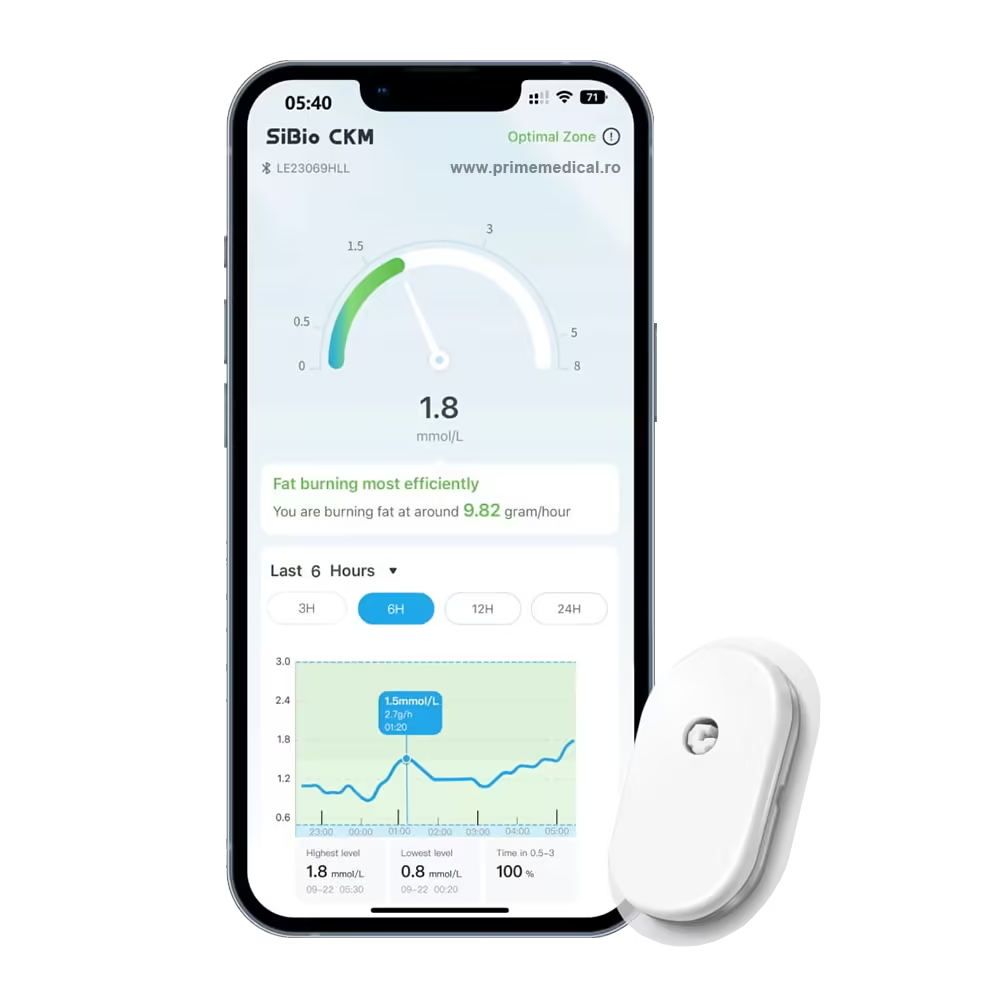
This situation is especially familiar to users of the Sibio CKM sensor, a modern device designed to monitor ketone levels continuously. Many expect that once they reduce carbs and increase fats, the sensor will instantly confirm ketosis. However, reality is far more nuanced. In most cases, the sensor is not wrong — instead, your metabolism has valid explanations for these results.

What Nutritional Ketosis Really Is?
Nutritional ketosis occurs when the body runs out of sufficient carbohydrates to generate energy from glucose. In this state, the liver shifts toward breaking down fatty acids and produces ketone bodies:
- Acetoacetate – the first ketone formed.
- Beta-hydroxybutyrate (BHB) – the most stable and reliable indicator, measured by the sensor.
- Acetone – a byproduct excreted through the breath.
These compounds become the brain and muscles’ primary energy source. Yet, noticeable levels of ketones appear only once the liver is fully adapted and the body switches entirely to fat-burning.
Foreigner In Romania and in need of a prescription for your chronic treatment?
Contact Dr. Petrache’s Virtual Clinic for any medical issue you encounter while in Romania. Send an email to: [email protected]
How the Sibio CKM Sensor Works?
Sibio CKM measures ketones in the interstitial fluid — the fluid surrounding cells. This closely mirrors blood values but with a natural delay of about 10–15 minutes.
The advantage is that you can track real-time trends without finger-pricking. But it’s important to remember: the sensor reflects exactly what your body is doing. If it shows low readings, that means your liver is not producing significant ketones.
Why You Might Not Enter Ketosis Even on Keto?
There are several reasons why your Sibio CKM sensor may not confirm ketosis, despite following the ketogenic diet. Let’s explore the most common and relevant factors.
1. Hidden Carbohydrates
Even when you avoid bread, pasta, and sugar, carbs may sneak in through:
- Dairy products like milk, yogurt, or soft cheese.
- Starchy vegetables such as carrots, sweet potatoes, or beets.
- Nuts and seeds consumed in excess.
- Sauces, dressings, and processed seasonings.
- Protein shakes or supplements containing maltodextrin or fillers.
Just 40–50 g of daily carbs can be enough to keep blood sugar stable and block ketosis.
2. The Adaptation Period
Entering ketosis doesn’t happen overnight. Some people adapt within 2–3 days, while others need 2–3 weeks. The liver has to upregulate specific enzymes to burn fat efficiently. If your past diet was high in carbohydrates, or if you have insulin resistance, adaptation will likely take longer.
3. Too Much Protein
One of the most overlooked reasons is gluconeogenesis — the liver’s ability to convert amino acids into glucose. If you eat excessive lean protein, such as chicken breast, shakes, or cheese, your liver may produce extra glucose, delaying ketosis.
4. Not Enough Fat
Keto isn’t just about cutting carbs — it’s about increasing healthy fats. Without enough fat sources (olive oil, avocado, fatty fish, butter, nuts), the liver lacks raw material to generate ketones.
Passing through Romania and need a prescription for your chronic treatment?
Contact Dr. Petrache’s Virtual Clinic for any medical issue you encounter while in Romania. Send an email to: [email protected]
5. Stress and Hormonal Balance
Chronic stress elevates cortisol, the stress hormone. Cortisol stimulates the liver to make glucose, even in the absence of carbs. The result: consistently lower ketones.
Other hormonal imbalances — hypothyroidism, polycystic ovary syndrome (PCOS), or metabolic syndrome — can also delay ketosis.
6. Exercise and Physical Activity
High-intensity workouts deplete glycogen stores. Instead of immediately producing ketones, the body may prioritize glycogen restoration. As a result, sensor readings may show temporarily low values after exercise.
7. Hydration and Electrolytes
Proper ketosis requires electrolyte balance. Deficiencies in sodium, potassium, or magnesium reduce metabolic efficiency. Likewise, dehydration impairs fat metabolism and ketone production.
8. Efficient Fat Utilization
Paradoxically, some people lose weight quickly yet see only modest ketone levels. This happens because the body burns fatty acids directly for energy, producing only minimal ketones. The sensor is correct — your body simply doesn’t need to flood the bloodstream with them.
9. Medications and Medical Conditions
Certain medications — corticosteroids, antipsychotics, some blood pressure drugs — increase blood sugar and reduce ketosis potential. Liver or pancreatic conditions may also limit ketone production.
Blood, Urine, and Sensor Testing – What’s the Difference?
Many wonder why their sensor results don’t match urine strips or blood tests.
- Urine strips detect acetoacetate, but results are influenced by hydration and are useful mainly in the early stages of ketosis.
- Blood tests measure BHB directly and remain the gold standard.
- CKM sensors like Sibio continuously track BHB in interstitial fluid, providing a reliable, real-time picture.
If discrepancies occur, it’s not because the sensor is faulty — it’s measuring a different biological compartment with excellent accuracy.
Real-Life Examples
- The cheese-and-nuts fan – Eats “keto foods” but consumes too many hidden carbs and protein. Sensor readings remain low.
- The weekend athlete – Works out intensely, but the body refills glycogen before ketone production kicks in.
- The stressed professional – Elevated cortisol keeps blood sugar steady, blocking ketone production.
Practical Steps to Boost Ketosis
If your Sibio CKM sensor doesn’t show ketosis despite following the diet, here are strategies to support your metabolism:
- Track every carb – Use a food journal or app to log daily carb intake.
- Moderate protein – Focus on fatty cuts of meat, fish, and eggs, rather than excessive lean protein.
- Increase healthy fats – Olive oil, avocado, fatty fish, nuts, and seeds.
- Manage stress – Prioritize sleep, relaxation techniques, and balanced routines.
- Choose moderate exercise – Walking, yoga, or light strength training can be better for ketosis than daily intense sessions.
- Stay hydrated and supplement electrolytes – Especially sodium, potassium, and magnesium.
Why the Sensor Isn’t Wrong
It can be tempting to blame the sensor when you don’t see high numbers. But remember: the sensor doesn’t make mistakes. It’s a precise reflection of what your body is doing at that moment.
Ketosis is not about chasing big numbers on a screen. It’s about metabolic efficiency: steady energy, controlled hunger, better glucose stability, and overall well-being. Even modest ketone levels can be metabolically beneficial.
The Bigger Picture
The ketogenic diet is more than a number game. Your overall progress should be measured through:
- Weight stability or gradual fat loss.
- Improved fasting glucose levels.
- Reduced cravings and better appetite control.
- Increased energy throughout the day.
If your Sibio CKM sensor shows low readings, it doesn’t mean the diet is failing — it means your body is adapting in its own way.
Tourist in Romania and in need of a prescription for your chronic treatment?
Contact Dr. Petrache’s Virtual Clinic for any medical issue you encounter while in Romania. Send an email to: [email protected]
Conclusion
If you’re on the keto diet but your Sibio CKM sensor doesn’t indicate ketosis, it’s not a device error. Instead, it reflects real metabolic dynamics — hidden carbs, adaptation time, protein excess, stress, workouts, or even efficient fat-burning.
Ketosis should not be viewed as a “badge of honor” earned only when numbers are high. What truly matters is how you feel, how your body responds, and the health benefits you achieve along the way.
Your sensor is a guide, not a judge — and the key is to use its insights to fine-tune your journey, not to doubt the technology.
Follow us on:
- FaceBook: Diabetes & Nutrition;
- YouTube: Diabetes Facts.