Fructose – Everything You Need to Know

What Is Fructose?
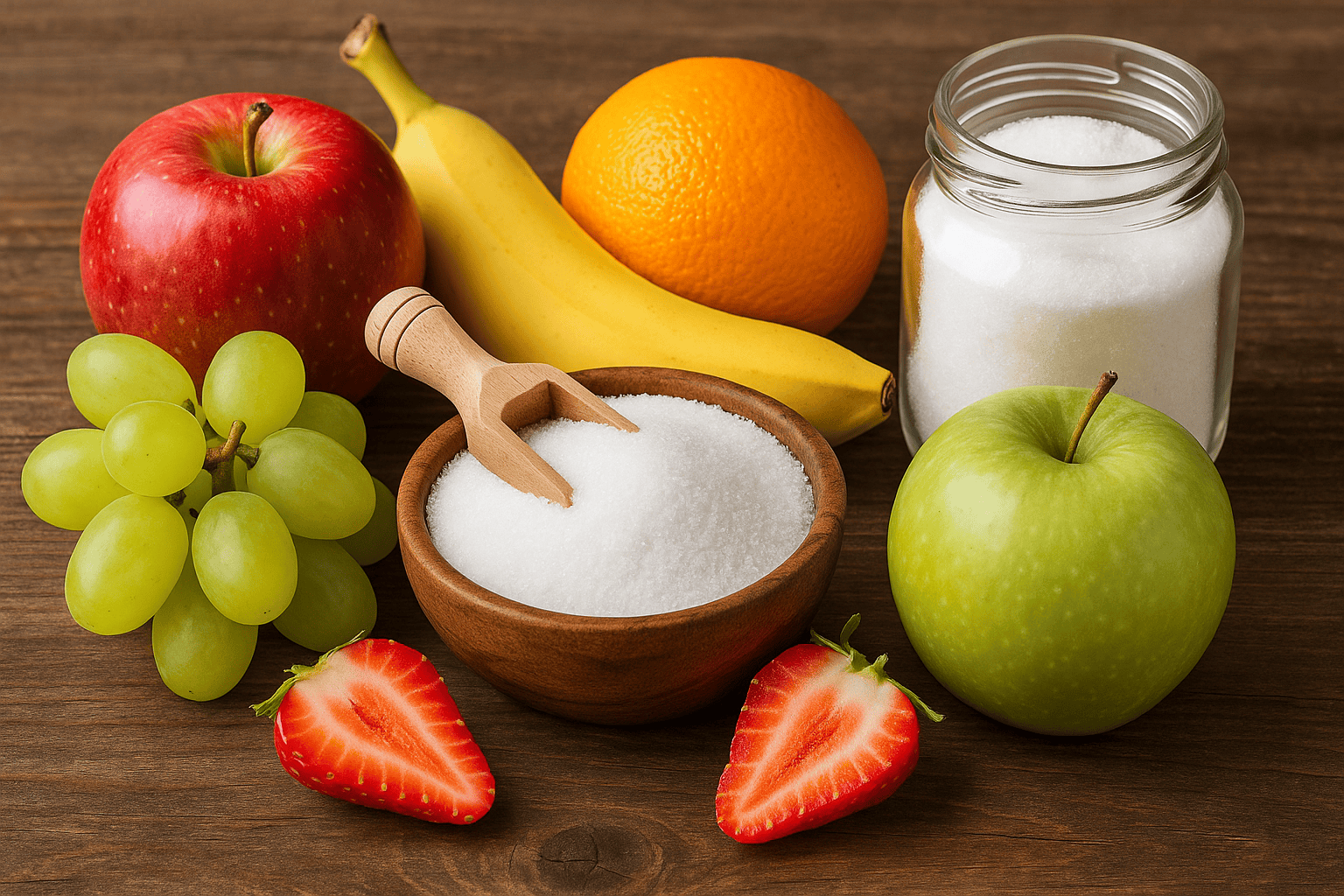
Fructose is a simple sugar (monosaccharide), a small carbohydrate molecule that is water-soluble and naturally sweet. Often referred to as “fruit sugar,” fructose is naturally found in most fruits, honey, and certain vegetables. Chemically, it shares the same molecular formula as glucose (C6H12O6), but its different structure gives it unique metabolic properties.
Fructose is sweeter than both glucose and sucrose, which explains why it is commonly used as a sweetener. If sucrose (table sugar) has a relative sweetness of 100%, fructose is about 140%.
Foreigner In Romania and in need of a prescription for your chronic treatment?
Contact Dr. Petrache’s Virtual Clinic for any medical issue you encounter while in Romania. Send an email to: [email protected]
Natural Sources of Fructose
Fructose occurs naturally in:
- Fruits: apples, pears, grapes, mangoes, cherries, watermelon
- Honey and natural syrups: agave syrup, maple syrup
- Vegetables: beets, carrots, onions, asparagus
- Fresh fruit juices and smoothies
The fructose found in these whole foods is accompanied by fiber, vitamins, minerals, and antioxidants, which slow down absorption and improve overall tolerance.
Added Fructose in the Food Industry
In modern diets, much of the fructose consumed does not come from fresh fruit but from processed foods. The most common source is High-Fructose Corn Syrup (HFCS), which is added to:
- soft drinks and sodas
- energy drinks
- cookies, cakes, and pastries
- ketchup, sauces, and dressings
- breakfast cereals
- snack bars and packaged desserts
This form of fructose is problematic because it is consumed in high amounts, absorbed quickly, and lacks the fiber matrix that protects the body from sugar overload.
How is Fructose Metabolized?
Fructose metabolism is distinct from glucose:
- Glucose is metabolized by most cells in the body and directly stimulates insulin release.
- Fructose is metabolized almost exclusively in the liver and does not directly trigger insulin secretion.
In the liver, fructose can be converted into:
- glucose – for immediate energy
- glycogen – the storage form of glucose
- triglycerides – fats, especially when fructose intake is high
Because of this, excessive fructose intake can increase fat buildup in the liver and elevate blood triglyceride levels.
Passing through Romania and need a prescription for your chronic treatment?
Contact Dr. Petrache’s Virtual Clinic for any medical issue you encounter while in Romania. Send an email to: [email protected]
Glycemic Index of Fructose
Fructose has a low glycemic index (15–25), meaning it does not raise blood sugar rapidly after consumption. While this may sound beneficial, it does not mean fructose is harmless. The liver’s unique handling of fructose can increase triglycerides, promote insulin resistance, and contribute to fat accumulation in the abdomen.
Natural vs. Added Fructose
- Natural fructose – from fruits and vegetables, is absorbed more slowly because of fiber content and is generally beneficial when consumed in moderation.
- Added fructose – from soft drinks, sweets, and processed foods, is absorbed rapidly in large amounts, stressing the liver and promoting metabolic disturbances.
The key difference lies in the food matrix: an apple provides fructose but also fiber and antioxidants, while a soda provides fructose as “empty calories.”
Benefits of Moderate Fructose Intake
- Provides quick energy, useful during intense physical activity
- Sweeter than glucose, so smaller amounts can achieve the same taste
- Comes from fruits and vegetables that also supply fiber, vitamins, minerals, and antioxidants
- Adds diversity to carbohydrate sources in the diet
Risks of Excessive Fructose Consumption
Excessive intake, especially through HFCS and sweets, is linked to:
- Non-alcoholic fatty liver disease (NAFLD) – one of today’s most common liver diseases
- Abdominal obesity – due to increased fat synthesis in the liver
- Insulin resistance and type 2 diabetes – through long-term metabolic overload
- Elevated triglycerides and cardiovascular risk
- Leptin resistance – interfering with satiety signals, leading to overeating
- Digestive symptoms – bloating, gas, or diarrhea in sensitive individuals
Fructose and Diabetes
For many years, fructose was thought to be “safe” for people with diabetes because of its low glycemic index. However, newer research shows that high fructose intake may worsen insulin resistance and increase abdominal fat.
For people with diabetes:
- Whole fruits are recommended in moderation, because fiber slows sugar absorption.
- Fruit juices and processed foods high in fructose should be limited, as they can worsen metabolic control.
Malabsorption and Intolerance
Two medical conditions involve fructose:
- Fructose malabsorption – when the intestine cannot properly absorb fructose, leading to bloating, abdominal pain, and diarrhea.
- Hereditary fructose intolerance – a rare genetic disease where fructose metabolism is impaired, requiring strict avoidance of all fructose.
Fructose is also a FODMAP sugar, meaning it can trigger digestive symptoms in people with Irritable Bowel Syndrome (IBS).
How to Consume Fructose in a Healthy Way
- Prefer whole fruits instead of concentrated juices.
- Combine fruits with protein or healthy fats to stabilize blood sugar.
- Limit sugary drinks, sweets, and processed foods.
- Choose fruits with moderate fructose content (berries, kiwi, citrus fruits).
- Stick to 2–3 servings of fruit per day if you have diabetes or metabolic syndrome.
Fructose Compared to Other Sweeteners
- Fructose vs. Glucose – fructose has a lower glycemic index but is metabolized only in the liver, while glucose is the body’s main energy source.
- Fructose vs. Sucrose – sucrose is a combination of glucose and fructose; its metabolism combines the effects of both.
- Fructose vs. Polyols (sorbitol, erythritol) – polyols provide fewer calories but may cause digestive discomfort; erythritol is the best tolerated.
- Fructose vs. Artificial sweeteners (aspartame, sucralose) – artificial sweeteners are calorie-free and don’t affect blood sugar, but they don’t provide nutrients.
Practical Examples of Fructose Content
- 1 medium apple: ~10 g fructose
- 1 can of soda: ~20–25 g fructose (via HFCS)
- 1 tablespoon of honey: ~8 g fructose
- 1 serving of berries: ~3–5 g fructose
Clearly, a whole apple or a handful of berries contributes modest amounts compared to a soda or dessert sweetened with HFCS.
Tourist in Romania and in need of a prescription for your chronic treatment?
Contact Dr. Petrache’s Virtual Clinic for any medical issue you encounter while in Romania. Send an email to: [email protected]
Conclusion
Fructose is a natural sugar, present in our diet for thousands of years, but modern consumption patterns have changed its impact on health. When it comes from whole fruits and vegetables, it is beneficial, bringing along fiber and antioxidants. When it comes from soft drinks and ultra-processed foods, it becomes a risk factor for fatty liver, obesity, and metabolic diseases.
The key is balance: fruits and vegetables should remain an essential part of the diet, while processed foods with high added fructose should be reduced. A healthy lifestyle does not eliminate fructose—it integrates it in its natural form, where it belongs, as part of a varied and nutrient-rich diet.
Follow us on:
- FaceBook: Diabetes & Nutrition;
- YouTube: Diabetes Facts.