Meat with Potatoes – Is It Wrong?
For years, many people have heard the same idea: “Never combine meat with potatoes.” For some, it has become almost an absolute nutrition rule. There are people who believe this combination:
- makes you gain weight instantly;
- “ferments” in the stomach;
- ruins digestion;
- or even causes diabetes.
But how much truth is actually behind these claims?
Reality is far more nuanced. In practice, the human body is perfectly capable of digesting proteins, fats, and carbohydrates at the same time. In fact, most traditional meals around the world are built exactly on this combination. The real issue is not the simple pairing of meat and potatoes, but the context in which the meal appears: portion size, cooking method, frequency, overall lifestyle, and caloric excess.
A meal with meat and potatoes can be completely different from another. There is a huge difference between:
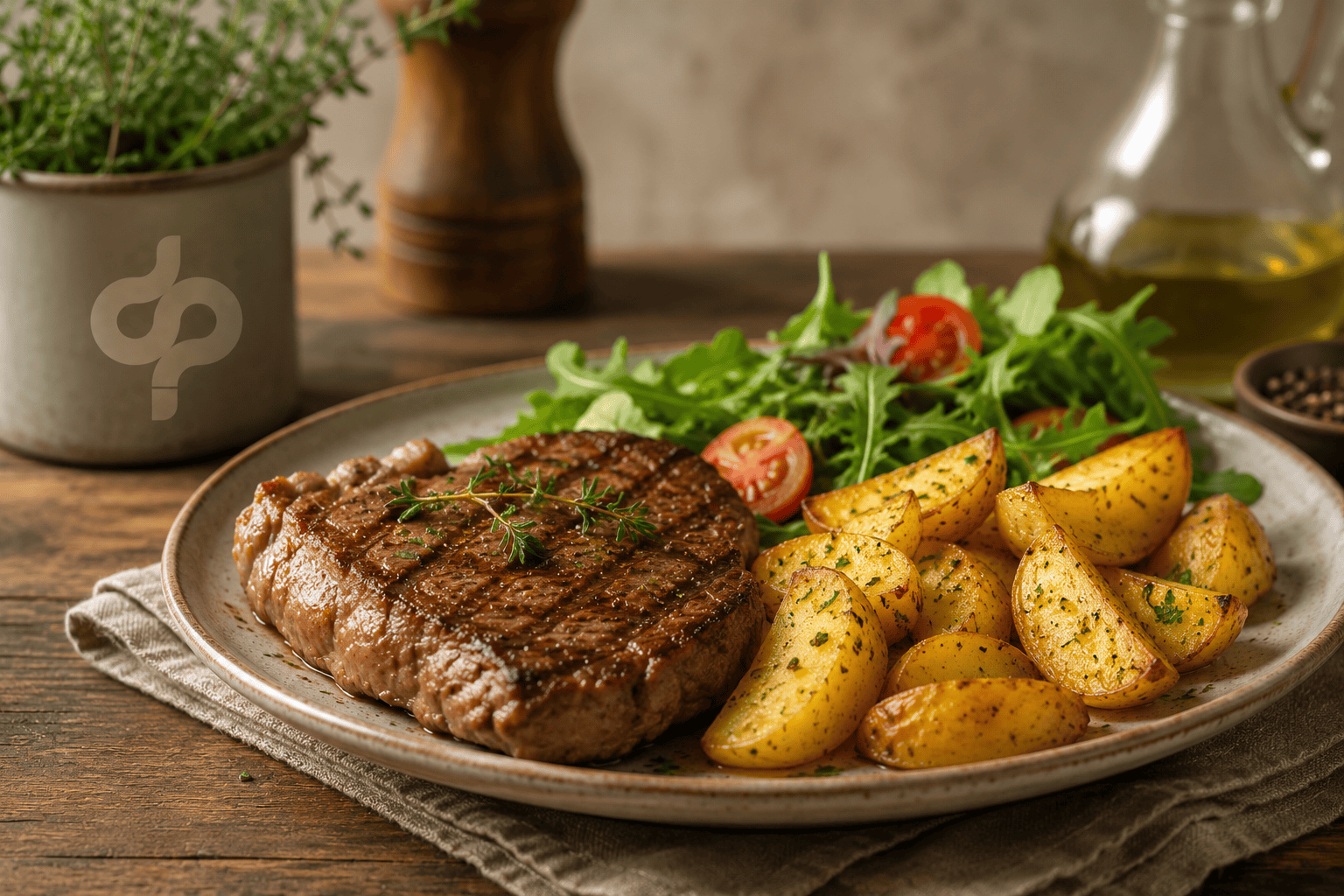
- grilled chicken breast with baked potatoes and salad;
- and fast food with fries, sauces, sugary drinks, and oversized portions.
The body does not react to nutrition myths. It reacts to biology, calories, nutrient composition, and lifestyle.

Tourist in Romania and in need of a prescription for your chronic treatment?
Contact Dr. Petrache’s Virtual Clinic for any medical issue you encounter while in Romania. Send an email to: clinica@diabet-si-nutritie.ro
Where Did the Idea Come From?
Many of these theories come from so-called “food combining” diets or older disassociated diet concepts. These theories claimed that the body cannot properly digest proteins and carbohydrates together because they supposedly require different digestive environments.
The problem is that real human physiology does not work that way.
The digestive tract produces multiple digestive enzymes and secretions simultaneously. The body is designed to process mixed meals. If that were not true, humanity would have struggled for thousands of years, since nearly every culture combines:
- starches with proteins;
- grains with meat;
- legumes with meat;
- potatoes with fish;
- bread with cheese;
- rice with protein sources.
In reality, the stomach and intestines constantly manage complex nutrient combinations.
Potatoes Are Not the Enemy
Potatoes have been heavily demonized in recent years, but reality is more complex. Potatoes are a source of:
- carbohydrates;
- potassium;
- vitamin C;
- fiber;
- resistant starch under certain conditions.
The main problem comes from the modern way potatoes are often consumed:
- deep fried in large amounts of oil;
- paired with fast food;
- eaten in huge portions;
- combined with sugary beverages.
Boiled or baked potatoes are metabolically very different from industrial fries.
Moreover, potatoes that are cooled after cooking develop more resistant starch, which may reduce their glycemic impact. That is why potato salad made with cooled potatoes may affect blood sugar differently than hot mashed potatoes.
Meat Is Not the Main Problem Either
Meat itself is not automatically “bad.” What matters is:
- the type of meat;
- the quantity;
- the level of processing;
- the cooking method.
There is a major difference between:
- fish baked in the oven;
- turkey breast;
- lean beef;
- and ultra-processed deli meats or fast-food products.
Protein may even improve satiety and slow gastric emptying. Sometimes pairing a protein source with carbohydrates can reduce how quickly blood sugar rises compared to eating carbohydrates alone.
This means that a moderate portion of potatoes alongside protein and salad can be much more balanced than eating a large amount of potatoes by themselves.
What Actually Happens After a Meal with Meat and Potatoes?
After eating:
- carbohydrates are converted into glucose;
- proteins are broken down into amino acids;
- fats are processed separately.
The body performs all of these tasks simultaneously every single day.
If the meal is extremely large and calorie-dense, it can lead to:
- higher insulin secretion;
- slower digestion;
- sleepiness;
- digestive discomfort;
- and sometimes higher glucose levels.
But the cause is not a “forbidden combination.” The real issue is excess.
Many people confuse the effects of a huge meal with the belief that certain foods should never be eaten together.
Is It Forbidden in Diabetes?
There is no universal medical rule saying that people with diabetes cannot eat meat with potatoes.
Instead, what matters is:
- portion size;
- the type of potato;
- cooking method;
- fat content;
- individual glucose response.
Some people tolerate:
- boiled potatoes;
- baked potatoes;
- cooled and reheated potatoes
very well.
Others may experience higher glucose spikes.
That is why glucose monitoring is far more useful than rigid food rules without scientific grounding.
Sometimes a person may have better glucose levels after:
- baked potatoes + meat + salad
than after: - pretzels;
- ultra-processed cereals;
- sugary drinks;
- refined snack foods.
Foreigner In Romania and in need of a prescription for your chronic treatment?
Contact Dr. Petrache’s Virtual Clinic for any medical issue you encounter while in Romania. Send an email to: clinica@diabet-si-nutritie.ro
Why Modern Meals Became Problematic
The major issue is not the meat-and-potatoes combination itself, but the transformation of this meal into a modern calorie bomb.
In many restaurants and fast-food chains:
- portions are oversized;
- potatoes are deep fried;
- sauces are extremely calorie-dense;
- beverages are sugary;
- meals are hyper-palatable.
The human brain is highly sensitive to combinations of:
- salt;
- fat;
- starch;
- intense flavors.
These meals strongly stimulate appetite and encourage overeating.
This creates the mental association:
“meat + potatoes = unhealthy.”
In reality, the real issue is caloric excess and food processing.
Portion Size Matters
A moderate portion and an enormous one have completely different metabolic effects.
Very often the issue is not the combination itself, but the fact that the meal contains:
- too much fat;
- too many calories;
- too little fiber;
- too little movement afterward.
Two people may both say they ate “meat with potatoes,” but one may have eaten:
- 150 g fish;
- 200 g baked potatoes;
- a large salad.
While the other consumed:
- a double burger;
- large fries;
- sauces;
- dessert;
- sugary soda.
The metabolic impact is completely different.
French Fries Change the Equation
This is one of the most important distinctions.
French fries:
- are much more calorie-dense;
- absorb oil;
- become hyper-palatable;
- are easier to overeat.
Additionally, repeatedly heated frying oils may generate undesirable compounds.
This does not mean fries must be completely eliminated for everyone, but frequency and quantity matter enormously.
What Are More Balanced Options?
In general, a better-balanced meal may include:
- lean meat;
- fish;
- baked or boiled potatoes;
- plenty of vegetables;
- fiber sources;
- reasonable portions.
Even walking after a meal may influence blood sugar more than many rigid food rules.
Just 10–15 minutes of walking after eating can help glucose metabolism.
Why Do Some People Feel Bad After Eating Meat with Potatoes?
There are several possible explanations:
- portions are too large;
- digestion is slower;
- reflux is present;
- excessive fat intake;
- too many fried foods;
- individual sensitivity;
- poor sleep;
- sedentary lifestyle.
Sometimes people blame the food combination itself, even though the real cause is the overall context.
Are There Truly “Forbidden” Food Combinations?
Real nutrition is rarely black and white.
The human body is remarkably adaptable. In most cases, metabolic health is influenced primarily by:
- chronic caloric excess;
- sedentary lifestyle;
- lack of sleep;
- stress;
- ultra-processed foods;
- smoking;
- genetic predisposition.
Not by occasionally eating meat with potatoes.
Passing through Romania and need a prescription for your chronic treatment?
Contact Dr. Petrache’s Virtual Clinic for any medical issue you encounter while in Romania. Send an email to: clinica@diabet-si-nutritie.ro
Conclusion
Meat with potatoes is NOT automatically a bad combination. The idea that these foods should “never be eaten together” does not have strong scientific support.
What truly matters is:
- how much you eat;
- how you cook the food;
- the type of meat you choose;
- the type of potatoes you consume;
- how active you are;
- and the overall quality of your lifestyle.
A simple meal with:
- quality protein;
- properly prepared potatoes;
- vegetables;
- and reasonable portions
can absolutely be part of a balanced diet.
The problem appears when meals become excessive, ultra-processed, and repetitive — not because meat and potatoes are eaten together.
Follow us on:
- FaceBook: Diabetes & Nutrition;
- YouTube: Diabetes Facts.