“Counterfeit glucose sensors”?

The reality behind the rumors and what you should know about Prime Medical
Recently, more and more patients have been asking the same question: “Are there counterfeit glucose sensors on the market?” This concern hasn’t appeared out of nowhere. Various claims are circulating, some even suggesting that certain distributors might be selling non-authentic products—including Prime Medical.
This is a serious topic that needs to be addressed clearly and responsibly, because we are talking about medical devices that patients rely on every single day.
What glucose sensors actually are
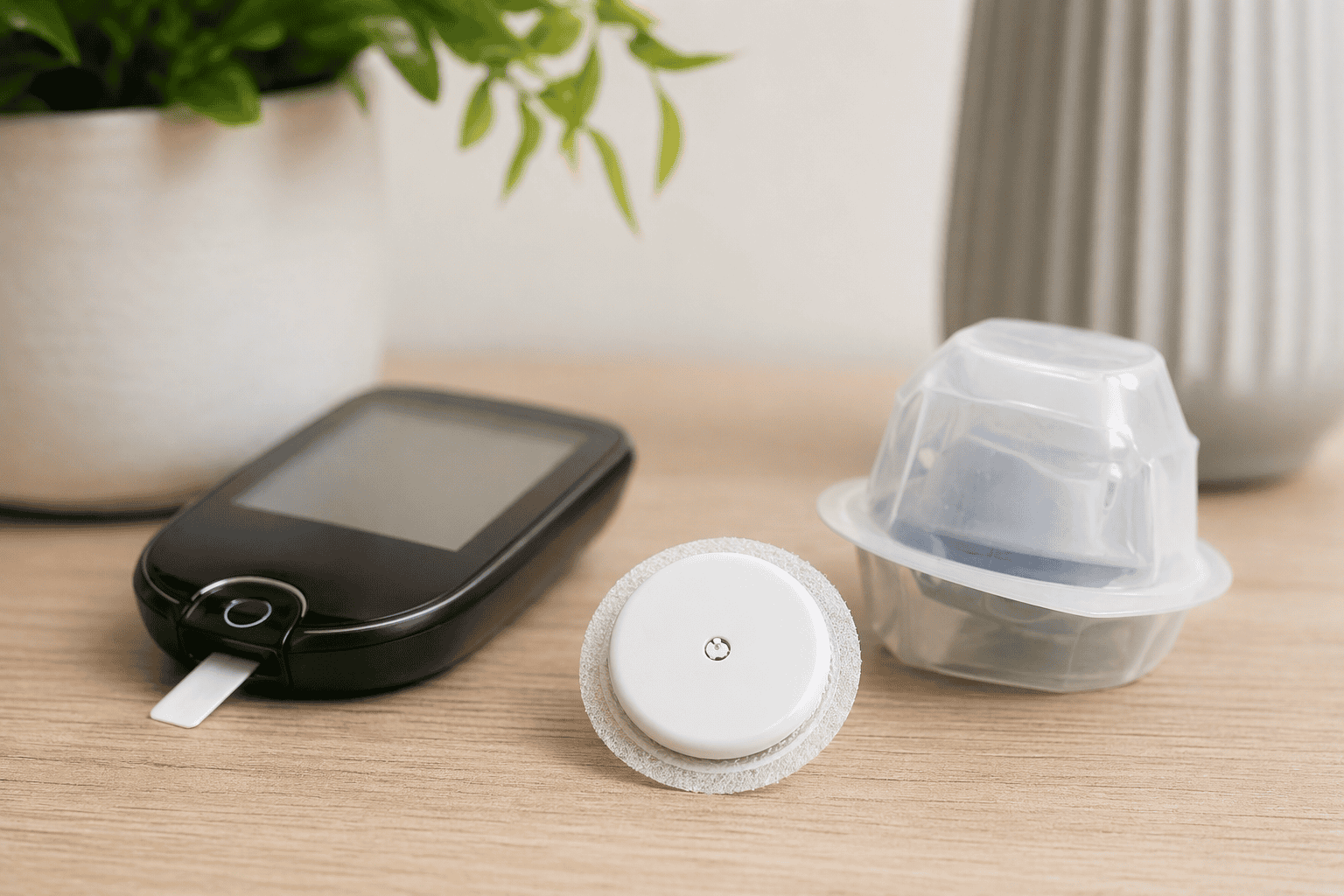
Continuous glucose monitoring (CGM) sensors are not simple consumer products. They are highly regulated medical devices, developed by major international companies, and integrated with mobile apps, algorithms, and digital platforms.
Each sensor has:
- a unique identification code
- a clearly defined production batch
- full traceability from manufacturer to end user
- strict technical and clinical validation
Because of this, creating a functional counterfeit is extremely difficult. These are not products that can simply be copied visually—they must perform accurately in real time.
Foreigner In Romania and in need of a prescription for your chronic treatment?
Contact Dr. Petrache’s Virtual Clinic for any medical issue you encounter while in Romania. Send an email to: clinica@diabet-si-nutritie.ro
Are there counterfeit sensors in Romania?
The answer must be clear and based on reality:
👉 There is no credible evidence that functional counterfeit CGM sensors are circulating within the regulated Romanian market.
This is an important distinction. Reports of “problems” with sensors are not evidence of counterfeit products.
Why these rumors appear—and who they affect
In a rapidly growing market, where demand for glucose sensors continues to rise, competition naturally becomes more intense. Unfortunately, in such environments, misleading narratives can sometimes emerge.
Claims about “counterfeit sensors” are particularly powerful because they directly target patient safety. They spread easily and are difficult for patients to verify, making them an effective way to create doubt and confusion.
The fact that such claims have been associated with distributors like Prime Medical is not coincidental—it reflects the pressures of a competitive market.
What patients often mistake for “fake sensors”
In practice, nearly all situations where patients suspect a “counterfeit” sensor can be explained by known factors:
- differences between sensor readings and fingerstick measurements
- instability during the first 24 hours
- pressure on the sensor during sleep
- misinterpretation of data without context
- normal variability between devices
These are common and well-understood phenomena. They may create the impression that the sensor is faulty, but they do not indicate that the product is counterfeit.
What defines a legitimate distributor
The distribution of medical devices follows strict rules. A legitimate distributor operates with:
- original products from verified sources
- full traceability and documentation
- transparent supply processes
- real patient support
Prime Medical operates within this framework. The products they provide are authentic, verifiable, and sourced through legitimate channels.
It is important to state this clearly:
👉 There is no evidence or indication that counterfeit sensors are distributed through Prime Medical.
The gap between perception and reality
When a patient experiences unusual readings, it is easy to assume that the product is not genuine. In reality, sensor performance is influenced by multiple factors, and no technology is perfect.
These limitations can sometimes lead to confusing readings, but they are part of normal device behavior—not proof of counterfeit products.
Confusion arises when these known limitations are misinterpreted or presented as evidence of something more serious.
Passing through Romania and need a prescription for your chronic treatment?
Contact Dr. Petrache’s Virtual Clinic for any medical issue you encounter while in Romania. Send an email to: clinica@diabet-si-nutritie.ro
The real risk for patients
The true risk does not come from regulated medical sensors distributed through legitimate channels. It comes from unvalidated products that claim to measure glucose but are not medical devices.
These are often found online and can generate completely inaccurate readings. Unlike approved CGM systems, they are not part of a controlled and verified ecosystem.
Why this clarification matters
Rumors like these do not just affect companies—they directly impact patients. They create anxiety, reduce trust, and may lead to poor decisions.
A patient who loses confidence in their sensor loses access to one of the most valuable tools for managing their health.
Tourist in Romania and in need of a prescription for your chronic treatment?
Contact Dr. Petrache’s Virtual Clinic for any medical issue you encounter while in Romania. Send an email to: clinica@diabet-si-nutritie.ro
Conclusion
Claims about counterfeit glucose sensors must be approached with caution and responsibility. Without concrete evidence, they remain just that—claims.
At this time, the reality is clear:
- there is no evidence of functional counterfeit CGM sensors circulating in Romania
- most reported issues are related to usage or interpretation
- distributors such as Prime Medical operate with authentic, verifiable products
For patients, the message is simple: rely on verified information, choose trusted sources, and avoid decisions based on rumors.
In healthcare, trust should always be built on facts—not assumptions.
Follow us on:
- FaceBook: Diabetes & Nutrition;
- YouTube: Diabetes Facts.