Injections vs bariatric surgery – what should we choose in 2026?
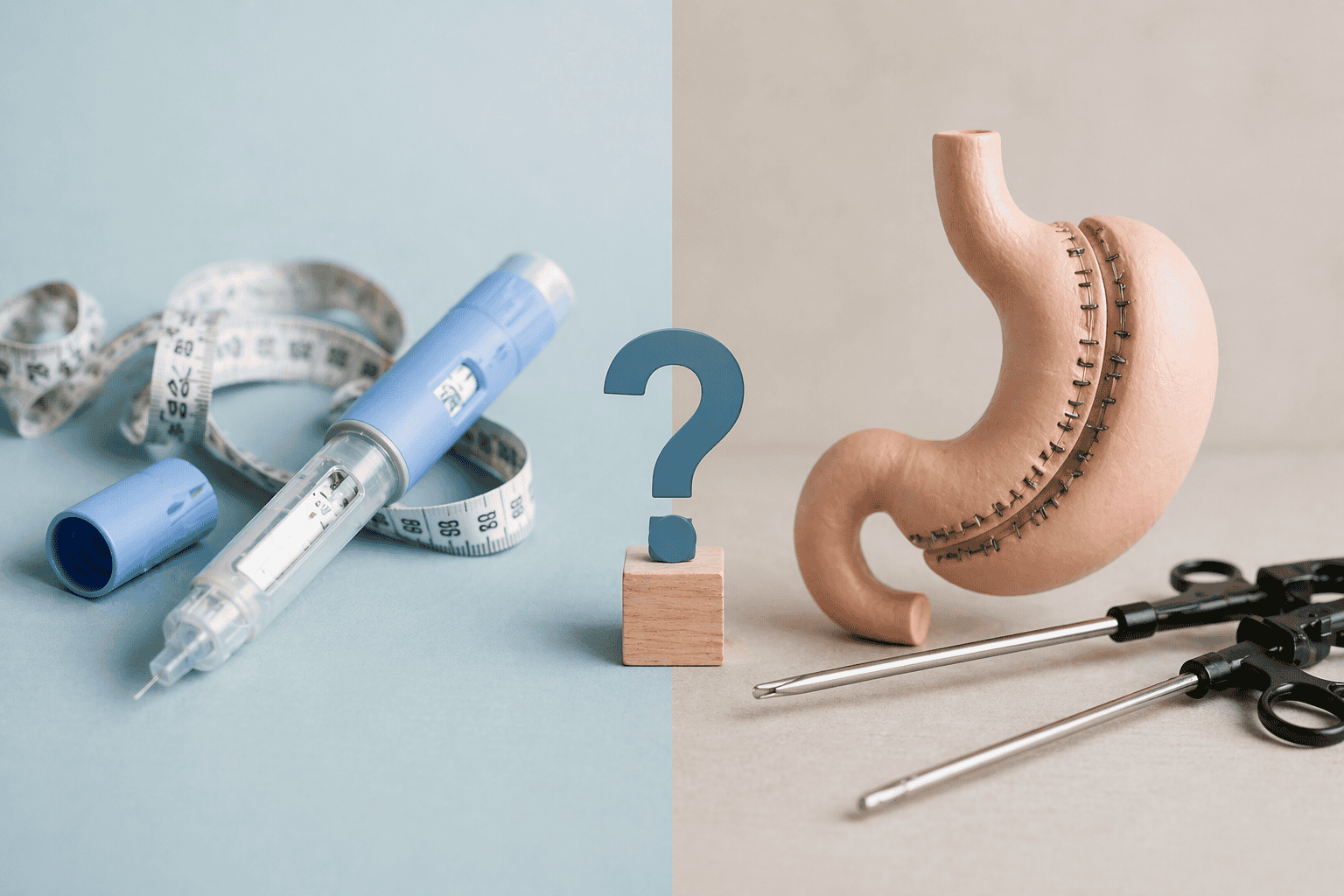
In 2026, the conversation around obesity treatment has changed dramatically. A few years ago, bariatric surgery was considered the main solution for severe cases. Today, modern injectable treatments for weight loss have completely reshaped this approach.
More and more patients are now facing the same question: should I choose surgery or an injectable treatment? The answer is no longer as straightforward as it used to be, but there are key elements that can guide this decision.

What has changed in recent years
The introduction of new injectable therapies has brought a major shift. These treatments no longer act superficially—they influence deeper mechanisms such as appetite, satiety, eating behavior, and even the emotional relationship with food.
Patients are no longer forced to constantly “fight” hunger. In many cases, appetite naturally decreases, and making healthier food choices becomes easier.
This shift has significantly reduced the need for invasive solutions for a large number of people.
Foreigner In Romania and in need of a prescription for your chronic treatment?
Contact Dr. Petrache’s Virtual Clinic for any medical issue you encounter while in Romania. Send an email to: clinica@diabet-si-nutritie.ro
What injectable treatment actually means
Modern injectable treatments for weight loss typically involve a once-weekly medication that acts on appetite regulation centers.
The effects usually include:
- reduced hunger
- earlier and stronger satiety
- decreased cravings for high-calorie foods
Weight loss tends to be gradual and, importantly, controllable. The pace can be adjusted, doses can be modified, and treatment can be stopped or changed depending on progress.
For many patients, this is a major advantage: there is no permanent anatomical change.
What bariatric surgery involves
Bariatric surgery involves anatomical changes to the digestive system. There are different types of procedures, but they all share a common goal: reducing stomach capacity and, in some cases, altering nutrient absorption.
The results can be impressive, especially in the first months. Weight loss is often rapid and sometimes dramatic. However, this speed comes at a cost.
The procedure is irreversible or difficult to reverse, involves surgical risks, and requires long-term adaptation. Patients must permanently change their eating habits, and ongoing medical monitoring is essential.
The fundamental difference
The difference between the two approaches is not just technical—it is philosophical.
Injectable treatment works with the body, influencing natural appetite regulation mechanisms. Bariatric surgery imposes change through anatomical modification.
One is flexible and reversible. The other is permanent and requires full commitment to a major intervention.
Passing through Romania and need a prescription for your chronic treatment?
Contact Dr. Petrache’s Virtual Clinic for any medical issue you encounter while in Romania. Send an email to: clinica@diabet-si-nutritie.ro
Effectiveness – how much weight can you lose?
By 2026, injectable treatments can lead to significant weight loss, in some cases comparable to surgical outcomes, especially in the medium term.
The difference is that weight loss is more gradual. You won’t see dramatic transformations in a few weeks, but the results are often easier to integrate and maintain.
Surgery provides rapid weight loss, but it does not guarantee long-term maintenance if lifestyle changes are not sustained.
Safety and control
Injectable treatments offer a key advantage: control. If side effects occur or results are not as expected, the therapy can be adjusted or stopped.
With surgery, changes are not easily reversible. That is why the decision must be made with much greater caution.
Who is each option suitable for?
Injectable treatment is currently the first choice for most patients with overweight or obesity who do not have a strict surgical indication.
Bariatric surgery remains an option in severe cases, especially when:
- significant complications are present
- other methods have failed
- metabolic risk is very high
Why more patients are choosing injections
The main reason is simple: effective results without surgery.
For many patients, avoiding an operation, maintaining control over treatment, and being able to adjust the process is decisive.
Additionally, the relationship with food often changes in a way that feels natural, not forced.
Tourist in Romania and in need of a prescription for your chronic treatment?
Contact Dr. Petrache’s Virtual Clinic for any medical issue you encounter while in Romania. Send an email to: clinica@diabet-si-nutritie.ro
Conclusion
In 2026, obesity treatment no longer automatically means surgery. Modern injectable therapies have become a real, effective, and often preferred alternative.
The decision should not be rushed or based on promises. It is a medical choice that must be tailored to each individual.
For most people, however, the direction is becoming increasingly clear: start with modern, controllable, minimally invasive solutions, and consider surgery only when it is truly necessary.
Follow us on:
- FaceBook: Diabetes & Nutrition;
- YouTube: Diabetes Facts.