NEW! The Medication That Could Surpass Wegovy?
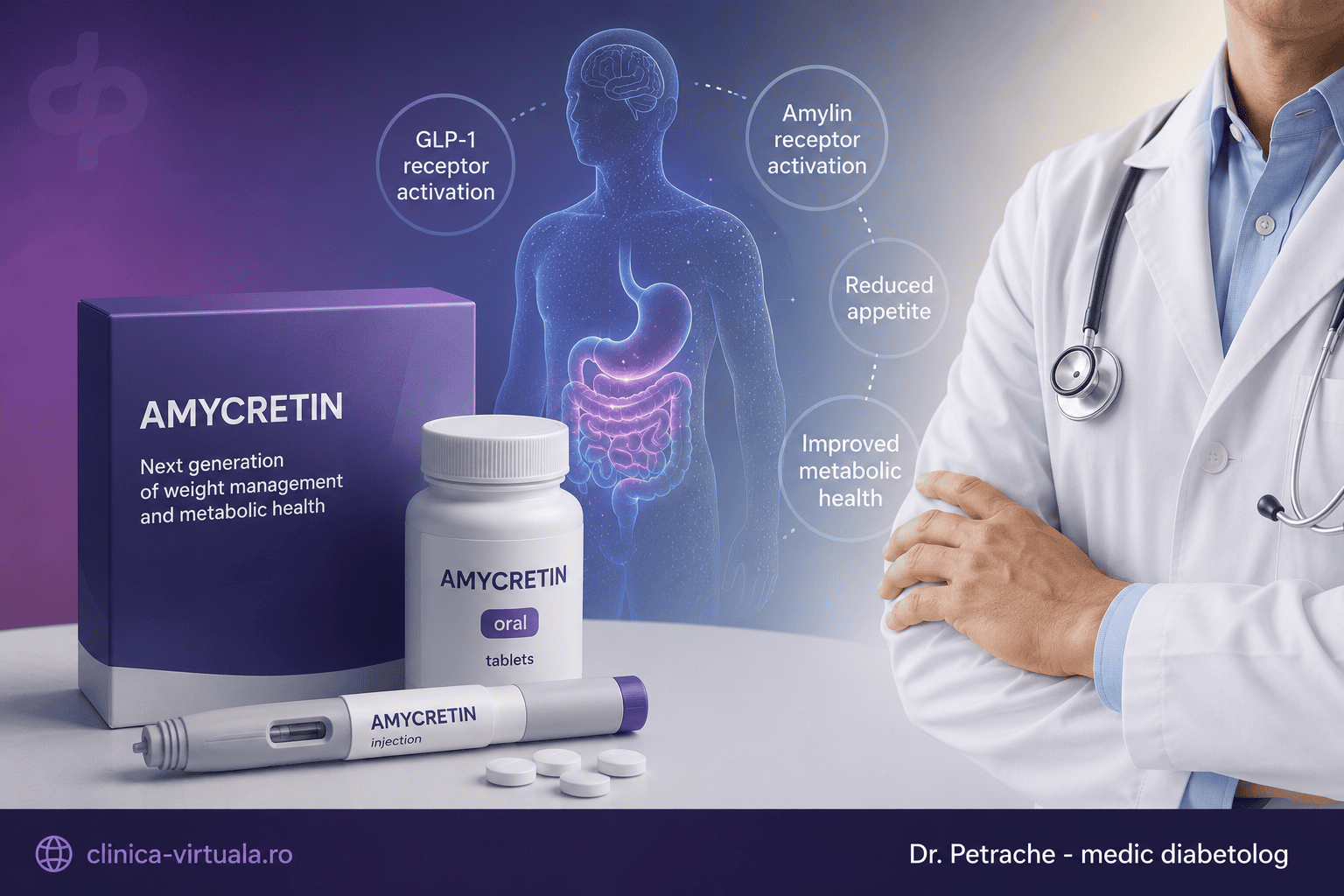

A New Era in Obesity Treatment
Just a few years ago, achieving a 5–10% reduction in body weight was considered a major therapeutic success.
Today, medicine is discussing results that are beginning to approach those achieved through bariatric surgery.
Ozempic, Wegovy, and later Mounjaro have fundamentally changed the way physicians and patients view obesity treatment. For the first time, we have therapies capable of producing levels of weight loss that were once considered nearly impossible without surgery.
Now, researchers are talking about a new molecule that may represent the next major step in this therapeutic revolution.
Its name is Amycretin.
Novo Nordisk, the company behind Wegovy and Ozempic, recently announced that the results obtained so far are promising enough for both the injectable and oral forms of Amycretin to advance into phase III clinical trials—the final major stage before potential regulatory approval.
For millions of people living with obesity, type 2 diabetes, and their associated complications, this development could be extremely significant.
Why Are Researchers Still Looking for Better Treatments?
At first glance, some people might ask:
“If Wegovy and Mounjaro work so well, why do we need another medication?”
The answer is simple.
Although current therapies have produced impressive results, many individuals still:
- Do not respond sufficiently to treatment
- Fail to achieve their desired weight loss
- Cannot tolerate gastrointestinal side effects
- Regain part of the lost weight after stopping therapy
Furthermore, obesity is an extraordinarily complex disease.
For hundreds of thousands of years, the human body evolved to protect itself against starvation. From an evolutionary perspective, famine posed a far greater threat than excess food availability.
When we lose weight, the body attempts to defend itself.
Hunger increases.
Energy expenditure decreases.
Cravings for calorie-dense foods become stronger.
Hormonal changes occur that promote weight regain.
For this reason, researchers continue searching for ways to influence multiple biological pathways simultaneously.
Amycretin is the result of exactly this strategy.
How Does Wegovy Work?
To understand Amycretin, we first need to understand Wegovy.
Wegovy contains semaglutide, a molecule that mimics the action of the hormone GLP-1.
GLP-1 is naturally released by the intestine after meals and sends signals to the brain indicating that enough food has been consumed.
This hormone:
- Reduces appetite
- Increases feelings of fullness
- Slows stomach emptying
- Improves blood glucose control
- Reduces spontaneous food intake
In practical terms, people using the medication feel less hungry and become satisfied with smaller portions.
This is one reason many patients report that, for the first time in their lives, they are no longer constantly thinking about food.
The concept of “food noise” became widely known largely because of medications like these.
But the Body Has Other Appetite-Control Systems
GLP-1 is not the only hormone involved in body weight regulation.
The human body relies on dozens of biological signals that constantly communicate between the gut, pancreas, and brain.
One of these signals is amylin.
Amylin is a hormone normally produced by pancreatic beta cells alongside insulin.
For many years, scientists believed that amylin played only a relatively minor role.
Today, we know the story is far more interesting.
Amylin influences:
- Appetite
- Satiety
- Gastric emptying
- The brain’s response to food
- Eating behavior
In essence, it is another biological system that tells the brain:
“You have eaten enough.”
What Did Researchers Discover?
At some point, scientists began asking a straightforward question.
If GLP-1 reduces hunger and amylin also reduces hunger, what would happen if both systems were activated simultaneously?
Could the effects become stronger?
Could satiety increase even further?
Could weight loss improve?
The answer appears to be yes.
This is how Amycretin was born.
What Exactly Is Amycretin?
Amycretin is an entirely new molecule.
It is not simply a combination of two existing medications.
Instead, it was specifically designed to activate both:
- GLP-1 receptors
- Amylin receptors
In other words, two separate biological systems simultaneously send signals to the brain that reduce food intake.
This approach represents one of the most sophisticated strategies developed so far in obesity medicine.
Why Is Amylin So Interesting?
Over recent years, researchers have discovered that amylin appears to affect brain regions that are different from those influenced by GLP-1.
This means the two mechanisms are not completely overlapping.
Rather than doing the same job twice, they seem to complement one another.
This is precisely why many experts believe the future of obesity treatment will not rely on a single hormone but on intelligently combining multiple biological signals.
Some specialists compare this evolution to the treatment of hypertension.
Initially, there was one medication.
Later, researchers discovered that targeting two mechanisms was more effective than targeting only one.
Today, combination therapies are common.
A similar transformation is now occurring in obesity treatment.
The Early Results Surprised the Medical Community
When the first clinical data were released, many researchers were astonished.
The results seemed almost too good to be true.
In studies involving individuals with overweight and obesity, injectable Amycretin produced weight reductions exceeding 20% of total body weight.
At certain doses, reductions approached 25%.
To understand the magnitude of these numbers, consider a person weighing 120 kilograms (265 pounds).
A 25% reduction would represent approximately 30 kilograms (66 pounds) of weight loss.
That individual could potentially reach a weight of around 90 kilograms (198 pounds) without undergoing surgery.
For obesity medicine, these results are extraordinary.
Why Do These Percentages Matter So Much?
Many people focus exclusively on the number of kilograms or pounds lost.
Physicians tend to look at things differently.
Certain biological thresholds are especially important.
A 5% reduction in body weight can improve blood glucose control.
A 10% reduction can significantly improve blood pressure and fatty liver disease.
A 15% reduction may lead to dramatic improvements in metabolic syndrome.
A reduction exceeding 20% enters a range where profound physiological changes occur throughout the body.
Inflammation decreases.
Cardiovascular risk improves.
Mobility increases.
Sleep apnea severity often declines.
In some cases, type 2 diabetes may even enter remission.
This is why the weight-loss figures reported with Amycretin have generated so much excitement.
An Even More Interesting Aspect: There Is Also an Oral Version
Perhaps the most surprising part of Novo Nordisk’s announcement is not the injectable form.
It is the oral form.
For many years, peptide-based medications were considered impossible to administer as tablets because they are typically destroyed in the digestive tract before absorption.
However, pharmaceutical technology has advanced dramatically.
Following the success of Rybelsus, researchers began exploring additional oral therapies.
The early results obtained with oral Amycretin have been strong enough to justify accelerated development.
This could open an entirely new chapter in obesity treatment.
Many patients dislike injections.
Others tolerate them poorly.
Some simply do not want to use injectable medications.
An effective oral therapy could significantly improve treatment accessibility.
What Happens Next?
One important point must be emphasized:
Amycretin is not yet available in pharmacies.
Although the results are highly encouraging, the medication must still pass through the most rigorous stage of evaluation: phase III clinical trials.
These studies will include thousands of participants and will assess not only efficacy but also long-term safety.
Only after successful completion of these trials will regulatory authorities determine whether the medication should be approved for widespread clinical use.
Amycretin vs. Wegovy – Which One Appears More Powerful?
This is probably the question most patients are asking.
Unfortunately, the scientifically correct answer is:
We do not know yet.
At present, there are no large head-to-head clinical trials directly comparing Amycretin and Wegovy under the same conditions, in the same patient populations, and over the same duration.
However, when researchers examine the available data, there is reason for optimism.
Wegovy demonstrated an average weight reduction of approximately 15% after about 68 weeks of treatment in its pivotal clinical trials.
At the time, this was considered revolutionary.
For the first time, a medication was able to achieve results approaching those seen after certain bariatric procedures.
Amycretin appears to go even further.
The currently available data suggest weight reductions exceeding 20%, and in some settings approaching 25%.
If these findings are confirmed in phase III clinical trials, we may be witnessing the arrival of a new generation of treatments capable of outperforming semaglutide.
Nevertheless, it is important not to get carried away by enthusiasm alone.
The history of medicine has shown repeatedly that impressive results observed in smaller studies must be confirmed in much larger populations.
Amycretin vs. Mounjaro
If Wegovy represents the current standard for GLP-1–based therapy, Mounjaro has already taken things one step further.
Tirzepatide, the active ingredient in Mounjaro, simultaneously stimulates GLP-1 and GIP receptors.
This dual mechanism has produced remarkable results.
In some studies, patients achieved average weight losses exceeding 20% of their body weight.
For many specialists, Mounjaro currently represents the benchmark for medical obesity treatment.
This is where Amycretin faces its greatest challenge.
The new molecule does not simply need to outperform Wegovy.
It must demonstrate that it can compete with tirzepatide.
That is why the medical community is following the upcoming studies with such interest.
If the preliminary results are confirmed, Amycretin could become one of the most effective medications ever developed for weight management.
What Happens in the Brain When We Lose Weight?
To understand why these medications are so effective, we must look beyond the stomach and intestines.
In reality, obesity is largely a disorder of energy regulation.
The brain constantly monitors:
- Available energy reserves
- Body fat stores
- Food intake
- Energy expenditure
When body weight decreases, the brain activates defense mechanisms.
Hunger increases.
Satiety decreases.
Metabolism slows down.
The body attempts to regain the lost weight.
This is one of the reasons why so many diets fail in the long term.
The problem is not a lack of willpower.
The problem is that the body actively fights against weight loss.
Medications such as Wegovy, Mounjaro, and Amycretin aim to modify these biological signals.
Instead of constantly battling hunger, the brain begins receiving stronger messages that the body has eaten enough.
For many patients, this is the most significant change.
Not simply eating less.
But no longer feeling consumed by thoughts about food throughout the day.
What Side Effects Have Been Observed?
This is one of the most important questions.
An effective medication must also be sufficiently safe for use by millions of people.
So far, Amycretin’s safety profile appears broadly similar to that seen with other modern obesity therapies.
The most commonly reported side effects have been gastrointestinal:
- Nausea
- Vomiting
- Diarrhea
- Constipation
- Abdominal discomfort
This is not surprising.
Virtually all modern therapies acting on the GLP-1 pathway produce similar effects.
In most cases, symptoms occur at the beginning of treatment or after dose escalation and tend to improve over time.
However, phase III trials involving thousands of participants will be necessary to identify any rare adverse events and to better understand long-term safety.
What Do These Results Mean for People With Type 2 Diabetes?
Although much of the public attention is focused on weight loss, the metabolic benefits are equally important.
Obesity and type 2 diabetes are deeply interconnected.
As body weight increases, insulin resistance becomes more severe.
The pancreas is forced to produce increasingly large amounts of insulin.
Over time, this mechanism begins to fail.
Weight reduction can dramatically improve this situation.
In some cases, losing 15–20% of body weight can normalize blood glucose levels and even lead to remission of type 2 diabetes.
The early Amycretin data suggest significant improvements in glycemic control, which is not surprising given the involvement of the GLP-1 receptor.
For people living with both obesity and type 2 diabetes, this could represent a major therapeutic advance.
Could It Be Used in Type 1 Diabetes?
This is another question many patients are likely to ask.
At present, there is insufficient evidence to recommend Amycretin for type 1 diabetes.
Experience with other medications in this class has shown that caution is essential.
People with type 1 diabetes have unique physiological needs and specific risks, including the potential risk of diabetic ketoacidosis under certain circumstances.
For this reason, any future studies involving type 1 diabetes will need to be conducted with exceptional care and rigor.
Why Are Oral Formulations So Important?
For many patients, the answer is straightforward.
Not everyone wants to use injections.
Even though modern injection devices are simple and relatively painless, some individuals prefer to avoid injectable therapies altogether.
An effective tablet could dramatically improve treatment accessibility.
In addition, oral medications are often easier to distribute, prescribe, and use than injectable products.
If the oral form of Amycretin confirms its effectiveness, the impact on the obesity treatment landscape could be enormous.
Are We Witnessing a Historic Shift?
Looking back, it is difficult not to notice how rapidly this field is evolving.
For decades, obesity treatment was dominated by recommendations regarding diet and physical activity.
These remain essential today.
However, our understanding of obesity has changed dramatically.
We now recognize that obesity is not simply the result of personal choices.
It is a complex disease influenced by hormones, genetics, the microbiome, the brain, environmental factors, and many other biological processes.
The emergence of medications such as Wegovy, Mounjaro, and now Amycretin reflects this new understanding.
Rather than simply telling patients to eat less and exercise more, we are beginning to target the biological mechanisms that regulate hunger and satiety.
When Could Amycretin Reach Pharmacies?
This is probably the question with the greatest practical relevance.
The answer is that it will still take time.
Although the current results are promising, the medication must complete the full clinical development process.
Phase III studies are expected to include thousands of participants and will evaluate both efficacy and long-term safety.
Once these studies are completed, regulatory agencies will carefully review the data.
Only then can approval and commercial availability be considered.
Therefore, Amycretin is not available today.
It remains, however, one of the most promising obesity medications currently in development.
Conclusion
Amycretin represents one of the most exciting developments in metabolic medicine in recent years.
By combining GLP-1 and amylin receptor activity within a single molecule, researchers aim to influence multiple pathways involved in body weight regulation simultaneously.
The preliminary results are impressive and suggest that a new generation of treatments capable of producing weight reductions exceeding 20% may soon emerge.
At the same time, it is important to balance enthusiasm with scientific rigor.
The findings must be confirmed in large clinical trials, and long-term safety must be established before the medication becomes available to patients.
If the current data are confirmed, we may be witnessing the beginning of a new chapter in the treatment of obesity and type 2 diabetes.
Just as Wegovy and Mounjaro transformed the field, Amycretin may represent the next major step forward in addressing one of the most significant health challenges of the 21st century.