Seeds in diabetes – which are best and which should be limited
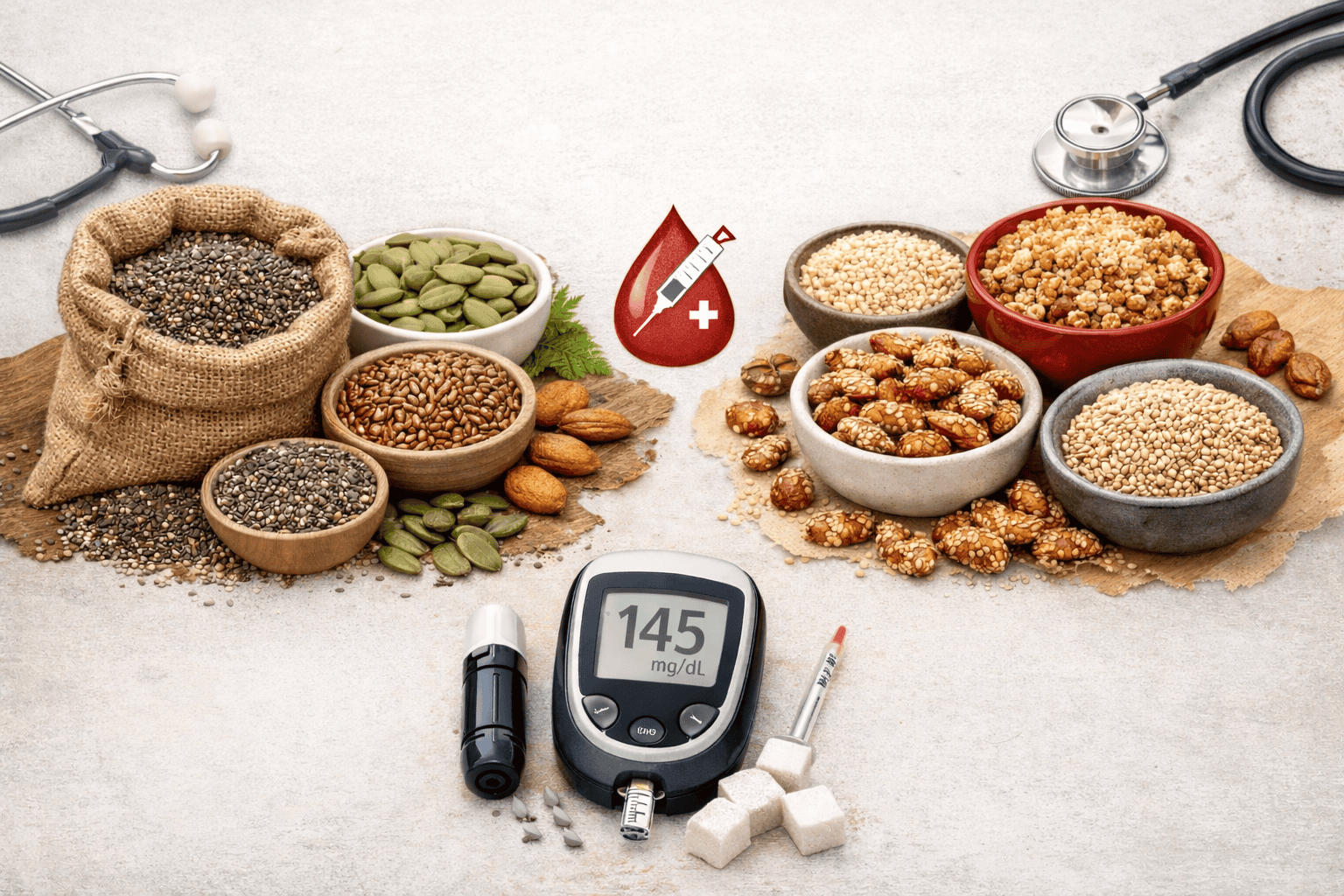
Seeds are often considered some of the healthiest foods. They are small but nutritionally dense, rich in fiber, healthy fats, vitamins, and minerals. For many people, they quickly become a regular part of daily nutrition.
In diabetes, however, even healthy foods must be approached with care.
Seeds can be an excellent ally for blood glucose control, but they can also become a hidden source of excess calories if consumed without moderation.

Foreigner In Romania and in need of a prescription for your chronic treatment?
Contact Dr. Petrache’s Virtual Clinic for any medical issue you encounter while in Romania. Send an email to: clinica@diabet-si-nutritie.ro
Why seeds are generally a good choice
Seeds have several characteristics that make them suitable for people with diabetes.
They contain small amounts of carbohydrates and are rich in fiber, which means their impact on blood glucose is generally low. In addition, they provide healthy fats that slow digestion and help stabilize blood sugar levels.
Another important benefit is their effect on satiety. Seeds can reduce appetite and help control overall calorie intake, which is essential for weight management.
The best seeds for diabetes
Certain types of seeds stand out for their metabolic benefits.
- Chia seeds are rich in soluble fiber and form a gel when mixed with liquids, slowing carbohydrate absorption.
- Flax seeds contain high amounts of fiber and omega-3 fatty acids, with beneficial effects on metabolism and inflammation.
- Pumpkin seeds are rich in magnesium, which plays a role in insulin sensitivity.
- Sunflower seeds provide vitamin E and healthy fats, but should be consumed in moderation.
- Sesame seeds contain calcium and antioxidant compounds.
These seeds can be easily integrated into a diabetes-friendly diet.
What should be limited
Even though they are healthy, seeds are not completely neutral.
The main issue is not blood glucose, but caloric density.
Seeds are rich in fats and therefore high in calories. Excessive consumption can lead to weight gain, which worsens insulin resistance.
In addition, some commercial products are:
- heavily salted
- roasted in oil
- coated with sugar or flavorings
These versions should be avoided.
Impact on blood glucose
In general, seeds have a low glycemic impact.
They do not cause rapid spikes in blood glucose and may even help stabilize it when combined with other foods.
However, this does not mean they can be consumed without limits.
In diabetes, even low glycemic foods must be portion-controlled.
Passing through Romania and need a prescription for your chronic treatment?
Contact Dr. Petrache’s Virtual Clinic for any medical issue you encounter while in Romania. Send an email to: clinica@diabet-si-nutritie.ro
How to consume them correctly
The way seeds are consumed makes the difference between benefit and excess.
They should not be eaten in large amounts on their own, without control. It is better to include them as part of balanced meals rather than as unlimited snacks.
A few simple principles can help:
- keep portions small
- combine them with yogurt, salads, or balanced meals
- avoid processed versions
- consume them regularly but in controlled amounts
What we observe in clinical practice
In clinical practice, seeds are often recommended but also frequently overestimated.
Patients who consume them in moderation benefit from better appetite control and indirectly improved glycemic stability.
On the other hand, those who consume them excessively, even in healthy forms, may struggle with weight management and metabolic control.
An important detail: seeds vs snacks
Seeds are often used as a snack.
The problem is that, because they are small and easy to eat, it is very easy to exceed the recommended portion without realizing it.
In this sense, they can become an “invisible” source of calories.
Tourist in Romania and in need of a prescription for your chronic treatment?
Contact Dr. Petrache’s Virtual Clinic for any medical issue you encounter while in Romania. Send an email to: clinica@diabet-si-nutritie.ro
Conclusion
Seeds are a valuable food in diabetes, with real benefits for metabolism and blood glucose control.
They are not a glycemic risk, but they can become a problem due to their high caloric content if consumed in excess.
Moderation, proper integration into meals, and choosing natural, unprocessed options are key.
As in many aspects of diabetes, it is not the food itself that makes the difference, but how it is used.
Follow us on:
- FaceBook: Diabetes & Nutrition;
- YouTube: Diabetes Facts.