The Skin Microbiome in Diabetes

Why Are Infections So Frequent?
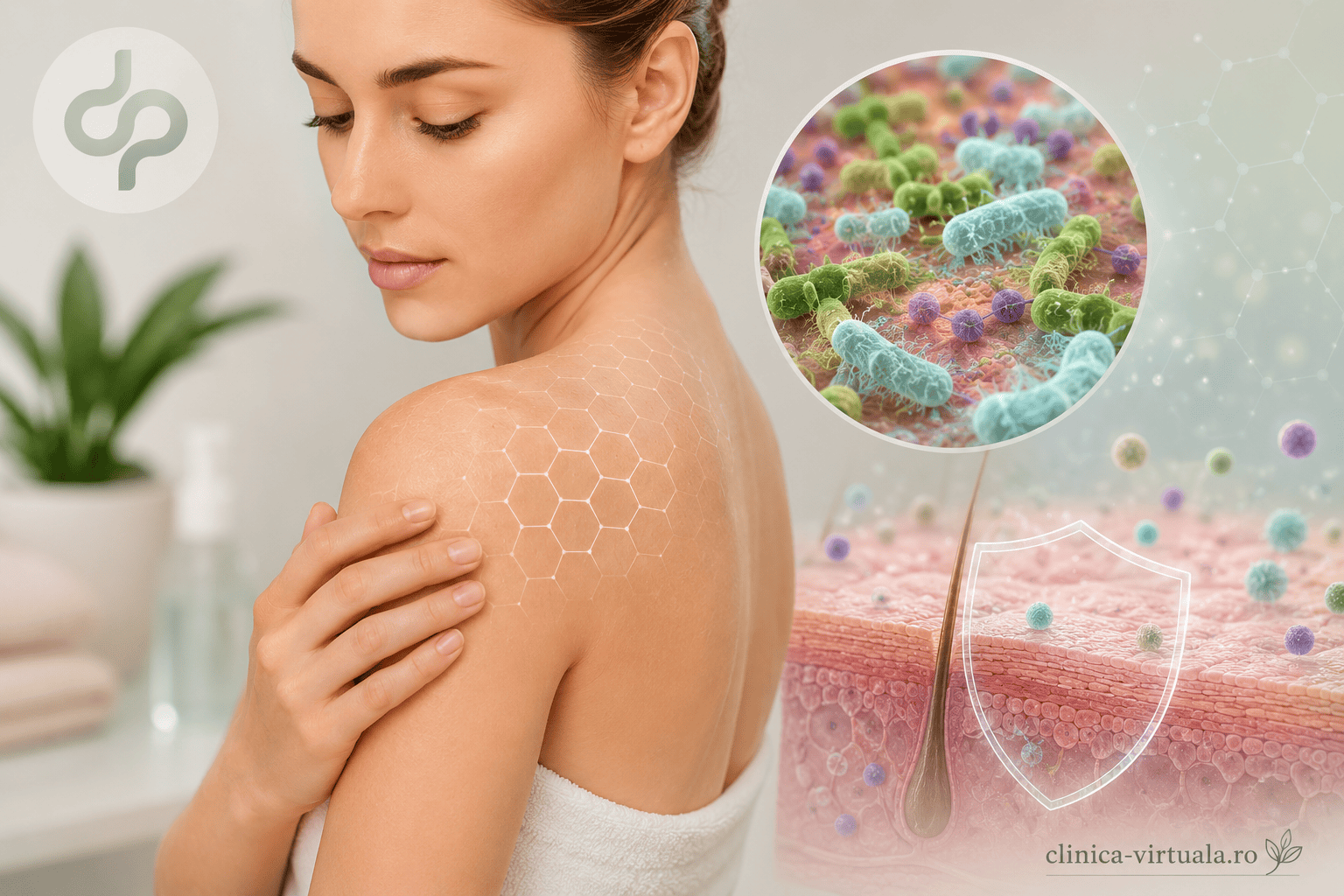
The skin is not just a “cover” surrounding the body. It is one of the most complex organs in the human body and hosts billions of bacteria, fungi, and other microorganisms that form what we call the skin microbiome. In recent years, research has increasingly shown how important this microscopic ecosystem is for our overall health.
In diabetes, this delicate balance can change dramatically. This is one of the reasons why many people experience more frequent:
- fungal infections;
- folliculitis;
- boils;
- infections between the toes;
- candidiasis;
- nail infections;
- wounds that heal slowly;
- persistent irritation.
Many patients simply feel they “have sensitive skin” or “sweat more,” but the mechanisms are far more complex. Diabetes directly affects the skin microbiome, local immunity, circulation, hydration, and even the composition of sweat.
Understanding these processes is extremely important because many skin complications in diabetes can actually be prevented.
Tourist in Romania and in need of a prescription for your chronic treatment?
Contact Dr. Petrache’s Virtual Clinic for any medical issue you encounter while in Romania. Send an email to: clinica@diabet-si-nutritie.ro
What Is the Skin Microbiome?
Every person’s skin is covered with microorganisms. These are not automatically harmful. On the contrary, under normal conditions, they play a protective role.
The skin microbiome includes:
- bacteria;
- fungi;
- viruses;
- microscopic organisms living together in a delicate balance.
Among the bacteria often considered “friendly” are species such as:
- Staphylococcus epidermidis;
- Cutibacterium;
- Corynebacterium.
These microorganisms:
- occupy space on the skin;
- consume available resources;
- prevent aggressive germs from multiplying;
- constantly communicate with the immune system.
In many ways, healthy skin functions like a living ecosystem.
What Happens in Diabetes?
In diabetes, especially when blood sugar levels are frequently elevated, this ecosystem begins to change.
There may be:
- changes in skin pH;
- increased glucose availability in tissues;
- altered sweating;
- reduced hydration;
- damage to the skin barrier;
- weaker local immune responses.
All these factors create an environment where aggressive microorganisms can grow more easily.
At the same time, protective bacteria may decrease in number or lose efficiency.
The result is an imbalanced microbiome, a phenomenon known as skin dysbiosis.
Why Does Infection “Love” High Blood Sugar?
Excess glucose directly affects microorganisms.
Many bacteria and fungi use glucose as an energy source. When blood sugar is high:
- sweat may contain more glucose;
- skin secretions change;
- tissues become more vulnerable.
As a result, microorganisms such as Candida can multiply much more easily.
This is one of the reasons why people with diabetes frequently develop:
- candidiasis;
- skin fold infections;
- nail fungal infections;
- persistent irritation.
Candida and Diabetes
Candida is a fungus normally present in the human body. Problems appear when it begins multiplying excessively.
In diabetes, the risk of candidiasis increases because of:
- elevated blood sugar;
- local moisture;
- impaired immunity;
- repeated antibiotic use;
- obesity;
- excessive sweating.
Candidiasis may appear:
- under the breasts;
- in the groin area;
- between the toes;
- in the genital area;
- inside the mouth.
Sometimes patients enter a vicious cycle:
infection increases inflammation → inflammation destabilizes blood sugar → elevated blood sugar further promotes infection.
Why Does the Skin Become Drier?
Many people with diabetes notice:
- very dry skin;
- flaking;
- itching;
- cracks.
This is not merely a cosmetic issue.
Diabetes is frequently associated with:
- cellular dehydration;
- sweat gland dysfunction;
- autonomic nerve damage;
- reduced natural protective secretions.
Dry skin develops microcracks more easily. These tiny “entry points” allow bacteria and fungi to penetrate deeper into tissues.
As a result, patients may develop:
- cellulitis;
- erysipelas;
- painful infections;
- chronic wounds.
The Role of Circulation
Diabetes affects small blood vessels even in relatively early stages.
Poor circulation means:
- less oxygen;
- fewer nutrients;
- slower healing;
- reduced immune defense.
This is why even a small wound can become problematic.
In the feet, this issue becomes extremely important. Over time, neuropathy and vascular damage may transform seemingly harmless lesions into severe ulcers.
Foreigner In Romania and in need of a prescription for your chronic treatment?
Contact Dr. Petrache’s Virtual Clinic for any medical issue you encounter while in Romania. Send an email to: clinica@diabet-si-nutritie.ro
The Immune System in Diabetes
People with diabetes do not automatically have a “weak immune system” in the traditional sense, but immune function may become less effective.
High blood sugar affects:
- neutrophils;
- macrophages;
- immune cell migration;
- the ability to destroy bacteria.
The body responds less efficiently to infections, and sometimes the usual warning signs may initially be less obvious.
This is one reason why infections can progress rapidly if not treated promptly.
Folliculitis and Boils
Many people with diabetes repeatedly experience:
- painful pimples;
- folliculitis;
- boils;
- abscesses.
In many cases, Staphylococcus aureus is involved.
An imbalanced microbiome, sweating, and elevated blood sugar create ideal conditions for bacterial growth.
Commonly affected areas include:
- the neck;
- armpits;
- buttocks;
- thighs;
- groin area.
Sometimes these infections become recurrent and require both dermatological and metabolic evaluation.
Diabetic Foot and the Microbiome
Few complications demonstrate the relationship between diabetes and the microbiome better than diabetic foot disease.
Diabetic ulcers often contain an extremely complex bacterial ecosystem.
It is usually not just “one bacterium,” but entire bacterial communities that:
- communicate with each other;
- form biofilms;
- become resistant to treatment.
A biofilm is a protective structure created by bacteria that makes them much harder to eliminate.
This is one reason why some wounds:
- persist for months;
- respond poorly to antibiotics;
- frequently recur.
Why Do Infections Appear Between the Toes?
Between the toes there is:
- warmth;
- moisture;
- friction;
- reduced ventilation.
In diabetes, these conditions become even more favorable for fungal and bacterial growth.
Infections may start very subtly:
- whitish skin;
- small cracks;
- itching;
- flaking.
Many people ignore these symptoms until they develop:
- pain;
- unpleasant odor;
- discharge;
- significant inflammation.
Antibiotics and the Skin Microbiome
Antibiotics can save lives, but frequent or improper use may damage the microbiome.
After repeated treatments:
- protective bacteria may decrease;
- fungi such as Candida may overgrow;
- resistant germs may emerge.
This is particularly important in diabetes because many patients receive antibiotics repeatedly for skin or urinary infections.
For this reason, treatment should not simply mean “another antibiotic,” but also:
- better blood sugar control;
- proper skin care;
- reducing contributing factors;
- correct wound management.
Sweating and Diabetes
Autonomic neuropathy may alter sweating patterns.
Some people sweat excessively in certain areas, while others develop extremely dry skin.
Both situations can affect the microbiome.
Excessive sweating promotes:
- moisture;
- fungal growth;
- irritation.
Very dry skin promotes:
- cracks;
- inflammation;
- bacterial penetration.
What Role Do Cosmetic Products Play?
Sometimes excessive attempts to “disinfect” the skin can actually worsen the problem.
Harsh products:
- destroy protective lipids;
- damage the microbiome;
- increase irritation;
- worsen dryness.
In diabetes, gentle skin care is essential:
- products without aggressive alcohol;
- regular moisturization;
- avoiding excessive exfoliation;
- preserving the skin barrier.
Passing through Romania and need a prescription for your chronic treatment?
Contact Dr. Petrache’s Virtual Clinic for any medical issue you encounter while in Romania. Send an email to: clinica@diabet-si-nutritie.ro
The Microbiome and Obesity
In many people, diabetes coexists with obesity.
Skin folds:
- retain moisture;
- increase local temperature;
- promote friction;
- alter the microbiome.
As a result, patients frequently develop:
- intertrigo;
- candidiasis;
- persistent irritation.
Weight reduction can significantly improve these problems.
Nutrition and the Skin Microbiome
More and more studies suggest that nutrition indirectly influences the skin microbiome through:
- the gut microbiome;
- inflammation;
- blood sugar;
- immune status.
Diets rich in:
- ultra-processed foods;
- sugar;
- sweetened beverages;
- caloric excess;
may promote systemic inflammation.
In contrast, diets rich in:
- vegetables;
- fiber;
- fish;
- fruits;
- healthy fats;
appear to support a healthier metabolic environment.
Sleep and Stress
Chronic stress and poor sleep affect:
- cortisol;
- inflammation;
- blood sugar;
- the immune system.
As a result, the skin microbiome may also be indirectly affected.
Many patients notice that during stressful periods:
- infections become more frequent;
- wounds heal more slowly;
- the skin becomes more irritated.
How Can the Risk of Infections Be Reduced?
Blood sugar control remains the most important factor.
The more stable glucose levels are:
- the less disrupted the microbiome becomes;
- the better the immune system functions;
- the more efficiently the skin regenerates.
In addition to glucose control, the following are extremely important:
- skin hydration;
- careful drying of skin folds;
- changing damp clothes quickly;
- appropriate footwear;
- rapid treatment of skin lesions;
- avoiding excessive self-medication with antibiotics.
When Should You See a Doctor?
Sometimes seemingly minor infections can progress rapidly in diabetes.
Medical evaluation is important if there is:
- extensive redness;
- discharge;
- significant pain;
- fever;
- wounds that do not heal;
- unpleasant odor;
- ulcers;
- recurrent infections.
The Future: Probiotics for the Skin?
Microbiome research is evolving rapidly.
There are already studies exploring:
- topical probiotics;
- bacterial transplantation;
- therapies that modify the microbiome;
- microbiome-friendly dermatologic products.
In the future, treating infections in diabetes may involve not only destroying aggressive bacteria, but also restoring the skin’s protective ecosystem.
Foreigner In Romania and in need of a prescription for your chronic treatment?
Contact Dr. Petrache’s Virtual Clinic for any medical issue you encounter while in Romania. Send an email to: clinica@diabet-si-nutritie.ro
Conclusion
Frequent infections in diabetes do not occur by chance. They result from a complex interaction between:
- blood sugar;
- inflammation;
- immunity;
- circulation;
- skin barrier damage;
- microbiome imbalance.
The skin is a living ecosystem, and diabetes can profoundly destabilize this balance.
Fortunately, many problems can be prevented through:
- better glucose control;
- proper skin care;
- balanced nutrition;
- rapid treatment of lesions;
- regular medical monitoring.
Understanding the skin microbiome changes the way we look at skin complications in diabetes. It is not only about “germs” or “infections,” but about the entire balance between the human body and the microscopic world permanently living on our skin.
Follow us on:
- FaceBook: Diabetes & Nutrition;
- YouTube: Diabetes Facts.