Oats in diabetes – friend or foe?
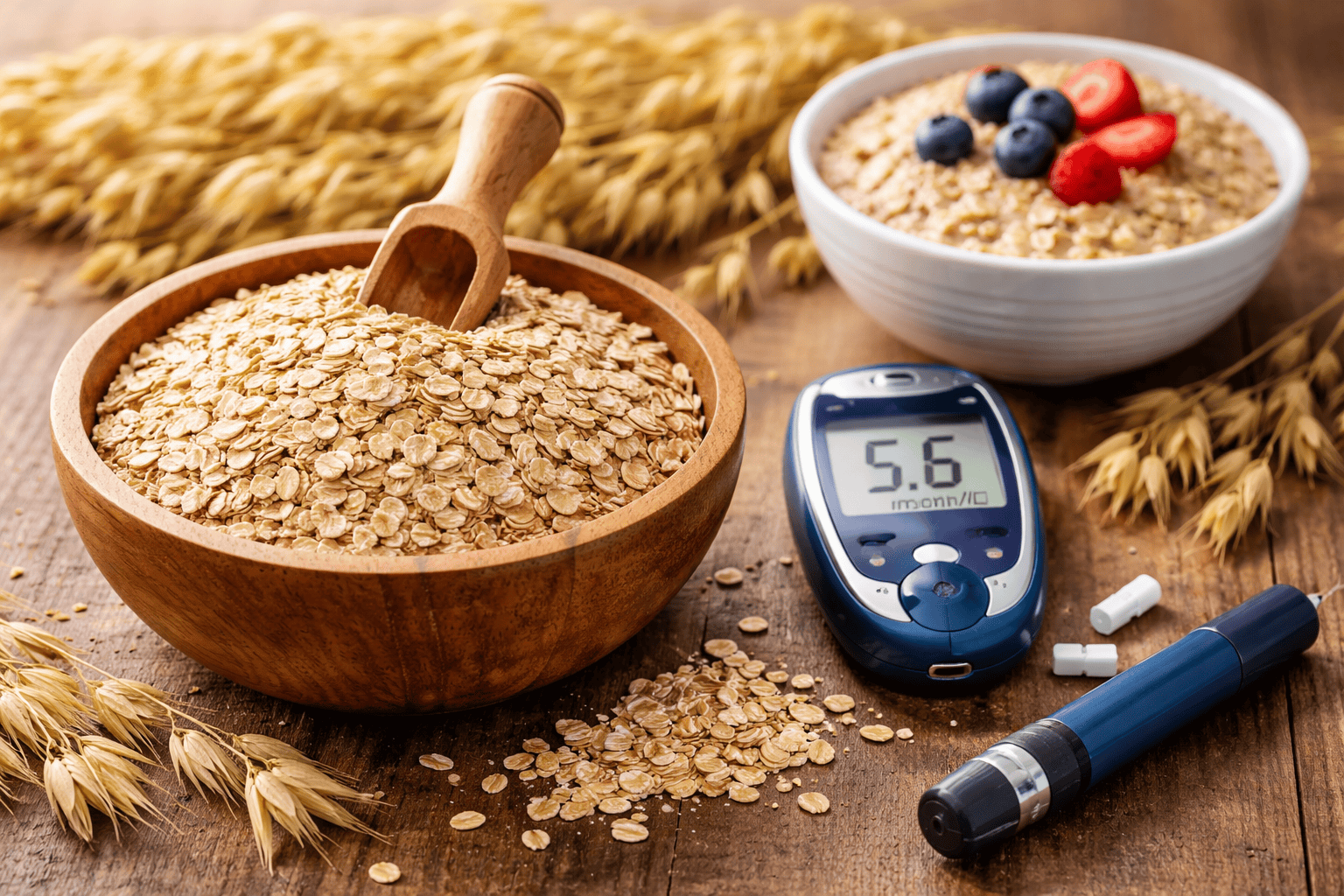
Oats are one of the most commonly recommended foods in healthy nutrition. They are often associated with balanced breakfasts, heart health, and good digestion. In many dietary guidelines, oats are considered an ideal choice.
But when it comes to diabetes, the question becomes more nuanced: are oats truly a friend, or can they become a problem?
The correct answer is not absolute. Oats can be a valuable ally or a source of glycemic imbalance, depending on the type, portion size, and how they are consumed.

Foreigner In Romania and in need of a prescription for your chronic treatment?
Contact Dr. Petrache’s Virtual Clinic for any medical issue you encounter while in Romania. Send an email to: clinica@diabet-si-nutritie.ro
What oats actually are
Oats are a whole grain, rich in fiber, vitamins, and minerals. Unlike refined products, they retain their natural structure, which significantly influences how they are digested and absorbed.
A key component of oats is beta-glucan, a type of soluble fiber with well-documented metabolic benefits.
This fiber plays a major role in how oats affect the body.
Impact on blood glucose
Oats contain carbohydrates, so they do affect blood glucose. However, compared to highly processed cereals, their effect can be more gradual.
Beta-glucan slows down carbohydrate absorption and reduces the speed at which glucose enters the bloodstream. This can lead to more stable and controlled increases in blood sugar.
That said, not all types of oats behave the same way.
The type of oats makes a difference
The degree of processing is essential.
There are significant differences between:
- steel-cut oats
- rolled oats
- instant oats
The more processed the oats, the faster they are digested and the higher the glycemic response.
Instant oats, although very convenient, are also the most problematic from a blood sugar perspective.
Benefits of oats in diabetes
When consumed properly, oats can offer real benefits.
They help stabilize blood glucose by slowing carbohydrate absorption. They increase satiety, which may reduce overall calorie intake. They also have beneficial effects on cholesterol, particularly by lowering LDL cholesterol.
Additionally, oats support digestive health and the gut microbiome, an increasingly important factor in metabolic balance.
Where the problem appears
Despite their benefits, oats are often consumed incorrectly.
Common situations I frequently see include:
- portions that are too large
- combinations with honey, sweet fruits, or sugar
- reliance on instant oats
- consumption without protein or healthy fats
In these situations, even a healthy food can lead to significant glucose spikes.
Passing through Romania and need a prescription for your chronic treatment?
Contact Dr. Petrache’s Virtual Clinic for any medical issue you encounter while in Romania. Send an email to: clinica@diabet-si-nutritie.ro
How to consume oats correctly
For oats to be beneficial, they must be integrated thoughtfully into the diet.
They should not be eaten alone, but combined with protein and healthy fats. This helps slow digestion and stabilize the glycemic response.
Portion size is essential. Even healthy foods can become problematic when consumed in excess.
Preparation also matters. Less processed oats, prepared simply, are preferable to instant or flavored versions.
What we observe in clinical practice
In real life, oats can produce different responses depending on the individual.
Some patients tolerate them very well and experience stable glucose levels. Others notice significant spikes, especially when consuming instant oats or sweet combinations.
This variability highlights the importance of individualized nutrition in diabetes.
Oats – friend or foe?
Oats are neither a perfect friend nor a true enemy.
They are a valuable food, but one that must be understood and used correctly.
They can be an ally when:
- minimally processed forms are chosen
- portions are moderate
- they are combined appropriately with other foods
They can become problematic when consumed in excess or in highly processed forms.
Tourist in Romania and in need of a prescription for your chronic treatment?
Contact Dr. Petrache’s Virtual Clinic for any medical issue you encounter while in Romania. Send an email to: clinica@diabet-si-nutritie.ro
Conclusion
Oats can be part of a diabetes-friendly diet, but they are not a “free” food.
Balance, proper selection, and monitoring of blood glucose response are key.
In diabetes, there are no universal solutions—only informed choices tailored to each individual.
Follow us on:
- FaceBook: Diabetes & Nutrition;
- YouTube: Diabetes Facts.