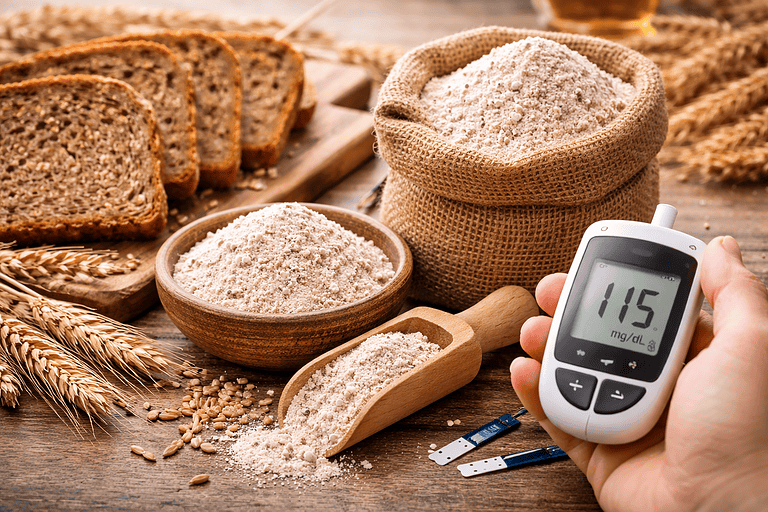
Don’t Eat Bread with …


Bread Is Not Always the Problem
In recent years, bread has almost become the “official enemy” of modern nutrition. Many people believe that any issue related to weight, blood sugar, or energy automatically comes from bread.
Reality, however, is more complex.
Very often, the real issue is not bread itself, but the combinations in which it is consumed and the overall size of the meal.
Bread can absolutely be part of a balanced diet. However, certain food combinations may turn a simple meal into one that is:
very calorie-dense, poorly satiating, and sometimes difficult to manage metabolically.
Tourist in Romania and in need of a prescription for your chronic treatment?
Contact Dr. Petrache’s Virtual Clinic for any medical issue you encounter while in Romania. Send an email to: clinica@diabet-si-nutritie.ro
Bread with Other Major Sources of Starch
One of the most common situations is combining bread with other large amounts of starchy carbohydrates in the same meal.
For example:
bread with fries, bread with pasta, bread alongside pizza, or bread consumed together with pastries.
The problem is not that these foods are “toxic,” but that the meal may become extremely calorie-dense without necessarily providing long-lasting fullness.
Sometimes people consume:
potatoes, bread, and sugary drinks in the same meal without realizing how much the total energy intake increases.
Bread and Ultra-Processed Foods
Another frequent combination is bread together with:
chips, salty snacks, fast food, or very high-calorie sauces.
This often creates an interesting effect:
the foods become very easy to overeat.
The crunchy texture, salt, fat, and soft bread create combinations that are highly rewarding for the brain.
As a result, people may continue eating even after their actual energy needs have already been exceeded.
Bread with Highly Processed Meats
Many people eat daily:
sandwiches with salami, sausages, processed deli meats, or other ultra-processed products.
In this situation, bread is not the only issue.
The meal may become rich in:
salt, heavily processed fats, additives, and concentrated calories.
In addition, many of these combinations contain very little fiber and may provide only short-term fullness.
This is why hunger may return quickly after the meal.
Bread and Sugary Drinks
This is probably one of the most underestimated combinations.
Many people consume:
sandwiches, pretzels, bakery products, or fast food together with sugary beverages.
At that point, the meal begins to contain:
carbohydrates from bread, liquid sugar, and often many extra calories that provide very little real satiety.
Liquid calories are often “invisible” to the brain compared to solid foods.
Foreigner In Romania and in need of a prescription for your chronic treatment?
Contact Dr. Petrache’s Virtual Clinic for any medical issue you encounter while in Romania. Send an email to: clinica@diabet-si-nutritie.ro
Bread Eaten Too Quickly
Sometimes the issue is not only what you eat with bread, but also how you eat it.
Soft, highly processed bread products can often be consumed extremely quickly.
When meals are eaten too fast:
satiety appears more slowly, and the brain may receive the “I’m full” signal too late.
What Combinations May Be More Balanced
In many situations, bread is tolerated better when the meal also contains:
protein, fiber, and less processed foods.
For example, combinations with:
eggs, yogurt, fish, vegetables, cheese, or hummus may provide better satiety than meals based almost entirely on starches and ultra-processed foods.
This does not mean there are “perfect” combinations — only that some meals tend to be more balanced than others.
Quantity Matters a Lot
Another important point is that people often talk about bread as if there are only two possibilities:
“good” or “bad.”
In reality, quantity changes everything.
There is a huge difference between:
one slice of bread alongside a balanced meal and eating bakery products repeatedly throughout the day.
White Bread versus Whole Grain Bread
This discussion is also more nuanced than it appears online.
Whole grain bread may provide:
more fiber and sometimes better satiety.
However, just because a product is labeled “fitness,” “whole grain,” or “multigrain” does not automatically make it an excellent nutritional choice.
Sometimes food marketing creates a healthy image even for highly processed products.
The Modern Problem Is Not Just Bread
Very often, the real issue is the combination of:
sedentary lifestyle, large portions, constant snacking, lack of fiber, and excessive ultra-processed foods.
Bread ends up being blamed for a much more complex eating pattern.
In reality, many people can include bread in a balanced diet without major problems.
Why Some People Feel Better When They Reduce Bread
This happens frequently because once people reduce bread, they also automatically reduce:
fast food, pastries, snacks, highly calorie-dense meals, and impulsive eating habits.
In other words, the benefit often comes not only from reducing bread itself, but from improving the overall dietary pattern.
Passing through Romania and need a prescription for your chronic treatment?
Contact Dr. Petrache’s Virtual Clinic for any medical issue you encounter while in Romania. Send an email to: clinica@diabet-si-nutritie.ro
Conclusion
Bread should not automatically be demonized.
However, certain food combinations may turn a simple meal into one that is highly caloric, poorly satiating, and metabolically difficult to manage.
Very often, what matters most is:
what you eat bread with, how much you eat, and how processed the overall meal is.
In nutrition, there is rarely a single “villain.” Most of the time, the overall context is what truly makes the difference.
Follow us on:
- FaceBook: Diabetes & Nutrition;
- YouTube: Diabetes Facts.