Is It Better to Take Vitamin D Together with Vitamin K?
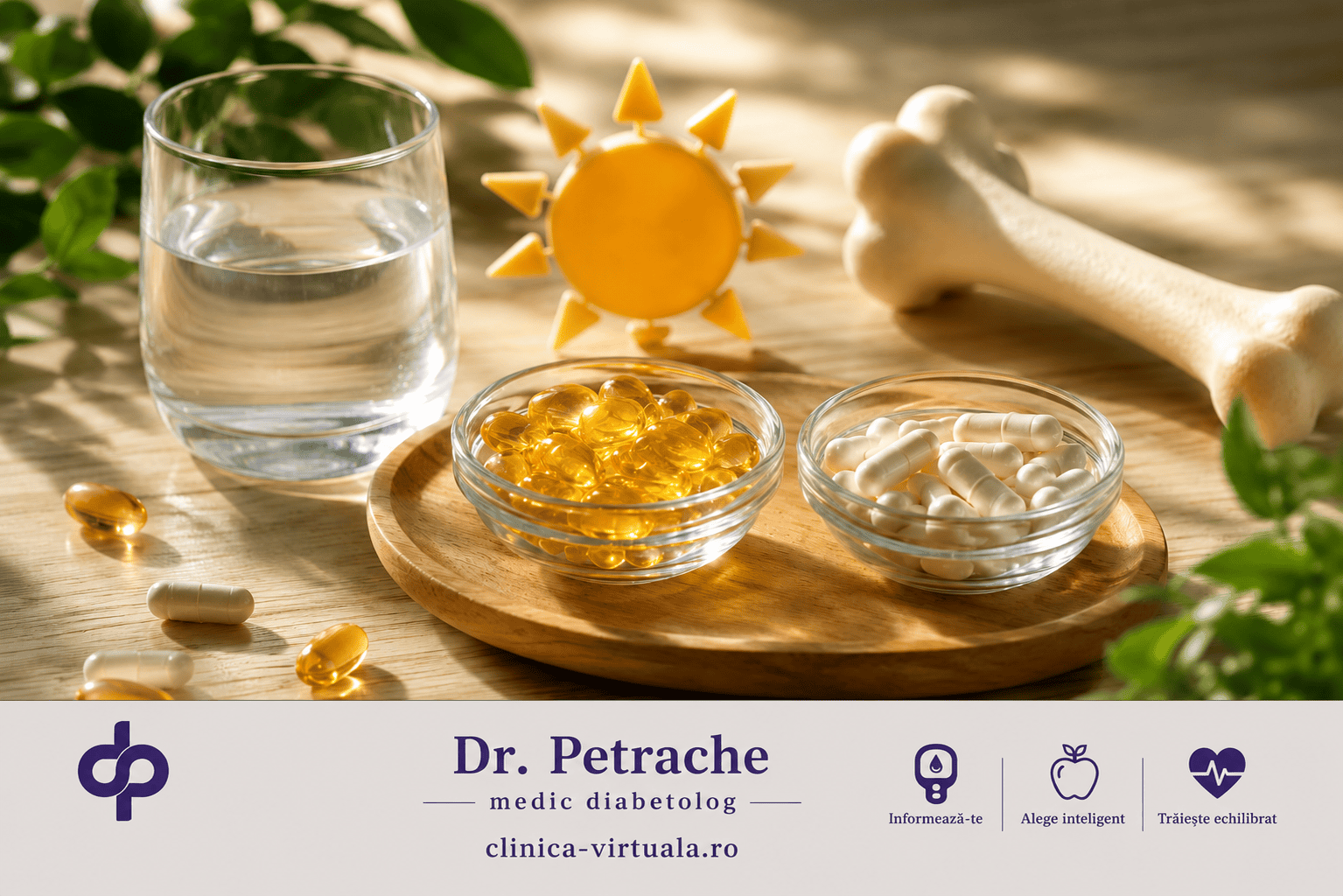
In recent years, supplements containing vitamin D and vitamin K2 have become increasingly popular. Many advertisements claim that vitamin K „directs calcium into the bones and prevents it from being deposited in the arteries,” suggesting that these two vitamins should always be taken together.
But how accurate are these claims? Does everyone taking vitamin D also need vitamin K? Or is this combination driven more by marketing than by solid scientific evidence?
Let’s take a closer look at what current research and international guidelines actually say.

Tourist in Romania and in need of a prescription for your chronic treatment?
Contact Dr. Petrache’s Virtual Clinic for any medical issue you encounter while in Romania. Send an email to: clinica@diabet-si-nutritie.ro
What Is Vitamin D and Why Is It So Important?
Vitamin D is a fat-soluble vitamin that plays a vital role in maintaining overall health. It is produced in the skin when exposed to sunlight and can also be obtained, in smaller amounts, through certain foods.
Its main functions include:
- Promoting the absorption of calcium and phosphorus from the intestine.
- Supporting healthy bones and teeth.
- Contributing to normal muscle function.
- Supporting the immune system.
- Participating in normal cell growth and differentiation.
Vitamin D deficiency is extremely common worldwide, particularly during the winter months, in older adults, people who spend little time outdoors, and individuals living with obesity.
A significant deficiency may lead to:
- Osteomalacia in adults.
- Rickets in children.
- Worsening osteoporosis.
- Increased risk of fractures.
For these reasons, vitamin D supplementation is recommended in many situations, provided it is taken at the appropriate dose recommended by a healthcare professional.
What Is Vitamin K?
Vitamin K is also a fat-soluble vitamin, but it serves different biological functions than vitamin D.
There are two main forms of vitamin K.
Vitamin K1 (Phylloquinone)
Vitamin K1 is primarily found in:
- Spinach.
- Broccoli.
- Cabbage.
- Lettuce.
- Kale.
- Other green leafy vegetables.
Its primary role is supporting normal blood clotting.
Vitamin K2 (Menaquinone)
Vitamin K2 has attracted growing scientific interest in recent years because of its potential role in bone and cardiovascular health.
It is naturally found in smaller amounts in:
- Aged cheeses.
- Liver.
- Egg yolks.
- Certain fermented foods.
Most dietary supplements contain vitamin K2 in the MK-7 (menaquinone-7) form because it has a longer half-life and maintains more stable blood levels.
Why Are Vitamin D and Vitamin K Combined?
The rationale behind combining these two vitamins lies in calcium metabolism.
Vitamin D increases calcium absorption from the intestine.
Vitamin K activates several vitamin K-dependent proteins, including:
- Osteocalcin, which plays an important role in bone mineralization.
- Matrix Gla Protein (MGP), a protein involved in inhibiting calcium deposition within blood vessels.
Based on these biological mechanisms, researchers proposed that taking vitamins D and K together might improve calcium utilization and provide additional health benefits.
What Are the Potential Benefits?
In theory, combining vitamin D and vitamin K could:
- Improve bone mineralization.
- Slow bone loss.
- Reduce fracture risk.
- Limit arterial calcification.
- Support cardiovascular health.
These hypotheses have led to numerous clinical studies over the past decade.
What Does the Scientific Evidence Show?
This is where things become more interesting.
Although the biological mechanisms are compelling, clinical studies have produced far less impressive results than many advertisements suggest.
Some studies have reported:
- Improvements in certain markers of bone metabolism.
- Modest increases in bone mineral density in selected populations.
- Favorable changes in biomarkers related to vascular calcification.
However, other studies have failed to confirm these findings.
Most importantly, there is currently no strong evidence showing that taking vitamin K together with vitamin D significantly reduces fractures or lowers the risk of heart attack or stroke in the general population.
For this reason, major international clinical guidelines do not recommend routine vitamin K supplementation for everyone taking vitamin D.
Foreigner In Romania and in need of a prescription for your chronic treatment?
Contact Dr. Petrache’s Virtual Clinic for any medical issue you encounter while in Romania. Send an email to: clinica@diabet-si-nutritie.ro
Does Vitamin D Cause Calcium to Build Up in the Arteries?
This is one of the most common claims circulating on social media.
The reality is much more complex.
When vitamin D is taken at recommended doses, there is no convincing evidence that it causes arterial calcification in healthy individuals.
Vascular calcification is influenced by many factors, including:
- Aging.
- Diabetes mellitus.
- Chronic kidney disease.
- Hypertension.
- Smoking.
- Chronic inflammation.
- Disorders of calcium and phosphate metabolism.
Therefore, the statement that „taking vitamin D without vitamin K causes calcium to accumulate in your arteries” is not supported by current scientific evidence.
Who May Benefit from Vitamin K2 Supplementation?
There are certain situations in which vitamin K2 supplementation may be considered, although decisions should always be individualized.
These include people with:
- Osteoporosis.
- Increased fracture risk.
- Certain disorders affecting bone metabolism.
- Very low dietary vitamin K intake.
Even in these cases, supplementation should be discussed with a healthcare professional.
Who Should Not Take Vitamin K Without Medical Advice?
Vitamin K can interfere with anticoagulant medications.
People taking:
- Warfarin.
- Acenocoumarol.
should not start vitamin K supplements without consulting their physician, as vitamin K may reduce the effectiveness of these medications and alter INR values.
If I Eat a Healthy Diet, Do I Need Vitamin K Supplements?
In most cases, the answer is no.
A balanced diet rich in:
- Spinach.
- Broccoli.
- Cabbage.
- Lettuce.
- Parsley.
- Green leafy vegetables.
- Fermented foods.
provides sufficient vitamin K for most healthy adults.
Severe vitamin K deficiency is relatively uncommon.
What If I Take High Doses of Vitamin D?
Some people take 4,000 IU, 5,000 IU, or even higher doses of vitamin D.
Even in these situations, there is no general recommendation that vitamin K must automatically be added.
More important than combining supplements is ensuring that vitamin D therapy is:
- Medically indicated.
- Based on measured vitamin D levels whenever appropriate.
- Properly monitored, especially during long-term high-dose supplementation.
How Should I Choose a Supplement?
If your healthcare provider recommends vitamin D alone, there is currently no evidence that you must purchase a supplement containing vitamin K as well.
If there is a clear indication for both vitamins, you may choose either a combined product or separate supplements.
The most important factor remains the appropriate dosage, not the number of ingredients listed on the label.
Passing through Romania and need a prescription for your chronic treatment?
Contact Dr. Petrache’s Virtual Clinic for any medical issue you encounter while in Romania. Send an email to: clinica@diabet-si-nutritie.ro
Conclusion
Vitamin D and vitamin K play different yet complementary roles in bone metabolism.
From a biological perspective, combining them makes sense, and laboratory research suggests they may work together in calcium regulation.
However, current clinical evidence does not support the routine use of vitamin K supplements in everyone taking vitamin D.
For most people, correcting vitamin D deficiency is sufficient, while a balanced diet provides adequate vitamin K intake.
Doctor’s Advice: Don’t let marketing claims convince you that vitamin D should always be taken together with vitamin K. Current international guidelines do not recommend this combination routinely for the general population. If you have osteoporosis, chronic kidney disease, are taking anticoagulant medication, or have other chronic medical conditions, consult your healthcare provider before starting any dietary supplement.
Follow us on:
- FaceBook: Diabetes & Nutrition;
- YouTube: Diabetes Facts.