HOMA Index – A Trend or a Necessity?
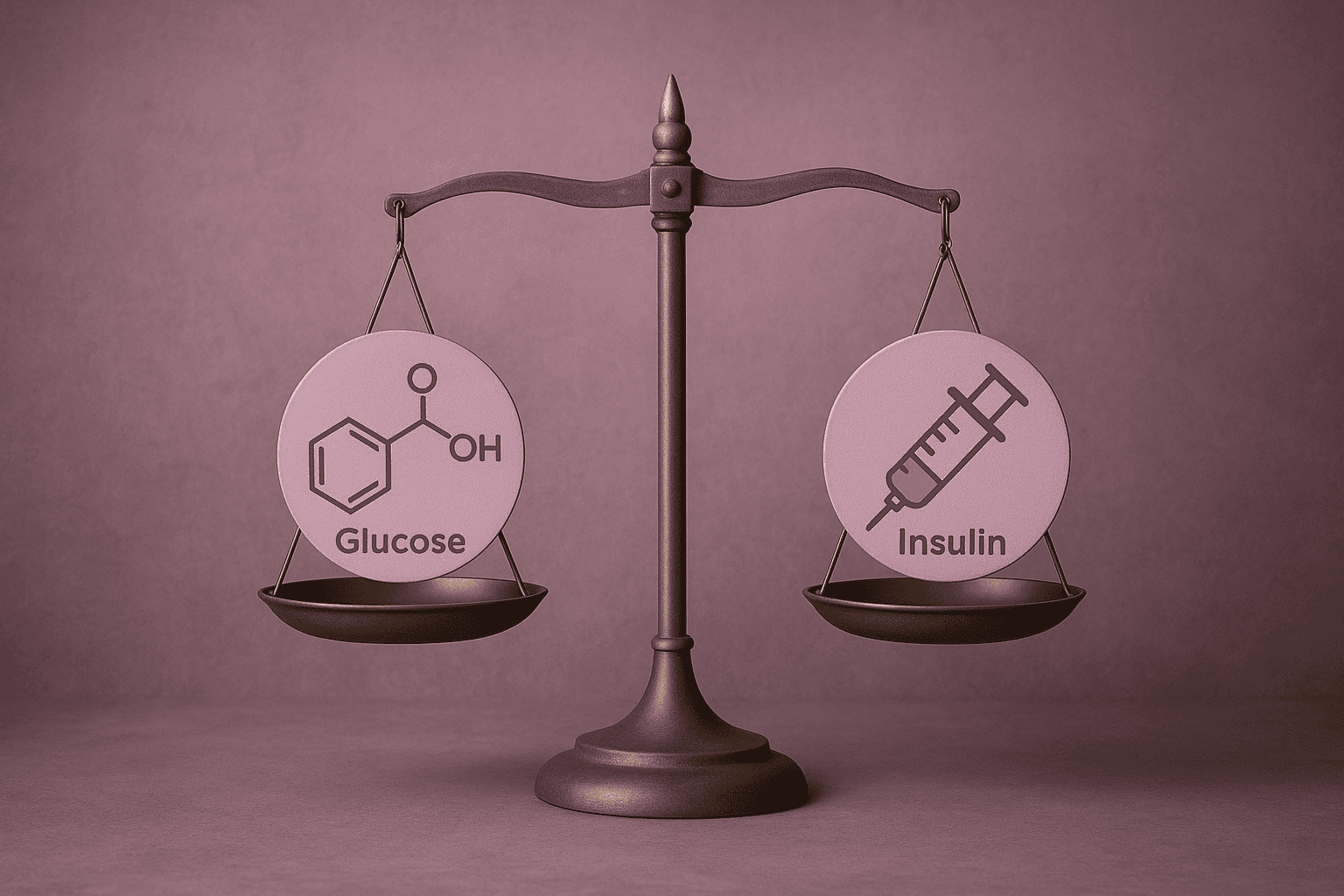
In recent years, the term “HOMA index” has appeared more and more often in discussions about metabolic health. Many patients request it in their blood tests or see it mentioned on social media, sometimes without fully understanding its meaning. Some see it as a new medical “trend,” while others recognize its true value. The truth is that the HOMA index is not a trend – it is a scientifically validated tool that allows doctors to look deep into the body’s glucose–insulin relationship, often years before diabetes becomes visible.

What HOMA Really Means
The acronym HOMA stands for Homeostatic Model Assessment. It is a mathematical model developed in the late 1970s to evaluate pancreatic beta-cell function and insulin sensitivity using only two simple fasting measurements: glucose and insulin.
The model was first proposed by Matthews and colleagues in 1985, at a time when measuring insulin resistance required complex and expensive laboratory procedures. HOMA was designed as a practical clinical tool – an equation that reflects how glucose and insulin interact in a steady-state condition.
Over time, HOMA has been validated in numerous studies and is now widely used in endocrinology, diabetology, and metabolic nutrition. It has two main components: HOMA-IR, which measures insulin resistance, and HOMA-B, which estimates pancreatic beta-cell function.
Foreigner In Romania and in need of a prescription for your chronic treatment?
Contact Dr. Petrache’s Virtual Clinic for any medical issue you encounter while in Romania. Send an email to: [email protected]
Understanding HOMA-IR
HOMA-IR (Homeostatic Model Assessment of Insulin Resistance) reflects how sensitive your cells are to insulin. In a healthy body, insulin acts as a key that allows glucose to enter the cells and be used for energy. When insulin resistance develops, the “keyholes” – the insulin receptors – become less responsive.
To compensate, the pancreas produces more and more insulin to keep blood sugar within normal limits. At first, this compensation works, but over time, the pancreas becomes overworked, and blood sugar levels start to rise – this is the prediabetic or early diabetic stage.
The formula used is:
HOMA-IR = (Fasting Glucose [mg/dl] × Fasting Insulin [μU/ml]) / 405
or, in SI units:
HOMA-IR = (Glucose [mmol/L] × Insulin [μU/ml]) / 22.5
As a rule of thumb:
- < 2.0 indicates normal insulin sensitivity
- 2.0–2.5 suggests increased risk
- 2.5–3.0 signals insulin resistance
Insulin resistance is the biochemical foundation of most modern diseases: type 2 diabetes, abdominal obesity, fatty liver disease, polycystic ovary syndrome, hypertension, and even certain cancers.
A high HOMA-IR means that the body needs more and more insulin to do the same job it once did easily. Chronic hyperinsulinemia is not just a symptom – it becomes a metabolic problem in itself, promoting fat storage, inflammation, and hormonal imbalance.
Understanding HOMA-B
While HOMA-IR tells us how resistant the body is to insulin, HOMA-B (Homeostatic Model Assessment of Beta-cell Function) reveals how hard the pancreas is working to secrete insulin.
The formula is:
HOMA-B = (20 × Insulin [μU/ml]) / (Glucose [mmol/L] – 3.5)
Results are expressed as percentages. Values between 100–150% suggest normal or slightly increased beta-cell function, while values below 80% indicate reduced insulin production.
When interpreted together, HOMA-IR and HOMA-B paint a complete picture of metabolic balance. In early insulin resistance, HOMA-B may be high because the pancreas is overcompensating. Later, as the beta cells tire and begin to fail, HOMA-B drops – marking the transition toward type 2 diabetes.
How to Interpret HOMA Clinically
Although HOMA is based on a simple calculation, it must always be interpreted in clinical context. Numbers mean little without the patient’s history, weight, waist circumference, lipid profile, and blood pressure.
For instance, a woman with polycystic ovary syndrome may have a high HOMA-IR despite a normal BMI due to hormonal imbalance and inflammation. A man with non-alcoholic fatty liver disease may also show high HOMA-IR because of hepatic insulin resistance.
Conversely, in long-standing diabetes where the pancreas is exhausted, HOMA-IR may appear normal or even low, while HOMA-B is drastically reduced. This indicates that the main problem is insulin deficiency, not resistance.
Together, HOMA-IR and HOMA-B help determine whether the issue lies in peripheral resistance, pancreatic exhaustion, or a combination of both.
Passing through Romania and need a prescription for your chronic treatment?
Contact Dr. Petrache’s Virtual Clinic for any medical issue you encounter while in Romania. Send an email to: [email protected]
Limitations of the HOMA Model
Like any mathematical model, HOMA has limitations. It is valid only in fasting conditions and at stable glucose levels. It should not be used in:
- type 1 diabetes or poorly controlled type 2 diabetes;
- patients under insulin therapy;
- acute stress, infection, or inflammation;
- severe endocrine disorders (Cushing’s syndrome, acromegaly).
Moreover, HOMA does not directly measure tissue-specific insulin sensitivity (for example, in muscles or liver). The gold-standard research method remains the hyperinsulinemic euglycemic clamp, but that is impractical for routine clinical use.
Therefore, HOMA should be seen as a screening and monitoring tool, not as an absolute diagnostic test. When interpreted properly, however, it provides essential insight into metabolic dynamics.
Clinical Examples
Example 1: a 38-year-old woman with fatigue and difficulty losing weight.
Fasting glucose: 92 mg/dl, insulin: 18 μU/ml.
HOMA-IR = (92 × 18) / 405 = 4.08 → elevated.
HOMA-B = (20 × 18) / (5.1 – 3.5) = 225% → compensatory hypersecretion.
Interpretation: compensated insulin resistance – the pancreas is overworking to maintain normal glucose.
After six months of dietary adjustment, regular exercise, and metformin therapy, her HOMA-IR decreases to 2.1 and HOMA-B to 140% — a clear metabolic improvement.
Example 2: a 55-year-old man with type 2 diabetes for 10 years.
Fasting glucose: 140 mg/dl, insulin: 6 μU/ml.
HOMA-IR = (140 × 6) / 405 = 2.07, apparently normal.
HOMA-B = (20 × 6) / (7.8 – 3.5) = 27% — poor beta-cell reserve.
Interpretation: pancreatic exhaustion – insulin secretion is failing despite moderate glucose levels.
These examples show how HOMA values can guide therapy. A patient with high HOMA-IR benefits from improving insulin sensitivity (through metformin, GLP-1 agonists, or lifestyle change), while one with low HOMA-B needs strategies that preserve or support pancreatic function.
The Role of C-Peptide
For even greater accuracy, HOMA can be complemented by C-peptide measurement, which reflects endogenous insulin secretion. Unlike circulating insulin, C-peptide is not affected by external insulin therapy and has a longer half-life. Comparing HOMA-B and C-peptide helps determine how much insulin the pancreas still produces and how much is lost through resistance. This is especially valuable in advanced diabetes or atypical forms of metabolic disease.
Why HOMA Is a Necessity
In a world where type 2 diabetes and metabolic syndrome are increasingly common – and often silent – HOMA is a necessity, not a fad. It allows doctors to detect metabolic imbalance years before glucose levels rise. Early intervention can prevent or delay diabetes through balanced nutrition, physical activity, weight control, and modern therapies that reduce inflammation and oxidative stress.
HOMA is also a powerful monitoring tool. A gradual decrease in HOMA-IR shows improved insulin sensitivity, while a stable HOMA-B value indicates preserved pancreatic function. Thus, the model not only identifies risk but also tracks progress over time.
Tourist in Romania and in need of a prescription for your chronic treatment?
Contact Dr. Petrache’s Virtual Clinic for any medical issue you encounter while in Romania. Send an email to: [email protected]
Conclusion
The HOMA index is not a fashion trend but a cornerstone of modern preventive medicine. It offers a precise yet simple overview of the balance between insulin sensitivity and pancreatic function. Used correctly, it can prevent diabetes, guide personalized therapy, and forecast metabolic evolution.
In an age where we have advanced technologies but often overlook subtle warning signs, HOMA remains a low-cost, high-value test. Numbers don’t tell the whole story — but interpreted wisely, they can save years of health.
Blood glucose is not just a number – it is the biochemical language through which your body speaks about its future.
Follow us on:
- FaceBook: Diabetes & Nutrition;
- YouTube: Diabetes Facts.