Pine Buds in Diabetes

Pine “Buds” in Diabetes – Are Pine Nuts a Smart Choice or a Hidden Trap?
In recent years, more and more people interested in healthy eating have discovered new foods, often labeled as “superfoods.” Among them are what in Romania are commonly called “pine buds.” In reality, this term is incorrect. The products you find in supermarkets are not buds, but the edible seeds of pine trees, internationally known as pine nuts.
This confusion is not just a linguistic detail. It can influence how people perceive the product and, more importantly, how they consume it. The word “buds” suggests something light, fresh, and low in calories, similar to sprouts or greens. In reality, pine nuts are very different. They belong nutritionally to the category of nuts and seeds, meaning they are dense in energy.
For someone living with diabetes, this distinction is essential. Managing diabetes is not only about blood sugar levels, but also about weight control, satiety, and long-term metabolic balance.
Foreigner In Romania and in need of a prescription for your chronic treatment?
Contact Dr. Petrache’s Virtual Clinic for any medical issue you encounter while in Romania. Send an email to: clinica@diabet-si-nutritie.ro
What Pine Nuts Actually Are and Why They Are So Popular
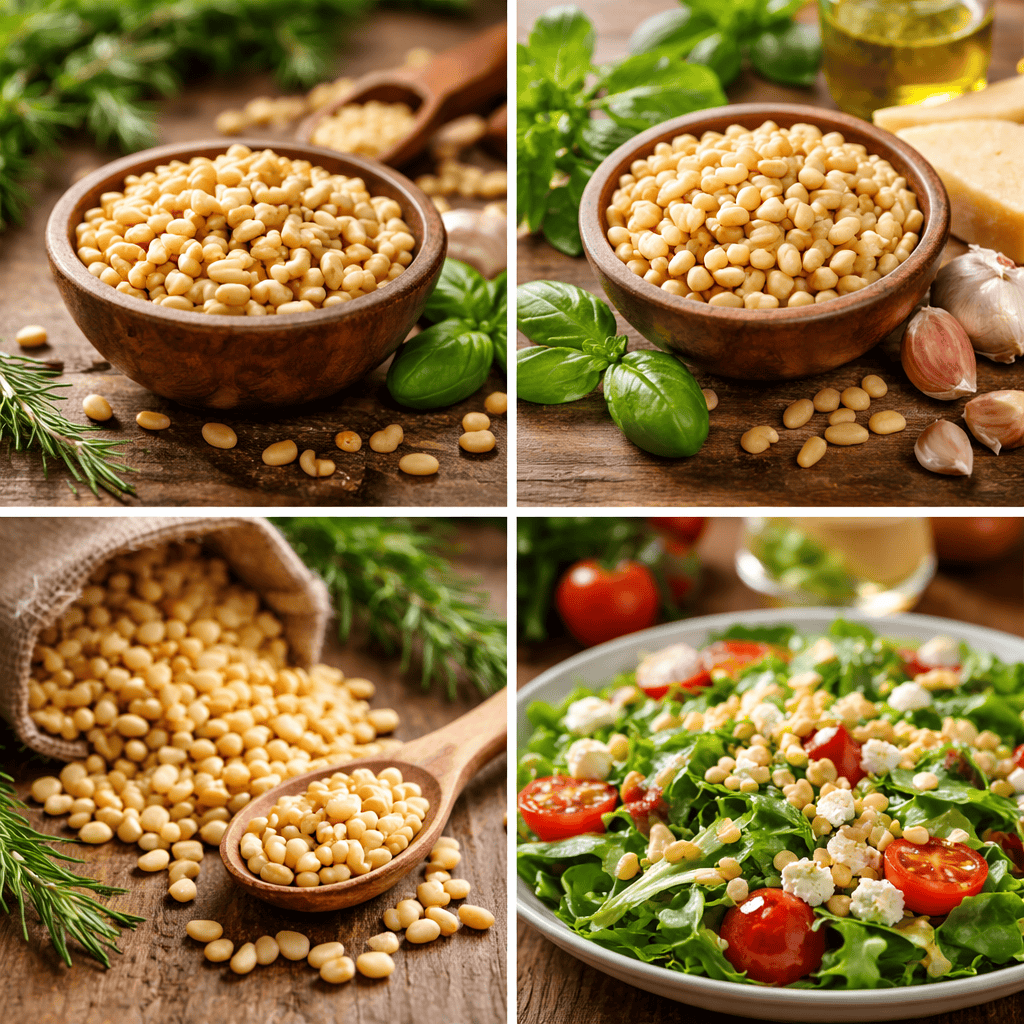
Pine nuts are seeds found inside pine cones from specific species of pine trees. They have been consumed for thousands of years, especially in Mediterranean cuisine. Small, ivory-colored, and slightly oily, they have a delicate, mildly sweet flavor that makes them highly valued in cooking.
You will often find them in dishes like pesto, salads, pasta, or even desserts. They are considered a premium ingredient, not only because of their taste but also because of their nutritional richness.
Biologically speaking, pine nuts are the plant’s energy reserve. This explains why they are so nutrient-dense. They contain a high amount of fats—mainly unsaturated fats—along with protein, fiber, and a range of essential micronutrients.
This composition makes them interesting for modern nutrition, including for people with diabetes, but only when they are properly understood and used in the right way.
Nutritional Profile and Metabolic Impact
From a diabetes perspective, one of the most important aspects of pine nuts is that they do not significantly raise blood sugar levels. Unlike refined carbohydrates or sugary foods, pine nuts contain relatively low amounts of carbohydrates and have a low glycemic index.
This means that when consumed in moderate quantities, they do not cause rapid spikes in blood glucose. Moreover, their high fat and protein content slows down digestion and nutrient absorption, leading to a more gradual release of energy.
In this sense, pine nuts can be a much better choice than many processed snacks that are commonly consumed between meals.
However, there is an important aspect that cannot be ignored: their high caloric density. Pine nuts are extremely energy-dense. Even a small portion provides a significant number of calories, which becomes particularly relevant for individuals trying to lose weight or maintain a healthy weight.
In diabetes management, weight control is just as important as blood sugar control. Therefore, a food that does not raise glucose can still become problematic if it leads to excessive calorie intake.
Why They Don’t Spike Blood Sugar but Still Matter
Understanding how pine nuts affect your body is key. Their low carbohydrate content means they do not trigger rapid increases in blood glucose. At the same time, their fat content slows digestion, helping to stabilize blood sugar levels.
This combination is generally beneficial for glycemic control. In addition, the unsaturated fats found in pine nuts may support a healthier lipid profile, which is important since many people with diabetes also struggle with cholesterol issues.
However, these same fats are responsible for their high caloric value. In other words, pine nuts are “gentle” on blood sugar but “dense” in energy.
Over time, excessive consumption can contribute to weight gain, which in turn can worsen insulin resistance and negatively affect overall metabolic health.
Passing through Romania and need a prescription for your chronic treatment?
Contact Dr. Petrache’s Virtual Clinic for any medical issue you encounter while in Romania. Send an email to: clinica@diabet-si-nutritie.ro
Can Pine Nuts Help with Weight Loss?
The answer is nuanced. Yes, they can help—but only if used correctly.
Pine nuts promote satiety. A small portion can help reduce hunger and prevent unhealthy snacking. This can be very helpful for individuals trying to control their food intake.
At the same time, their pleasant taste and soft texture make them easy to overeat. It is very common for people to consume them mindlessly, especially when eating straight from the package.
This is where the classic trap of “healthy foods” appears. The issue is not the food itself, but the quantity.
How to Properly Include Pine Nuts in a Diabetic Diet
Pine nuts can absolutely be part of a balanced diet, but their role should be complementary rather than central.
The best way to consume them is as part of a meal, not as a large standalone snack. For example, they work very well when added to salads, combined with vegetables and a source of protein. In this context, they enhance both flavor and satiety without turning the meal into a calorie overload.
On the other hand, eating them in large amounts on their own—especially out of habit, boredom, or distraction—can quickly lead to excessive calorie intake.
A Common Mistake I See in Practice
A very common scenario is this: a patient eliminates sweets and processed foods, but starts consuming large amounts of nuts and seeds, including pine nuts, believing they are completely safe.
Blood sugar levels may remain relatively stable, but weight loss stalls or even reverses. This leads to frustration and confusion.
In reality, the issue is not the choice of food, but the lack of portion control.
This is a perfect example of how a healthy food can become problematic when consumed in excess.
The Difference Between “Doesn’t Raise Blood Sugar” and “Is Ideal”
This distinction is essential.
Just because a food does not raise blood sugar does not mean it can be eaten without limits. In diabetes, the goal is not only to avoid glucose spikes but to maintain overall metabolic balance.
This includes weight management, lipid control, and reducing inflammation.
Pine nuts fall into the category of beneficial foods, but only when used appropriately.
Final Thoughts – Are Pine Nuts Suitable for Diabetes?
Pine nuts, often incorrectly called “pine buds,” are a nutritious food that can be safely included in the diet of people with diabetes.
They do not cause rapid increases in blood sugar, have a favorable fat profile, and can help with satiety.
However, their high caloric density means they should be consumed in moderation.
The main concern is not blood sugar, but excess.
Tourist in Romania and in need of a prescription for your chronic treatment?
Contact Dr. Petrache’s Virtual Clinic for any medical issue you encounter while in Romania. Send an email to: clinica@diabet-si-nutritie.ro
My Message to You
If you have diabetes, there is no need to avoid pine nuts, but they should not be treated as “free foods.” They are healthy, but not unlimited.
In many cases, the difference between progress and stagnation is not caused by obviously “bad” foods, but by overconsumption of foods considered “too good.”
Once you learn how to integrate them properly, your diet becomes more balanced, more flexible, and, most importantly, sustainable.
Follow us on:
- FaceBook: Diabetes & Nutrition;
- YouTube: Diabetes Facts.