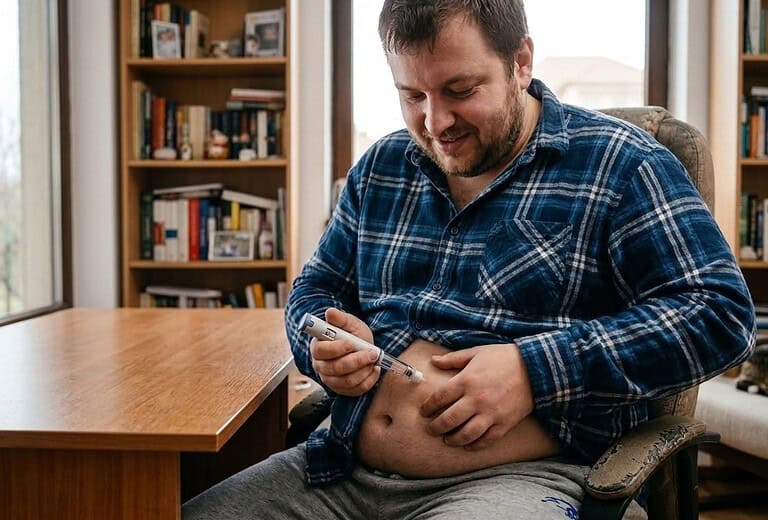
The only Glucose Sensor You Can Wear for 21 Days
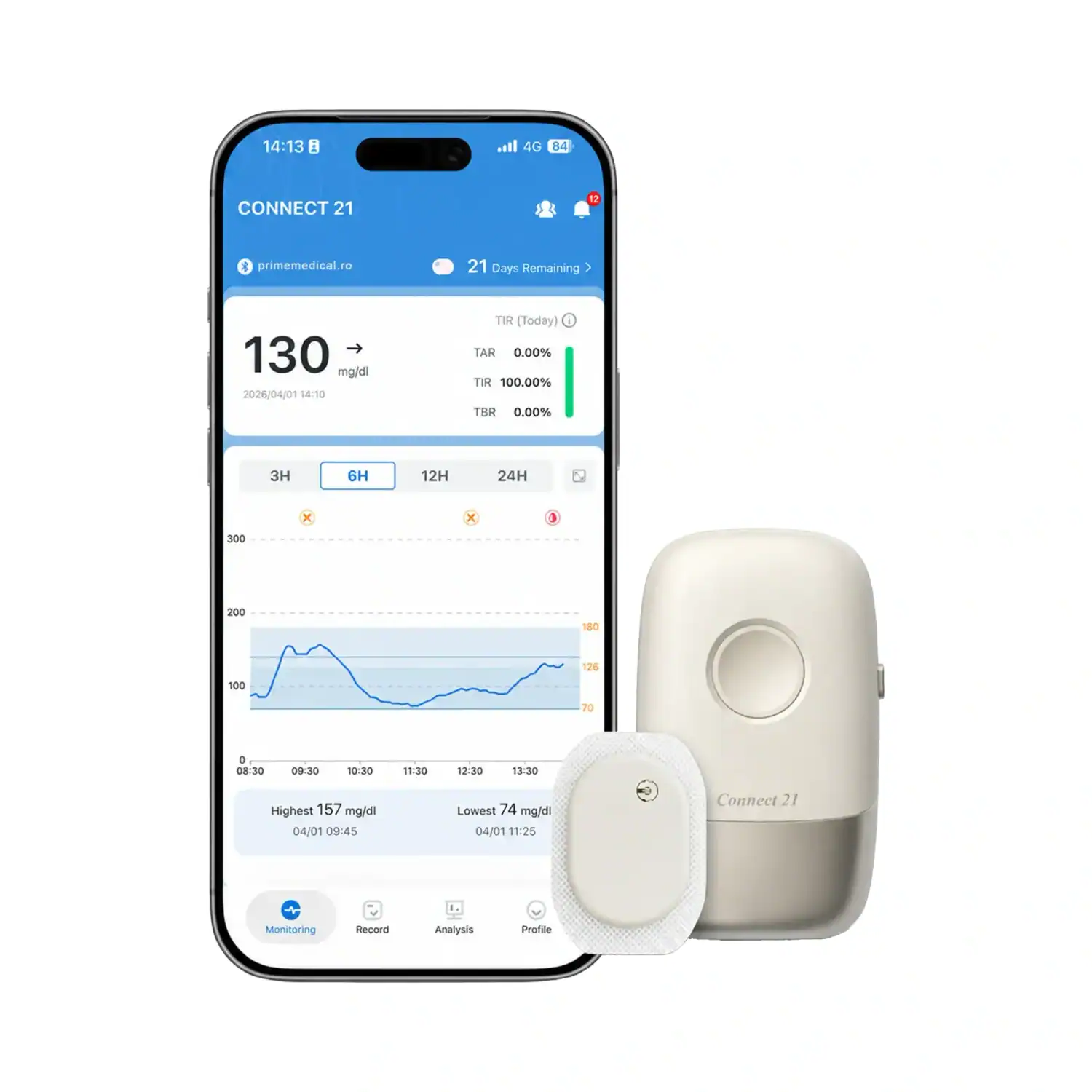
Continuous glucose monitoring has significantly changed the way people with diabetes can track their glucose levels. Instead of relying on a few point-in-time measurements performed with a blood glucose meter, a CGM (Continuous Glucose Monitoring) system provides a much more detailed picture of glucose fluctuations throughout the day and night.
One of the practical limitations of CGM systems, however, remains sensor wear time. Most conventional CGM sensors need to be replaced after approximately 7–15 days, depending on the model.
Connect 21 CGM changes this routine: a single sensor can be worn for 21 days.
This is one of the features that most clearly differentiates it from commonly used CGM sensors and makes it an interesting option, particularly for people who want fewer sensor applications and longer periods of monitoring with the same device.
In Romania, Connect 21 CGM is available from PrimeMedical.ro.

What is Connect 21 CGM?
Connect 21 CGM is a continuous glucose monitoring system manufactured by Teljane Medical Technology (Suzhou) Co., Ltd., based on the Instara-1/TX-series platform and marketed under the Connect 21 CGM name.
The sensor measures glucose in the interstitial fluid and automatically transmits the data via Bluetooth to the Connect 21 CGM app installed on your smartphone.
Its main features include:
- 21-day sensor wear;
- a new glucose reading every 5 minutes;
- up to 288 glucose readings per day;
- approximately 15-minute warm-up time;
- factory calibration;
- manufacturer-declared MARD of 8.2%;
- measurement range of 36–468 mg/dL (2.0–26.0 mmol/L);
- 21-day data memory;
- high and low glucose alerts;
- Bluetooth smartphone connectivity;
- glucose reports and trend analysis;
- IP58 water resistance;
- sensor dimensions of 27.5 × 20 × 4.5 mm;
- recommended application site on the back of the upper arm.
21 days with a single sensor – the main advantage of Connect 21 CGM
If you use a CGM continuously, the difference between 10, 14, 15 and 21 days may initially seem relatively small.
Over the course of a year, however, the difference becomes significant.
A sensor with a 21-day wear time means approximately:
365 days ÷ 21 days = 17–18 sensors per year.
By comparison, continuous monitoring throughout the year would require approximately 26 sensors with a 14-day system and around 24–25 sensors with a 15-day system.
Therefore, a 21-day wear time can mean fewer sensor applications over the course of a year, provided each sensor reaches its full intended wear duration.
This can be particularly important for people who use CGM continuously and are familiar with the repetitive cycle of removing an old sensor and applying a new one.
Why does CGM sensor wear time matter?
Longer wear time is more than just a number printed on the box.
For the user, every sensor change involves removing the previous sensor, preparing a new application site, applying the new device, connecting it to the app and going through another warm-up period.
With Connect 21 CGM, this procedure is required once every three weeks if the sensor is worn for the full 21-day period.
For many people, fewer sensor changes can mean a simpler monitoring routine.
There is also the advantage of fewer applications to the skin. This does not mean that skin reactions are eliminated – any adhesive can potentially cause irritation in susceptible individuals – but fewer applications may represent a practical advantage.
A new glucose reading every 5 minutes
Connect 21 CGM provides a new reading every 5 minutes.
This means:
12 readings per hour and up to 288 readings in 24 hours.
The benefit of continuous glucose monitoring, however, is not simply the large number of measurements.
A blood glucose meter provides a point-in-time value: it tells us what our blood glucose level is at the exact moment we perform the test.
A CGM also allows us to observe the direction in which glucose is moving.
For example, we can see:
- what happens to glucose after breakfast;
- how much glucose rises after certain foods;
- the effect of physical activity;
- whether glucose rises during the night;
- whether episodes of hypoglycaemia occur;
- how much time we spend within our target glucose range;
- how variable our glucose levels are throughout the day.
In practical terms, we move from a few glucose “snapshots” to something much closer to a continuous movie of glucose behaviour.
Approximately 15-minute warm-up time
Another interesting feature of Connect 21 CGM is its short warm-up period.
After applying the sensor and pairing it with the app, the warm-up period is approximately 15 minutes.
Glucose readings then become available.
For people who rely on continuous monitoring every day, a short warm-up period reduces the time between applying a new sensor and having access to glucose data.
Does Connect 21 CGM require calibration?
Connect 21 CGM is factory-calibrated, which means routine manual calibration using a blood glucose meter is not required.
This does not mean that a blood glucose meter becomes unnecessary.
It is important to remember that the two devices do not measure glucose in exactly the same physiological compartment.
A blood glucose meter measures glucose in capillary blood, while a CGM measures glucose in interstitial fluid.
For this reason, there can be a physiological delay between blood glucose and interstitial glucose values, particularly when glucose levels are rising or falling rapidly.
If a sensor reading does not match your symptoms or appears unusual, checking your blood glucose with a meter before making an important treatment decision is advisable.
How accurate is Connect 21 CGM?
The manufacturer reports a MARD of 8.2% for Connect 21 CGM.
MARD – Mean Absolute Relative Difference – is one of the metrics used to assess CGM system performance.
In simple terms, a lower MARD generally indicates a smaller average difference from the reference glucose measurements used in the evaluation study.
However, MARD should not be used alone to determine which sensor is “best”. Values obtained from different studies are not always directly comparable because methodologies, study populations and testing conditions may differ.
Therefore, the 8.2% figure should be understood as the value declared by the manufacturer.
The Connect 21 CGM app
The sensor communicates with the Connect 21 CGM app via Bluetooth.
The app allows users to monitor their current glucose level and glucose trends, as well as receive alerts for high or low glucose levels.
Events such as meals, physical activity and medication can also be recorded, helping users understand the relationship between lifestyle factors and glucose response.
The app also allows the analysis of important metrics used in modern diabetes management, including Time in Range (TIR) and AGP – Ambulatory Glucose Profile reports.
Data and reports can be shared, which may be useful when discussing glucose management with family members, caregivers or healthcare professionals.
What is Time in Range?
One of the major advantages of CGM is the ability to analyse not only average glucose but also the amount of time spent within different glucose ranges.
Time in Range (TIR) represents the percentage of time during which glucose levels remain within the established target range.
Depending on the clinical situation, we can analyse:
- time spent within range;
- time spent above range;
- time spent below range;
- glucose variability.
These metrics can provide information that HbA1c alone cannot offer.
Two people can have the same HbA1c while having very different glucose profiles. One may have relatively stable glucose levels, while another may frequently alternate between hyperglycaemia and hypoglycaemia.
CGM allows us to see this difference.
CGM is not only useful for people treated with insulin
Continuous glucose monitoring is often associated with type 1 diabetes and insulin therapy.
However, the information provided by CGM may have broader applications, depending on the medical indication and individual objectives.
A continuous glucose profile can help us understand the body’s response to:
- different amounts and types of carbohydrates;
- combinations of carbohydrates, protein and fat;
- meal timing;
- physical activity;
- stress;
- sleep;
- medication.
For people with diabetes, this information can be discussed with their healthcare professional and incorporated into their treatment strategy.
Connect 21 CGM and nutrition
From a nutritional perspective, CGM can become an extremely interesting educational tool.
For example, two meals containing the same amount of carbohydrates will not necessarily produce the same glucose profile.
We may observe differences when carbohydrates are eaten alone compared with when they are combined with protein, fibre and fat.
We can also see the effect of taking a walk after a meal or compare the response to a meal eaten earlier in the day with the same meal eaten late in the evening.
However, it is important not to turn glucose monitoring into a competition to achieve a perfectly flat glucose line.
Glucose normally changes after we eat.
The purpose of CGM is to provide useful information that can support better decisions, not to create anxiety around every glucose fluctuation.
Where is Connect 21 CGM applied?
The recommended application site is the back of the upper arm.
The skin should be properly prepared before application. The area should be cleaned and allowed to dry completely before the sensor is inserted.
Areas with irritation, scars or other skin changes should be avoided.
The Connect 21 CGM package includes the sensor, dedicated applicator, an alcohol wipe and an adhesive patch.
Is Connect 21 CGM water-resistant?
Connect 21 CGM has an IP58 rating.
This allows the device to be worn during normal daily activities, including showering, provided the manufacturer’s specified conditions and recommendations are followed.
Water resistance should not, however, be confused with the adhesive being indestructible. Repeated friction, heavy sweating, accidental impact or mechanical stress around the sensor can affect adhesion.
A sensor only 4.5 mm thick
A device designed to remain on the body continuously for three weeks also needs to be sufficiently discreet.
Connect 21 CGM measures 27.5 × 20 × 4.5 mm, and its low profile is an advantage for everyday wear.
This can be particularly relevant when dressing, sleeping or carrying out normal daily activities, when a more prominent sensor may be more likely to catch on clothing or be accidentally knocked.
Who might find Connect 21 CGM particularly interesting?
Its 21-day wear time may make Connect 21 CGM particularly interesting for people who want:
- continuous monitoring for longer periods;
- fewer sensor changes;
- access to glucose readings directly on their smartphone;
- alerts for high and low glucose;
- glucose trend analysis;
- Time in Range assessment;
- reports that can be exported and discussed with a healthcare professional;
- a factory-calibrated sensor;
- a short warm-up period.
21 days may also matter when calculating monthly CGM costs
When comparing CGM prices, looking only at the price of one sensor does not tell the whole story.
Sensor wear time also needs to be taken into account.
A cheaper sensor that needs to be replaced more frequently may result in a different monthly cost compared with a more expensive sensor that lasts longer.
With Connect 21, one sensor theoretically provides three weeks of continuous glucose monitoring.
For this reason, a more useful question when comparing CGM systems may be:
“How much does one day of monitoring cost?”
rather than simply:
“How much does the sensor cost?”
Prices may change over time, so the cost per day should always be calculated using the current purchase price.
21 days means fewer interruptions to your routine
There is also an advantage that cannot simply be expressed in financial terms.
People who use CGM continuously need to integrate sensor replacement into their routine.
With a 21-day sensor, replacement occurs approximately once every three weeks.
Over the course of a year, the difference compared with a 10-, 14- or 15-day sensor can mean significantly fewer applications.
For people who rely on continuous monitoring long-term, this logistical convenience can become almost as important as the technical specifications themselves.
What should we know about the difference between CGM and a blood glucose meter?
It is normal for the value displayed by a CGM sensor and a finger-stick blood glucose measurement not to be identical at all times.
CGM measures glucose in interstitial fluid rather than directly in capillary blood.
During periods when glucose is changing rapidly – after a meal, after insulin administration or during/after physical activity – there can be a physiological delay between the two values.
Therefore, if your symptoms do not match the glucose value displayed by the sensor, checking with a blood glucose meter remains important.
Are there situations in which the sensor needs to be removed?
Yes.
According to the usage information provided for Connect 21 CGM, the sensor should be removed before certain imaging procedures, including MRI, CT scans and X-rays.
Users should always follow the official instructions supplied with the device.
Where can you buy Connect 21 CGM in Romania?
Connect 21 CGM is available in Romania from PrimeMedical.ro, a retailer specialising in glucose monitoring devices.
The product page provides the current price, availability and purchasing information.
Connect 21 CGM – key specifications
Wear time: 21 days
Reading frequency: every 5 minutes
Readings per day: up to 288
Warm-up time: approximately 15 minutes
Calibration: factory-calibrated
Manufacturer-declared MARD: 8.2%
Measurement range: 36–468 mg/dL
Connectivity: Bluetooth
App: Connect 21 CGM
Water resistance: IP58
Dimensions: 27.5 × 20 × 4.5 mm
Recommended application site: back of the upper arm
Manufacturer: Teljane Medical Technology (Suzhou) Co., Ltd.
Conclusion: Connect 21’s main advantage is right there in its name
The CGM market has evolved enormously. Today, continuous glucose monitoring is no longer simply about being able to see glucose levels without performing multiple finger-stick tests every day. We now compare accuracy, alerts, apps, reports, sensor size, warm-up time and, importantly, sensor wear duration.
From this perspective, Connect 21 CGM offers a very clear advantage: 21 days of continuous glucose monitoring with a single sensor.
Within Prime Medical‘s current CGM range, this is the longest sensor wear duration. For users, 21 days can mean fewer sensor changes, fewer applications over the course of a year and a simpler glucose-monitoring routine.
At the same time, Connect 21 offers the features expected from a modern CGM system: automatic readings, smartphone data transmission, alerts, trend analysis, Time in Range, AGP reports and the ability to share glucose information.
Connect 21 CGM is available in Romania from PrimeMedical.ro.
Medical disclaimer: This article is intended for informational and educational purposes only and does not replace medical advice or consultation. Technical specifications for Connect 21 CGM are based on information provided by the manufacturer and distributor. Always use the device according to the official instructions for use. Do not change your diabetes treatment or insulin doses solely on the basis of the information presented in this article; treatment decisions should be discussed with your healthcare professional.