Homocysteine – What Is It and Why Does It Matter?
In recent years, more people have begun looking beyond traditional health markers such as blood glucose, cholesterol, and blood pressure. Among the laboratory tests receiving increasing attention is homocysteine, a marker that many patients first encounter when investigating cardiovascular risk, neurological conditions, or fertility issues.
Although it is less well known than cholesterol or high-sensitivity C-reactive protein (hs-CRP), homocysteine can provide valuable insights into vascular health, nervous system function, and certain vitamin deficiencies.

Tourist in Romania and in need of a prescription for your chronic treatment?
Contact Dr. Petrache’s Virtual Clinic for any medical issue you encounter while in Romania. Send an email to: clinica@diabet-si-nutritie.ro
What Is Homocysteine?
Homocysteine is an amino acid produced in the body during the metabolism of methionine, an essential amino acid found in protein-rich foods.
Under normal circumstances, homocysteine does not accumulate in the bloodstream because it is rapidly converted into other substances with the help of several essential vitamins:
- Vitamin B6
- Vitamin B12
- Folic acid (Vitamin B9)
When this metabolic process becomes less efficient, homocysteine levels begin to rise.
Why Is Homocysteine Important?
For many years, cardiovascular risk assessment focused primarily on cholesterol levels.
Researchers later observed that individuals with elevated homocysteine levels were more likely to develop:
- Heart attacks
- Strokes
- Blood clots (thrombosis)
- Peripheral arterial disease
- Accelerated atherosclerosis
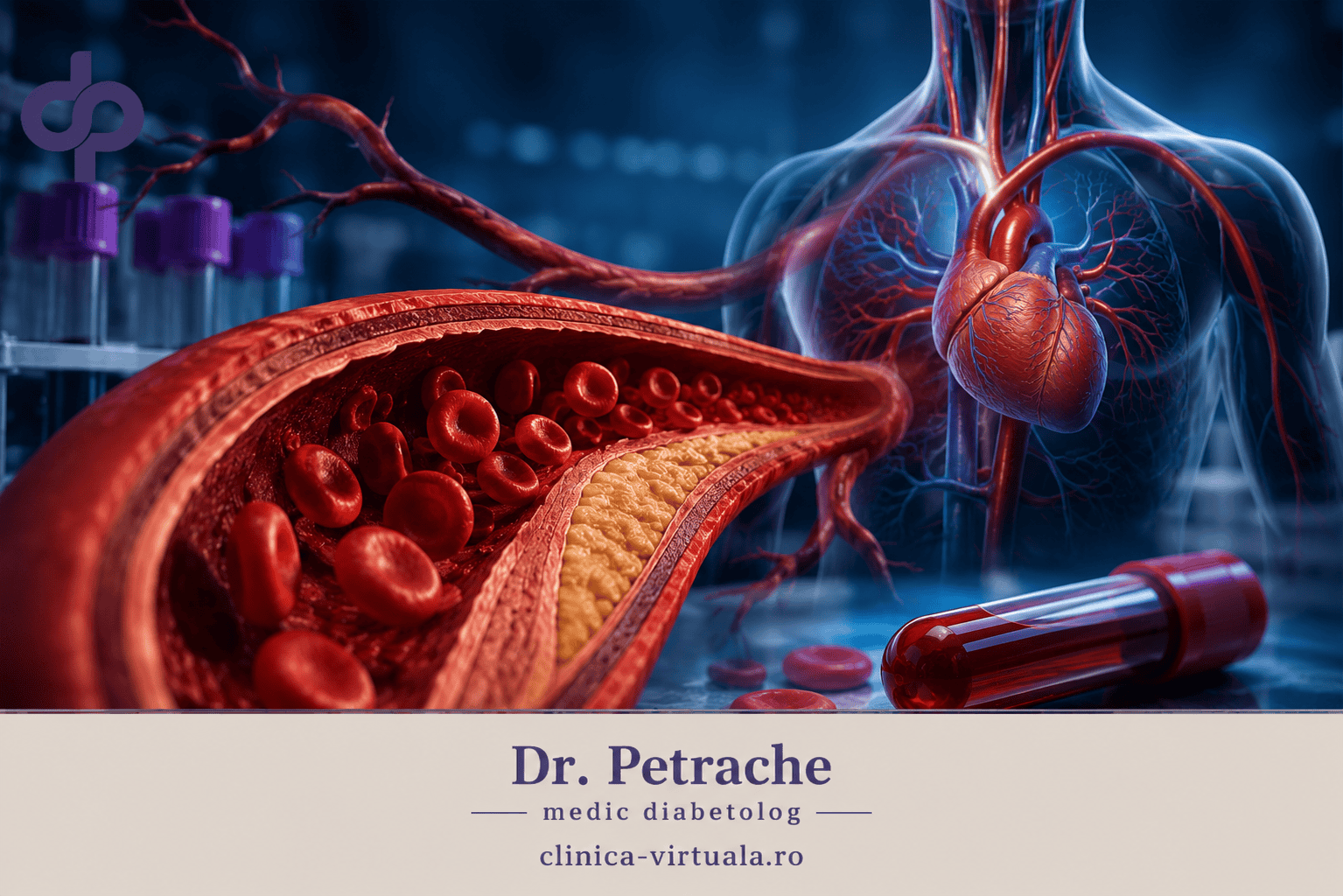
Elevated homocysteine may directly damage the inner lining of blood vessels, promoting inflammation and blood clot formation.
For this reason, it is considered an additional marker of cardiovascular risk.
How Does Homocysteine Affect Blood Vessels?
High homocysteine levels can cause microscopic injury to the vascular endothelium.
The endothelium is the inner lining of blood vessels and plays a crucial role in:
- Regulating blood pressure
- Preventing abnormal clot formation
- Controlling inflammation
- Maintaining arterial elasticity
When endothelial function is impaired, the process of atherosclerosis may accelerate.
In addition, homocysteine may contribute to:
- Oxidation of LDL cholesterol
- Activation of inflammatory pathways
- Increased platelet aggregation
- Formation of blood clots
What Are Normal Homocysteine Levels?
Reference ranges may vary slightly between laboratories.
In general:
- Less than 10 µmol/L – Optimal
- 10–15 µmol/L – Mildly elevated
- 15–30 µmol/L – Moderately elevated
- Above 30 µmol/L – Significantly elevated
- Above 100 µmol/L – Severely elevated
Many experts consider values below 10 µmol/L to be ideal for cardiovascular prevention.
Why Does Homocysteine Increase?
Several factors can contribute to elevated homocysteine levels.
Vitamin B12 Deficiency
This is one of the most common causes.
Deficiency may occur in:
- Vegetarians and vegans
- Individuals with atrophic gastritis
- Patients with pernicious anemia
- People taking certain medications long term
Folic Acid Deficiency
Folate is essential for homocysteine metabolism.
Insufficient folate intake may result in elevated homocysteine levels even when other factors are normal.
Vitamin B6 Deficiency
Less commonly, a deficiency of vitamin B6 may contribute to elevated homocysteine.
Chronic Kidney Disease
The kidneys play a role in removing homocysteine from the body.
When kidney function declines, homocysteine levels often rise.
Genetic Factors
Some individuals carry variants of the MTHFR gene that reduce the body’s ability to metabolize homocysteine efficiently.
These genetic variations may contribute to elevated levels, especially when vitamin deficiencies are also present.
Smoking
Smoking is associated with higher homocysteine levels and further increases vascular damage.
Aging
Homocysteine levels tend to rise with age.
Foreigner In Romania and in need of a prescription for your chronic treatment?
Contact Dr. Petrache’s Virtual Clinic for any medical issue you encounter while in Romania. Send an email to: clinica@diabet-si-nutritie.ro
Homocysteine and Diabetes
People with diabetes already face an increased cardiovascular risk.
When homocysteine levels are elevated as well, that risk may become even greater.
Some studies have linked high homocysteine levels with:
- Progression of atherosclerosis
- Kidney damage
- Diabetic neuropathy
- Cardiovascular events
For this reason, homocysteine testing may be useful in the overall cardiovascular risk assessment of certain individuals with diabetes.
Homocysteine and Pregnancy
Homocysteine has also become an important topic in reproductive medicine.
Elevated levels have been associated with:
- Recurrent miscarriages
- Placental complications
- Preeclampsia
- Fetal growth restriction
As a result, homocysteine testing is sometimes included in the evaluation of infertility or recurrent pregnancy loss.
Homocysteine and Brain Health
The brain is particularly sensitive to elevated homocysteine levels.
Numerous studies have found associations between high homocysteine and:
- Cognitive decline
- Dementia
- Alzheimer’s disease
- Stroke
These effects may result from both vascular damage and direct effects on nerve cells.
Who Should Consider Homocysteine Testing?
This test may be particularly useful for:
- Individuals with a history of heart attack or stroke
- People with a family history of early cardiovascular disease
- Patients with diabetes
- Individuals with vitamin B12 deficiency
- Patients with peripheral neuropathy
- People with unexplained blood clots
- Women with recurrent miscarriages
- Individuals suspected of having folate deficiency
It is not generally recommended as a routine screening test for the entire population.
How Can Homocysteine Levels Be Reduced?
Treatment depends on the underlying cause.
Correcting Vitamin Deficiencies
In many cases, supplementation with:
- Vitamin B12
- Folic acid
- Vitamin B6
can significantly reduce homocysteine levels.
A Balanced Diet
Good dietary sources of folate include:
- Spinach
- Broccoli
- Asparagus
- Legumes
- Avocado
Vitamin B12 is found primarily in:
- Meat
- Fish
- Eggs
- Dairy products
Smoking Cessation
Smoking contributes both to elevated homocysteine levels and to increased cardiovascular risk.
Regular Physical Activity
Exercise may indirectly support healthier homocysteine levels by improving overall metabolic and vascular health.
Is Homocysteine an Independent Risk Factor?
This question has generated considerable debate.
There is strong evidence that elevated homocysteine levels are associated with increased cardiovascular risk.
However, clinical trials evaluating whether lowering homocysteine with vitamin supplementation reduces the risk of heart attacks and strokes have produced mixed results.
As a result, homocysteine is currently viewed more as an important marker of cardiovascular risk and vitamin status than as a direct cause of cardiovascular disease.
Passing through Romania and need a prescription for your chronic treatment?
Contact Dr. Petrache’s Virtual Clinic for any medical issue you encounter while in Romania. Send an email to: clinica@diabet-si-nutritie.ro
Conclusions
Homocysteine is a naturally occurring amino acid, but elevated levels may serve as a warning sign for vascular, neurological, and metabolic health issues.
High homocysteine levels have been associated with an increased risk of atherosclerosis, heart attack, stroke, and thrombosis. In many cases, the underlying cause is a deficiency of vitamin B12, folic acid, or vitamin B6—conditions that can often be identified and corrected relatively easily.
For people with diabetes, cardiovascular disease, neuropathy, infertility, or a history of thrombosis, homocysteine testing can provide valuable additional information and contribute to a more comprehensive assessment of overall health.
Follow us on:
- FaceBook: Diabetes & Nutrition;
- YouTube: Diabetes Facts.