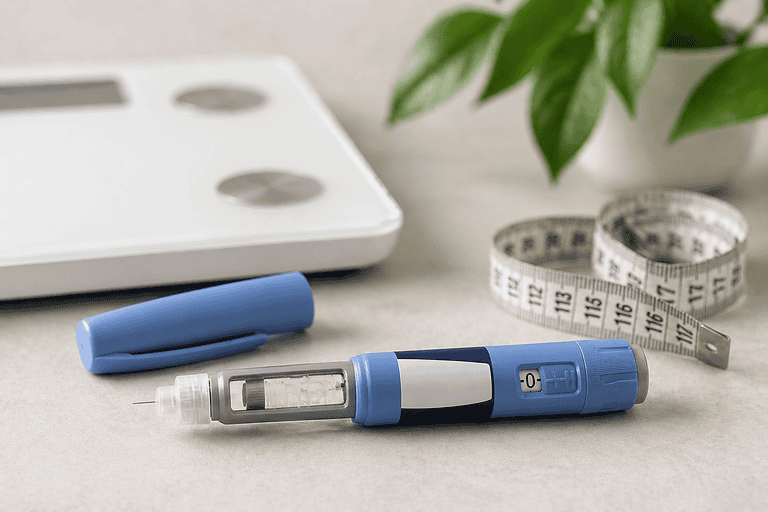
Weekly Insulin – approved by FDA
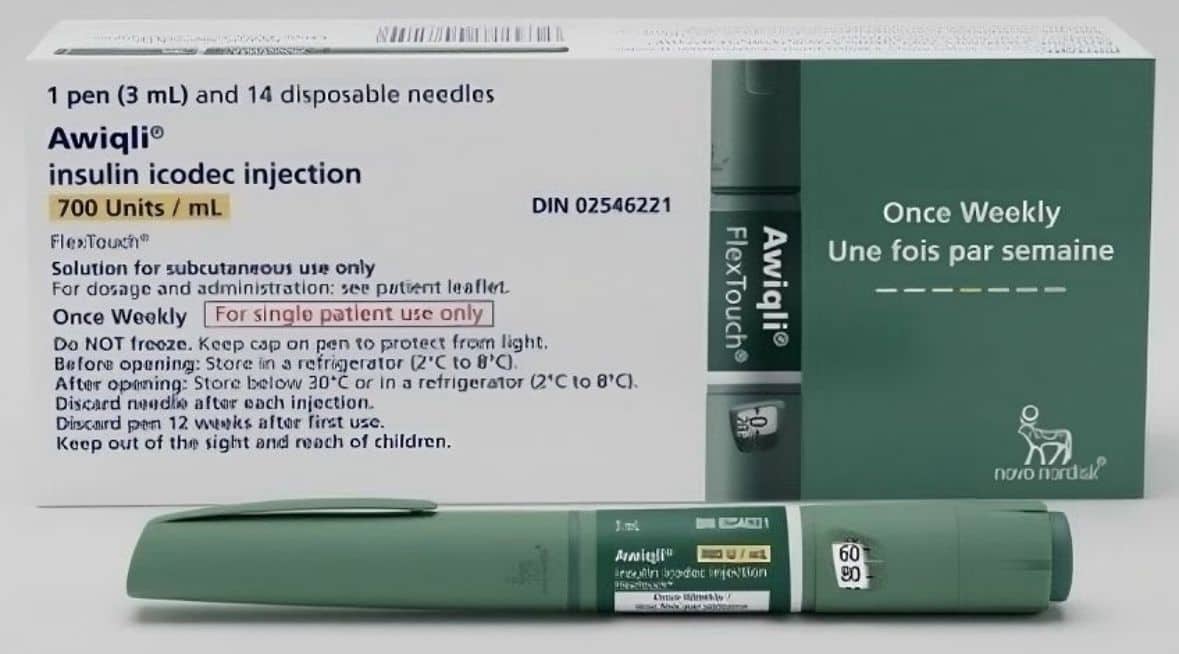

Weekly Insulin – A Turning Point in Diabetes Treatment
In what may become a defining moment in modern diabetology, Novo Nordisk has announced the approval in the United States of the first once-weekly basal insulin: insulin icodec (Awiqli).
This is not just another pharmaceutical innovation. It is, very likely, the beginning of a new era in diabetes care—one that could fundamentally change how patients experience insulin therapy.
What is weekly insulin and why does it matter
Insulin icodec is an ultra–long-acting basal insulin designed to be administered once a week, instead of the traditional daily injections required with current basal insulins.
Until now, the entire logic of insulin therapy has revolved around daily dosing. This new approach challenges that paradigm completely.
The approval is based on the ONWARDS clinical program, which included more than 2,600 patients with type 2 diabetes. The results showed HbA1c reductions comparable to daily basal insulins, with a similar safety profile.
In simple terms: similar efficacy, far fewer injections.
Foreigner In Romania and in need of a prescription for your chronic treatment?
Contact Dr. Petrache’s Virtual Clinic for any medical issue you encounter while in Romania. Send an email to: clinica@diabet-si-nutritie.ro
A major shift in real-life patient care
From a patient’s perspective, the impact is enormous.
A person who used to take 365 injections per year could now require only 52.
This translates into:
- better adherence to treatment
- reduced injection-related anxiety
- a simpler therapeutic routine
- potentially improved long-term glycemic control
In real-world practice, one of the biggest barriers in diabetes management is not the lack of treatment options, but poor adherence. Weekly insulin directly addresses this issue.
What patients and clinicians need to understand
Despite its promise, this is not a “simple insulin”—it is a more convenient one, but it requires careful use.
First, it is not suitable for all patients. In the United States, it is approved for adults with type 2 diabetes who require basal insulin.
Second, dose adjustments become more complex. With daily insulin, adjustments can be made relatively quickly. With a weekly formulation, any change has a prolonged effect.
Third, the risk of hypoglycemia must be managed carefully, especially during treatment initiation.
Is it approved for type 1 diabetes?
This is a key question.
In the United States, insulin icodec is approved only for type 2 diabetes.
Clinical trials have included patients with type 1 diabetes, and the insulin does lower HbA1c in this population. However, the risk of hypoglycemia appears to be higher, and glycemic variability makes weekly dosing more difficult to manage.
In some regions, such as parts of Europe, regulatory decisions may allow broader use, including type 1 diabetes. However, even there, it is not considered a first-line option.
In practical terms, weekly insulin is likely to become widely used in type 2 diabetes, while remaining a more limited option in type 1 diabetes.
Passing through Romania and need a prescription for your chronic treatment?
Contact Dr. Petrache’s Virtual Clinic for any medical issue you encounter while in Romania. Send an email to: clinica@diabet-si-nutritie.ro
How it fits with modern therapies like GLP-1 and dual agonists
It is essential to understand that weekly insulin does not replace modern therapies such as:
- semaglutide (Wegovy, Ozempic)
- tirzepatide (Mounjaro)
Instead, it complements them.
In current clinical practice:
GLP-1 receptor agonists and dual agonists are often first-line options, especially in patients with obesity.
Basal insulin is introduced when glycemic control remains insufficient.
Weekly insulin makes this transition much easier for patients who would otherwise resist starting insulin therapy.
The bigger picture: where diabetes care is heading
This approval should be seen in a broader context.
In recent years, three major trends have shaped diabetes care:
- improved pharmacological therapies that promote weight loss
- continuous glucose monitoring technologies
- simplification of treatment regimens
Weekly insulin fits perfectly into this third direction.
All of these innovations aim toward the same goal: better metabolic control with a better quality of life.
Limitations and unanswered questions
As with any new therapy, important questions remain:
- How will it perform in real-world settings outside clinical trials
- What will be the cost and accessibility
- How quickly will it become available in Europe
- How will patients adapt to a completely different dosing rhythm
It is also crucial to state clearly: this is not a magic solution.
If nutrition and lifestyle are not optimized, no insulin—whether daily or weekly—can fully compensate.
What this means for you as a patient
If you are living with diabetes, this is a development worth following closely.
In the coming years, it is very likely that:
- weekly insulin will become a standard option for selected patients
- treatment regimens will continue to simplify
- quality of life will become a central focus of diabetes care
Tourist in Romania and in need of a prescription for your chronic treatment?
Contact Dr. Petrache’s Virtual Clinic for any medical issue you encounter while in Romania. Send an email to: clinica@diabet-si-nutritie.ro
Conclusion
The approval of insulin icodec is more than a new drug—it is a potential turning point.
For the first time, insulin therapy—often perceived as burdensome and invasive—can become significantly easier to integrate into daily life.
And perhaps most importantly, it addresses one of the biggest challenges in diabetes management: patient fatigue and resistance to treatment.
Follow us on:
- FaceBook: Diabetes & Nutrition;
- YouTube: Diabetes Facts.