What Complications Can Diabetes Cause?
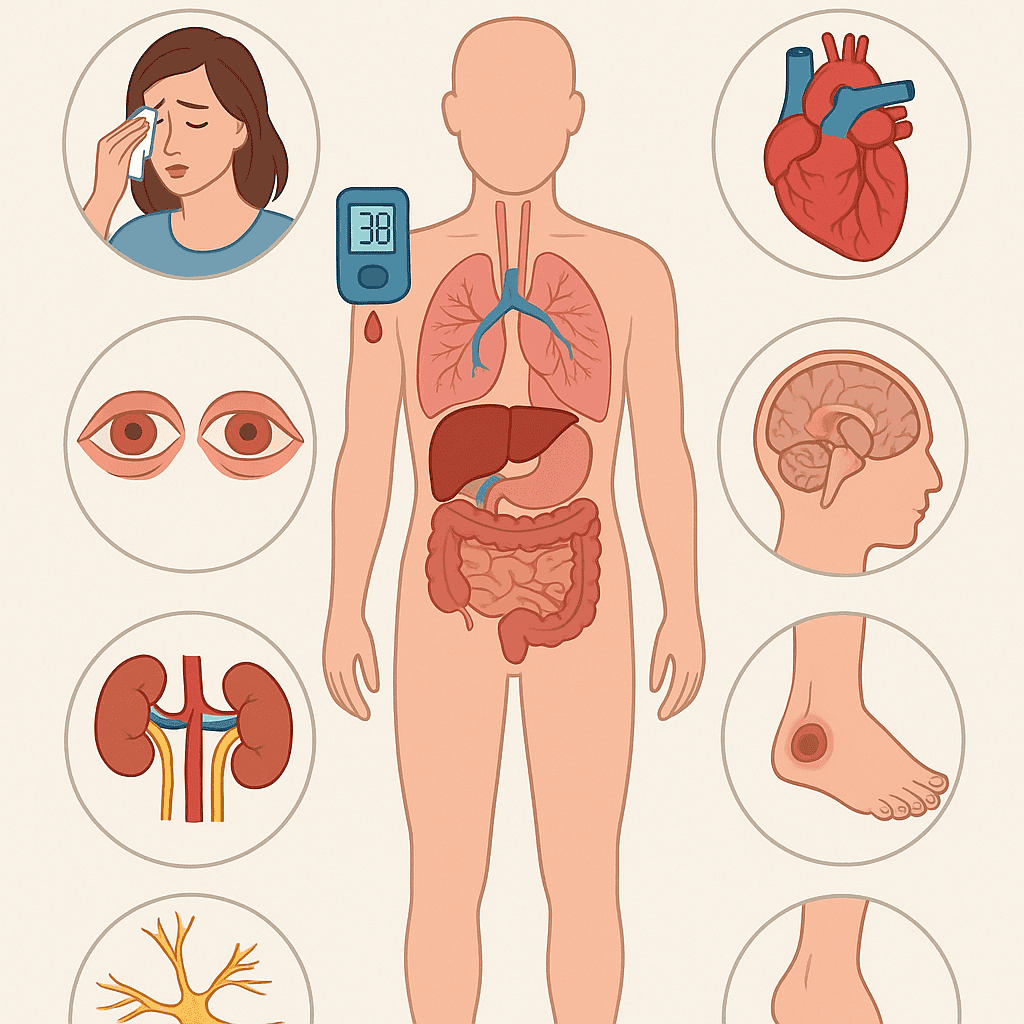
Diabetes mellitus is a chronic condition in which the body cannot properly use glucose, leading to elevated blood sugar levels. If not properly managed, diabetes can progressively damage blood vessels, nerves, and various organs, resulting in serious and sometimes irreversible complications. However, with good glycemic control and regular monitoring, most of these complications can be prevented or delayed.

Passing through Romania and need a prescription for your chronic treatment?
Contact the Dr. Petrache’s Virtual Clinic for any medical issue you encounter while in Romania. Send an email to: [email protected]
Acute Complications of Diabetes
These occur suddenly and require immediate medical attention:
1. Hypoglycemia
A sudden drop in blood glucose below 70 mg/dL. Causes include excessive insulin, delayed meals, unplanned physical activity, or alcohol intake.
Symptoms: shakiness, sweating, intense hunger, confusion, loss of consciousness.
Treatment: rapid intake of simple carbohydrates (glucose tablets, juice).
2. Severe Hyperglycemia
Excessively high blood sugar, often above 250 mg/dL. It can be triggered by infections, stress, or skipped medications.
Consequences: dehydration, altered consciousness, risk of coma.
3. Diabetic Ketoacidosis (DKA)
A serious complication, more common in type 1 diabetes. It occurs when the body breaks down fat in the absence of insulin, producing toxic ketones.
Symptoms: nausea, vomiting, rapid breathing, fruity-smelling breath, drowsiness.
This is a medical emergency.
4. Hyperosmolar Hyperglycemic State (HHS)
More common in elderly people with type 2 diabetes. Blood glucose can exceed 600 mg/dL.
Symptoms: extreme thirst, confusion, seizures. Requires immediate hospital care.
Chronic Complications of Diabetes
These develop over time due to persistent high blood glucose, gradually affecting various organs and systems.
Passing through Romania and need a prescription for your chronic treatment?
Contact the Dr. Petrache’s Virtual Clinic for any medical issue you encounter while in Romania. Send an email to: [email protected]
1. Microvascular Complications
a. Diabetic Retinopathy
Affects the blood vessels of the retina, leading to blurred vision, macular edema, or even blindness.
Prevention: good glycemic control and annual eye exams.
b. Diabetic Nephropathy
Kidney damage that can cause protein in the urine, high blood pressure, and in severe cases, kidney failure.
Prevention: blood sugar and blood pressure control, low-sodium/protein diet.
c. Diabetic Neuropathy
Nerve damage affecting peripheral and autonomic nerves. It causes pain, numbness, digestive issues, and sexual dysfunction.
Prevention: glycemic control, regular foot exams, and neurological evaluation.
2. Macrovascular Complications
a. Cardiovascular Disease
Diabetes significantly increases the risk of heart attack, angina, and heart failure.
Prevention: blood sugar, cholesterol, and blood pressure management, no smoking.
b. Stroke
Increased risk due to accelerated atherosclerosis and hypertension.
Prevention: blood pressure medication, healthy diet, physical activity.
c. Peripheral Artery Disease (PAD)
Poor blood flow in the legs, increasing the risk of ulcers and amputation.
Prevention: ABI and Doppler tests, smoking cessation, walking programs.
Other Diabetes-Related Complications
Infections: Weakened immune function leads to frequent urinary tract infections, skin infections, fungal infections, and gum disease.
Diabetic Foot: Ulcers from neuropathy and poor circulation. Requires careful foot care and regular podiatry visits.
Dental Complications: Periodontitis, gingivitis, and tooth loss are more frequent in poorly controlled diabetes.
Cognitive Decline: Diabetes increases the risk of dementia and Alzheimer’s disease.
Pregnancy Complications: Fetal macrosomia, preeclampsia, and increased future risk of gestational diabetes.
When Do Complications Appear?
Complications do not develop overnight. They typically occur after years of uncontrolled diabetes and are influenced by:
- Blood sugar levels (high HbA1c = higher risk)
- Duration of diabetes
- Associated risk factors (smoking, hypertension, high cholesterol)
- Lack of routine checkups or poor treatment adherence
How Can Complications Be Prevented?
Prevention is possible and effective. Here’s what you can do:
- Regular blood glucose monitoring and maintaining a healthy HbA1c
- Annual visits to ophthalmologists, cardiologists, and nephrologists
- Periodic evaluation of kidney, nerve, and vascular function
- Adherence to prescribed treatment
- Daily physical activity and a balanced diet
- No smoking
- Regular consultations with a diabetologist
Passing through Romania and need a prescription for your chronic treatment?
Contact the Dr. Petrache’s Virtual Clinic for any medical issue you encounter while in Romania. Send an email to: [email protected]
Conclusion: Diabetes doesn’t hurt, but its complications can damage your life
Diabetes is a silent disease, but its complications can dramatically affect both quality and length of life. The good news is that most of these complications are preventable. With proper education, medical support, and proactive self-care, you can live well with diabetes. At Dr. Petrache’s Virtual Clinic, we provide comprehensive evaluations, personalized prevention plans, and professional monitoring to protect your health long term.
Follow us on:
- FaceBook: Diabetes & Nutrition;
- YouTube: Diabetes Facts.