3 mistakes that completely ruin your glucose sensor readings
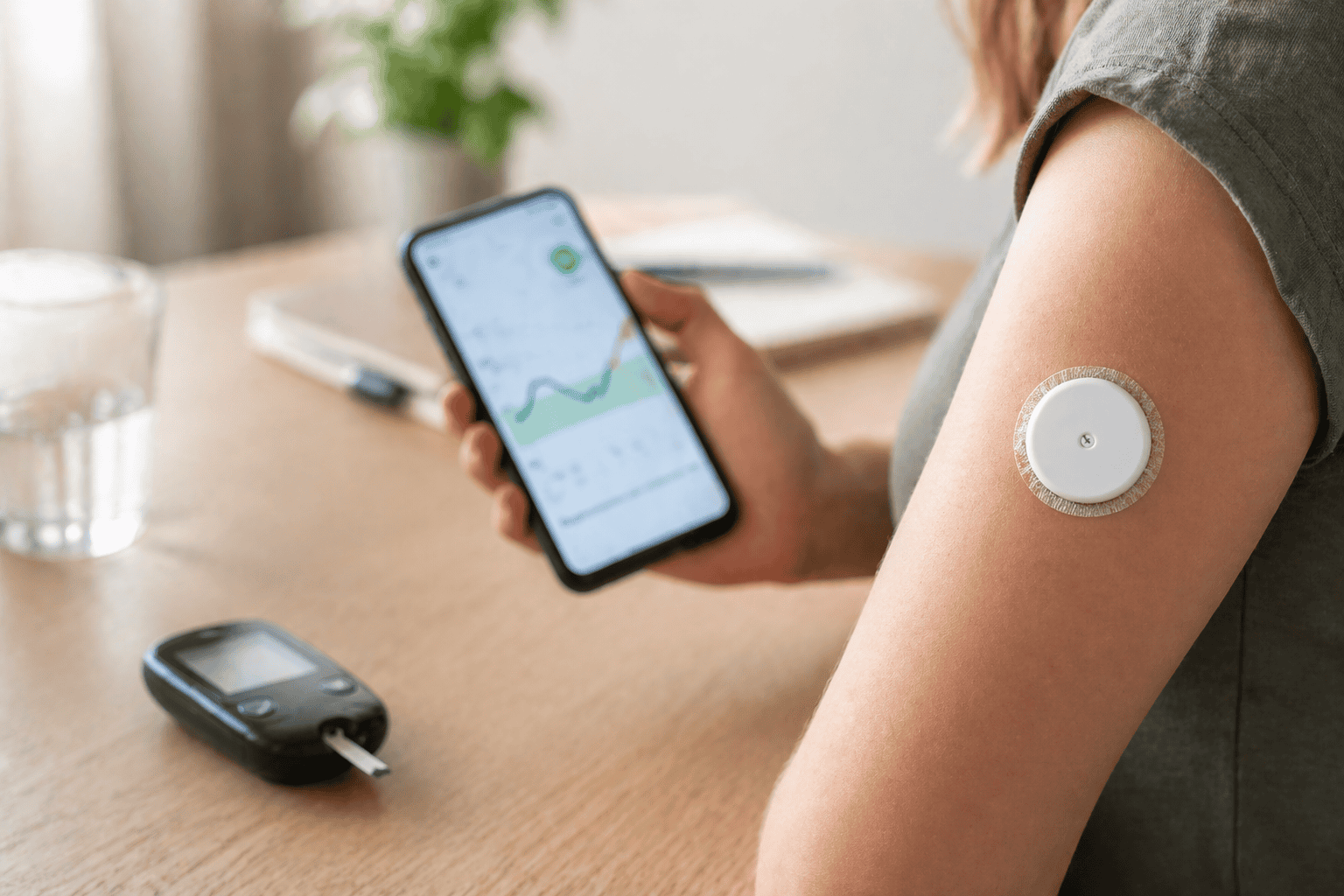
Continuous glucose monitors have completely changed the way we understand diabetes and metabolism. They provide ongoing data, trends, alerts, and a much clearer picture compared to a few fingerstick measurements per day. Still, many people end up saying the same thing: “my sensor isn’t accurate” or “it gives me weird readings.”
In reality, most of the time the problem is not the sensor itself, but how it is used and interpreted. There are a few common mistakes that can seriously distort the readings and, as a result, the decisions you make. Once you understand and avoid them, the sensor becomes much more reliable and useful.

The key difference you need to understand
Before discussing the mistakes, it’s important to clarify one essential point: a glucose sensor does not measure blood glucose. It measures glucose in the interstitial fluid, the fluid between your cells.
This seemingly small difference has important consequences. The values are not identical and, more importantly, they are not perfectly synchronized in time. There is usually a delay of about 10–15 minutes between what is happening in the blood and what the sensor shows.
If you expect the two methods to match perfectly, you will constantly feel that the sensor is “wrong.” In reality, it is working correctly—just measuring something slightly different.
Foreigner In Romania and in need of a prescription for your chronic treatment?
Contact Dr. Petrache’s Virtual Clinic for any medical issue you encounter while in Romania. Send an email to: clinica@diabet-si-nutritie.ro
Mistake #1: comparing the sensor to a glucometer at the wrong time
This is by far the most common source of confusion. Many people check their blood glucose with a glucometer and immediately compare it to the sensor. If the values are different, the conclusion is quick: the sensor is inaccurate.
The issue appears especially when glucose levels are changing rapidly. After meals, during physical activity, or after medication, blood glucose can rise or fall quickly. The sensor, however, reflects these changes with a delay.
So it is completely possible to see 160 mg/dL on the glucometer and 130 mg/dL on the sensor without either being wrong. They are simply showing the same process at slightly different moments.
This becomes even more confusing if you ignore the trend arrows. If the sensor shows an upward arrow, the value is rising and will likely soon reach the glucometer reading.
When glucose is stable, the differences between the two methods are much smaller. That’s why meaningful comparisons should be made during stable periods, not during rapid fluctuations.
Mistake #2: fully trusting the sensor in the first 24 hours
The first hours after applying a sensor are often the most misleading. Many people expect perfect accuracy right away, but that’s not how it works.
After insertion, the sensor needs time to stabilize in the tissue. The area is slightly affected by the insertion process, minor local inflammation can occur, and readings may be more variable. This is why values can seem “erratic” during the first day.
If you make important decisions based on these early readings, you may react to information that is not yet reliable. For example, you might correct a glucose level that isn’t actually high or treat a “low” that isn’t real.
As time passes, the sensor becomes more stable and the data more consistent. During the first 24 hours, it’s best to treat the readings as approximate and avoid major decisions based solely on them.
Mistake #3: putting pressure on the sensor without realizing it
This is a very common but often overlooked issue. It usually happens during sleep.
If you lie on the side where the sensor is placed, the pressure can temporarily reduce the flow of interstitial fluid in that area. This can lead to artificially low readings.
This is how so-called nighttime “lows” appear, only to disappear quickly once you change position. If you are not aware of this phenomenon, it can be alarming and may lead to unnecessary actions.
It’s important to always interpret values in context. If the sensor shows a sudden drop during sleep, but you have no symptoms and the values quickly return to normal after moving, it is very likely a pressure-related artifact.
Passing through Romania and need a prescription for your chronic treatment?
Contact Dr. Petrache’s Virtual Clinic for any medical issue you encounter while in Romania. Send an email to: clinica@diabet-si-nutritie.ro
Why these mistakes happen
All these situations have one thing in common: they come from the desire to stay in control. When you have access to continuous data, it is tempting to check frequently and react to every change.
The problem is that a sensor should not be interpreted as isolated numbers, but as a dynamic system. The trend, the context, and the pattern over time matter much more than a single value.
Without this perspective, a very useful tool can easily become a source of stress and confusion.
How to use the data correctly
A glucose sensor is not just a device that tells you “your number.” It shows how your body responds to different situations.
Instead of focusing on small differences, it is much more helpful to look at:
- the direction your glucose is moving
- how your body reacts to food
- the effect of physical activity
- daily patterns
Over time, this information becomes far more valuable than a perfectly matched number at a single moment.
Tourist in Romania and in need of a prescription for your chronic treatment?
Contact Dr. Petrache’s Virtual Clinic for any medical issue you encounter while in Romania. Send an email to: clinica@diabet-si-nutritie.ro
Conclusion
Glucose sensors are powerful tools, but they are not perfect and should not be interpreted rigidly. Most issues do not come from the device itself, but from how it is used.
Comparing readings at the wrong time, relying too much on the first day, and applying pressure to the sensor are three simple mistakes that can completely distort the picture.
If you avoid these and understand how the system works, the sensor becomes what it is meant to be: a real ally in understanding your body.
Follow us on:
- FaceBook: Diabetes & Nutrition;
- YouTube: Diabetes Facts.