Crush Garlic Before Cooking
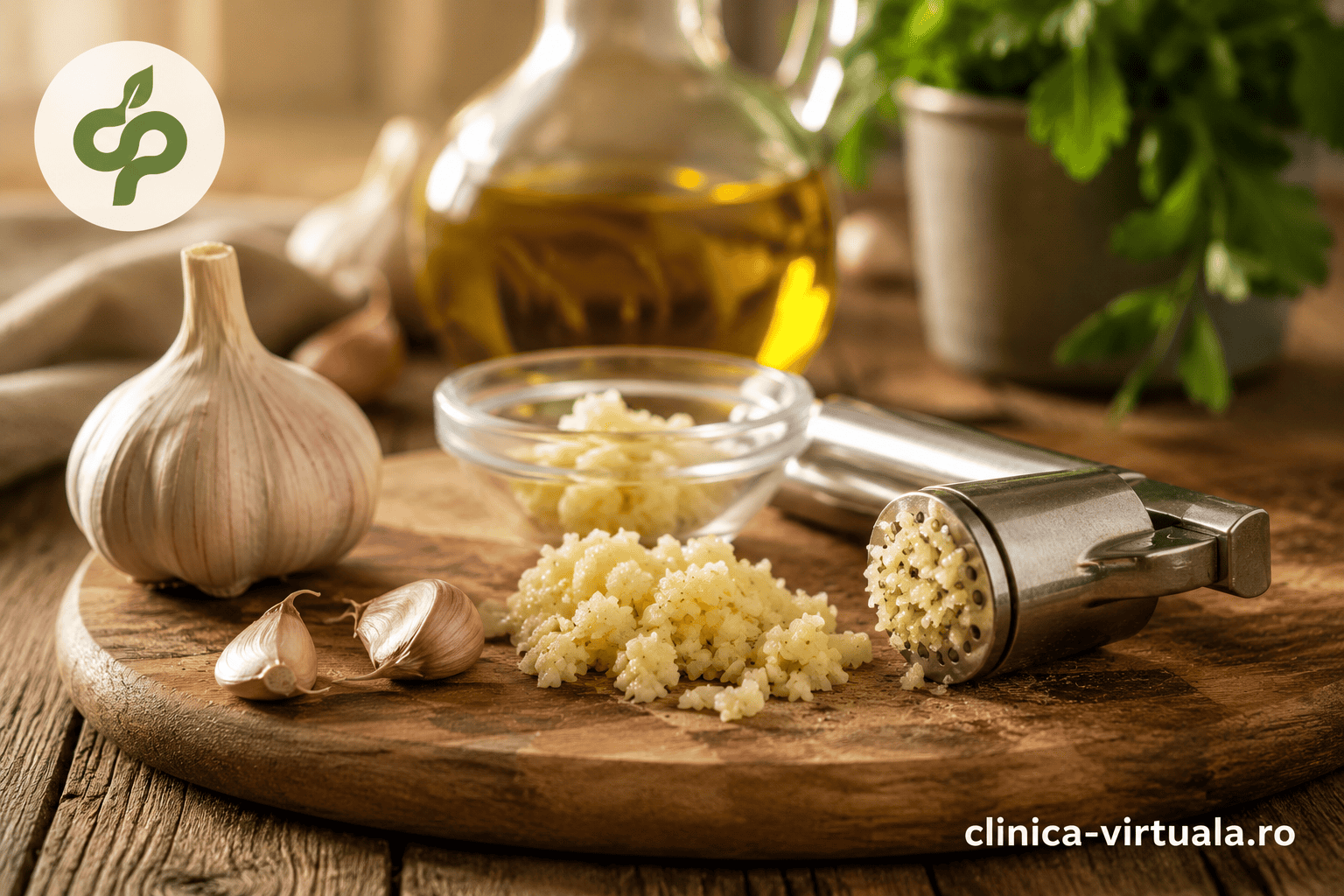
Garlic is one of the most studied foods in the world when it comes to bioactive compounds and potential health benefits. For thousands of years, it has been used both in cooking and traditional medicine, and today it continues to fascinate researchers because of its surprisingly complex chemistry.
What many people do not realize, however, is that the way you prepare garlic can significantly change what happens inside it.
A seemingly simple detail — crushing or chopping garlic before cooking — can influence the formation of certain active compounds. In practice, waiting just a few minutes between crushing garlic and heating it may alter the chemistry of the food.
It sounds like a small culinary trick, but it is supported by real biochemical mechanisms.

Tourist in Romania and in need of a prescription for your chronic treatment?
Contact Dr. Petrache’s Virtual Clinic for any medical issue you encounter while in Romania. Send an email to: clinica@diabet-si-nutritie.ro
What Garlic Contains
Garlic contains numerous sulfur compounds responsible for:
- its intense smell;
- its distinctive flavor;
- and part of the biological effects studied in research.
In intact garlic cloves, many of these substances exist in relatively inactive forms.
When garlic is:
- crushed;
- chopped;
- sliced;
- chewed;
its cells break apart, allowing certain enzymes to come into contact with other molecules inside the garlic.
This is where the interesting part begins.
How Allicin Forms
One of the most famous compounds associated with garlic is allicin.
Allicin does not exist in large amounts inside whole, untouched garlic cloves. It forms after garlic is crushed or cut.
The process involves:
- alliin;
- and an enzyme called alliinase.
When the structure of garlic is damaged through crushing, the enzyme can transform alliin into allicin.
Allicin is responsible for:
- garlic’s powerful smell;
- its characteristic flavor;
- and some of the antioxidant and antimicrobial effects studied in laboratories.
Why Timing Matters Before Cooking
The problem is that the enzyme alliinase is sensitive to heat.
If garlic is immediately thrown into a very hot pan:
- the enzyme may quickly become inactive;
- allicin formation may be reduced.
However, if garlic is:
- crushed;
- then left to rest for a few minutes before cooking;
the enzyme has time to produce more allicin before high temperatures stop the process.
That is why many sources recommend:
- crushing the garlic;
- waiting approximately 5–10 minutes;
- then cooking it.
Does This Mean Cooked Garlic Is “Bad”?
No.
It is important to avoid extremes and exaggerated interpretations.
Cooked garlic remains:
- flavorful;
- nutritious;
- valuable in a healthy diet.
Even if some heat-sensitive compounds decrease, cooked garlic still contains:
- antioxidants;
- sulfur compounds;
- aroma;
- and important culinary properties.
In addition, many people tolerate cooked garlic better than raw garlic.
Raw Garlic Versus Cooked Garlic
There are important differences between the two.
Raw garlic:
- has a stronger flavor;
- produces more allicin;
- may irritate digestion in some people.
Cooked garlic:
- becomes sweeter;
- has a milder taste;
- may be easier to tolerate;
- develops a different chemical profile.
There is not necessarily a “perfect” version. In many cases, combining raw and cooked garlic can be the most interesting option both nutritionally and culinarily.
Foreigner In Romania and in need of a prescription for your chronic treatment?
Contact Dr. Petrache’s Virtual Clinic for any medical issue you encounter while in Romania. Send an email to: clinica@diabet-si-nutritie.ro
What Studies Say About Garlic
Garlic is extensively researched for possible effects related to:
- cardiovascular health;
- blood pressure;
- metabolism;
- inflammation;
- microbes;
- immune function.
However, it is extremely important to remain realistic.
Many dramatic claims found online:
- come from animal studies;
- use concentrated extracts;
- involve doses far higher than normal food consumption.
That does not mean garlic is useless. It simply means that:
healthy nutrition does not work through “miracle superfoods.”
Garlic and Cardiovascular Health
Some studies suggest that certain garlic preparations may have modest effects on:
- blood pressure;
- cholesterol profile;
- vascular function.
However, these effects are usually:
- moderate;
- variable;
- dependent on dosage and context.
No single food can compensate for:
- smoking;
- sedentary lifestyle;
- excess calorie intake;
- poor sleep;
- highly processed diets.
Why Garlic Smells So Strong
The sulfur compounds formed after crushing garlic are extremely volatile.
They can:
- enter the air;
- be absorbed into the bloodstream;
- even appear in breath and sweat.
This is why garlic odor can persist long after eating it.
Interestingly, the same chemistry responsible for the smell is also what attracts scientific interest.
Does the Crushing Method Matter?
Yes, to some extent.
Pressing, finely chopping, or aggressively crushing garlic destroys more cells and encourages enzymatic reactions.
A garlic clove left mostly intact produces less allicin compared to one that is:
- thoroughly crushed;
- very finely chopped.
That is why grated garlic or garlic passed through a press usually has a more intense flavor.
Culinary Combinations That Work Well
Garlic pairs very well with:
- olive oil;
- tomatoes;
- aromatic herbs;
- vegetables;
- yogurt;
- mushrooms;
- meat;
- fish.
In many traditional cuisines, garlic appears alongside ingredients rich in antioxidants and healthy fats.
Sometimes traditional gastronomy intuitively reaches combinations that science later tries to explain.
Are There Any Limitations?
Yes.
Excessive consumption may cause:
- reflux;
- bloating;
- digestive irritation;
- unpleasant breath odor.
For some people, large amounts of raw garlic can be difficult to tolerate.
In addition, certain concentrated garlic supplements may interact with:
- blood thinners;
- some medications;
- surgical procedures.
Passing through Romania and need a prescription for your chronic treatment?
Contact Dr. Petrache’s Virtual Clinic for any medical issue you encounter while in Romania. Send an email to: clinica@diabet-si-nutritie.ro
Sometimes Small Details Change Food Chemistry
The story of garlic reveals something fascinating about nutrition:
it is not only the ingredient that matters,
but also what you do with it.
Sometimes:
- cutting;
- crushing;
- cooling;
- fermenting;
- exposure to light;
- cooking time;
can significantly alter the composition of foods.
And that is one of the most fascinating things about cooking:
it changes not only flavor,
but also biochemistry.
Follow us on:
- FaceBook: Diabetes & Nutrition;
- YouTube: Diabetes Facts.