FDA Warning: Weight Loss Treatments and the Risk of Blindness
Medical article | November 12, 2026
Modern weight loss medications, such as Mounjaro, Wegovy, and Saxenda, have revolutionized obesity treatment. These therapies help reduce appetite, control hunger, and achieve significant weight loss.
However, on November 9, 2026, the U.S. Food and Drug Administration (FDA) issued an important warning about a potentially increased risk of vision loss associated with medications that act on GLP-1 receptors.
The warning concerns a rare but potentially serious condition called non-arteritic anterior ischemic optic neuropathy (NAION), which can cause sudden and sometimes permanent vision loss.
This information has raised concerns among people using injectable or oral treatments for obesity and type 2 diabetes.
But how significant is the risk? Are all these medications equally dangerous? Most importantly, should patients discontinue their treatment?
Let’s examine what the FDA says and what scientific studies have revealed.

Which Weight Loss Medications Are Affected by the FDA Warning?
The warning applies to medications that act on GLP-1 receptors, including tirzepatide, which targets both GIP and GLP-1 receptors.
The medications covered include:
| Medication | Active ingredient | Main indication |
|---|---|---|
| Mounjaro | Tirzepatide | Type 2 diabetes and weight management, depending on the country |
| Zepbound | Tirzepatide | Obesity, United States |
| Wegovy | Semaglutide | Obesity |
| Ozempic | Semaglutide | Type 2 diabetes |
| Rybelsus | Semaglutide | Type 2 diabetes |
| Saxenda | Liraglutide | Obesity |
| Victoza | Liraglutide | Type 2 diabetes |
| Trulicity | Dulaglutide | Type 2 diabetes |
The FDA’s list also includes other medications, such as exenatide, lixisenatide, and orforglipron.
It is important to understand that not all these medications are approved for obesity treatment and that their approved indications may differ between the United States and the European Union.
The warning does not mean that every medication has the same scientifically established risk of vision loss.
The FDA decided to introduce a warning for the entire category based on its evaluation of the available evidence.
What Is NAION, the Condition That Can Cause Blindness?
Non-arteritic anterior ischemic optic neuropathy, commonly known as NAION, occurs when the blood supply to the anterior portion of the optic nerve becomes insufficient.
The optic nerve transmits visual information from the eye to the brain. When its supply of oxygen and nutrients is reduced, the nerve fibers may become damaged.
NAION typically causes sudden, painless vision loss in one eye.
Patients may notice that part of their visual field is missing, that their vision has become blurred, or that certain areas appear dark.
Sometimes, the visual disturbance is first noticed in the morning, immediately after waking up.
Unfortunately, damage to the optic nerve may be irreversible, and there is currently no treatment proven to reliably restore vision lost because of NAION.
NAION is not the same as diabetic retinopathy or other eye complications that may develop in people with diabetes.
What Did the FDA Discover?
The FDA reviewed several categories of evidence, including randomized clinical trials, observational studies, post-marketing adverse event reports, and experimental research.
One of the most important analyses included 126 randomized clinical trials involving 134,253 participants.
Researchers identified 15 cases considered likely to represent NAION: 10 among people receiving GLP-1 medications and five in comparator groups.
Estimated NAION cases per 100,000 person-years
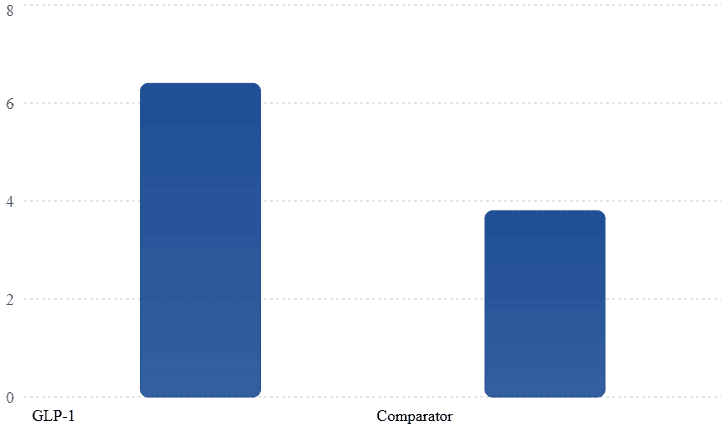
Aggregated FDA analysis; these figures do not represent individual risk estimates for each medication.
The absolute difference was approximately 2.6 additional cases per 100,000 person-years.
This difference suggests a possible increase in risk, although the event remains very rare.
However, the small number of cases limits the precision of the estimate, and the findings alone do not establish a causal relationship.
The FDA also analyzed real-world medical data.
Results varied depending on the medications used for comparison. The risk was not statistically significantly increased compared with SGLT2 inhibitors, but it was higher compared with DPP-4 inhibitors.
These findings illustrate why interpreting the potential risk is complex.
Why Might Weight Loss Medications Affect Vision?
The exact biological mechanism remains unknown.
Several explanations have been proposed, including changes in blood pressure, circulation, and metabolism that could influence blood flow to the optic nerve.
However, these explanations remain hypotheses.
Furthermore, people with diabetes, obesity, hypertension, or sleep apnea may already have an increased risk of NAION, regardless of the medications they use.
Consequently, it is difficult to determine how much of the observed risk is caused by the medication itself and how much is related to pre-existing medical conditions.
The FDA did not identify a convincing mechanism in the experimental studies it reviewed that could explain the potentially increased risk.
Are All Weight Loss Medications Equally Risky?
There is currently insufficient evidence to conclude that all medications included in the FDA warning carry the same risk of NAION.
Semaglutide, the active ingredient in Wegovy and Ozempic, has been investigated more extensively in connection with this condition.
For tirzepatide, the active ingredient in Mounjaro and Zepbound, the medication-specific evidence remains more limited.
Importantly, scientific studies have not always produced consistent results.
For example, an analysis published in the British Journal of Ophthalmology in 2026 included 96,829 participants from randomized trials involving semaglutide and liraglutide.
The researchers did not identify an increased incidence of NAION compared with placebo.
Eight cases were confirmed: three among participants receiving GLP-1 medications and five in placebo groups.
These findings do not invalidate the FDA warning. However, they demonstrate that the available scientific evidence remains inconsistent and that further research is necessary.
Who Is at Greater Risk of Vision Loss?
NAION does not occur exclusively in people using weight loss medications.
Several recognized or associated risk factors include:
- Diabetes mellitus.
- High blood pressure.
- Obstructive sleep apnea.
- Smoking.
- Anemia.
- Chronic kidney disease.
- Certain anatomical characteristics of the optic nerve.
People who have already experienced NAION in one eye have an increased risk of developing the condition in the other eye.
Having one or more of these risk factors does not mean that a patient will develop NAION, but it does justify a careful assessment of the benefits and risks of treatment.
What Symptoms Should Concern Patients?
The FDA recommends particular attention to sudden changes in vision.
Warning signs include:
- Sudden, painless vision loss, especially in one eye.
- Dark spots or missing areas in the visual field.
- Suddenly blurred vision.
- Changes in color perception.
- Loss of part of the visual field, including tunnel-like vision.
Sudden vision loss is a medical emergency.
Patients experiencing these symptoms should seek immediate emergency medical attention and ophthalmological evaluation.
Not every visual disturbance occurring during GLP-1 treatment is caused by NAION.
Other eye or neurological conditions can produce similar symptoms and may also require urgent diagnosis and treatment.
Should Patients Stop Their Weight Loss Treatment?
This is probably the most important question for patients.
The FDA does not recommend that everyone taking GLP-1 medications discontinue treatment as a precaution.
The warning is intended to inform patients and healthcare professionals about a potentially rare but serious adverse event.
If patients have no visual symptoms, treatment may generally continue according to their physician’s recommendations, following an individualized assessment of benefits and risks.
However, sudden visual disturbances require immediate medical evaluation.
If NAION is confirmed, the FDA recommends that healthcare professionals consider discontinuing GLP-1 treatment unless the benefits of continuing clearly outweigh the risks.
Is Continuing Treatment More Dangerous Than Living With Obesity?
There is no universal answer to this question.
Obesity is associated with numerous complications, including type 2 diabetes, hypertension, obstructive sleep apnea, cardiovascular disease, and metabolic dysfunction-associated steatotic liver disease.
Modern GLP-1-based treatments can produce substantial weight loss and provide important metabolic and cardiovascular benefits.
On the other hand, vision loss is a serious complication, even when the likelihood of its occurrence is low.
In clinical practice, prescribing decisions should consider the treatment indication, the patient’s medical history, associated conditions, and any previous ophthalmological problems.
For someone with severe obesity and multiple metabolic complications, the benefits of treatment may be considerable.
For someone who simply wants to lose a few kilograms without a medical indication for pharmacological treatment, the benefit-risk balance is different.
Weight loss medications should not be used solely for cosmetic purposes in the absence of an appropriate medical indication.
What Do I Recommend to Patients Taking Mounjaro, Wegovy, or Other GLP-1 Medications?
First, I do not recommend discontinuing treatment solely because of alarming headlines or media reports.
However, patients should be informed about symptoms that require immediate medical evaluation.
Second, controlling cardiovascular and metabolic risk factors remains essential. These include blood glucose, blood pressure, lipid levels, and body weight.
People with diabetes should also follow the recommended schedule of ophthalmological examinations, regardless of whether they are using GLP-1 medications.
Patients with a history of NAION should discuss their individual risks with their physician before starting or continuing treatment.
At present, there is insufficient evidence to recommend a special ophthalmological screening protocol for all GLP-1 users specifically to prevent NAION.
Furthermore, there is no established evidence that using lower doses or changing the interval between injections eliminates this potential risk.
Conclusion: Can Weight Loss Treatments Cause Blindness?
The FDA warning issued on November 9, 2026, is real and should be taken seriously.
Available evidence suggests a possible association between medications with GLP-1 activity and non-arteritic anterior ischemic optic neuropathy, a rare condition that may cause permanent vision loss.
However, the observed absolute risk is low, and a definitive causal relationship has not been established for every medication individually.
There is no evidence that everyone using Mounjaro, Wegovy, Ozempic, or Saxenda faces a substantial risk of blindness.
The essential message for patients is that these medications continue to offer important medical benefits, but they should be used under medical supervision, with appropriate indications and monitoring for potential adverse effects.
A safety warning does not automatically mean that a medication should be abandoned. It means that physicians and patients need to be better informed about its potential risks.
Scientific References
- U.S. Food and Drug Administration (FDA). Safety Labeling Changes for GLP-1 Receptor Agonists. November 9, 2026.
- FDA MedWatch. Safety Information for Patients and Healthcare Professionals. 2026.
- British Journal of Ophthalmology. Non-Arteritic Anterior Ischemic Optic Neuropathy in Randomized Clinical Trials of Semaglutide and Liraglutide. 2026.
Visiting Romania and need a prescription?
- Forgot your regular medication at home?
- Running out of your chronic treatment?
- Need a prescription for a medication while travelling in Romania?
Dr. Petrache’s Virtual Clinic offers an online prescription service for foreign visitors in Romania.
Simply send us an email with your prescription request and the relevant medical information. If the medication can legally and safely be prescribed, you will receive payment instructions and your prescription will be sent to you electronically.
No clinic visit required.
📧 clinica@diabet-si-nutritie.ro
🌐 Dr. Petrache’s Virtual Clinic – Services for Foreigners
Prescriptions are issued at the physician’s discretion and in accordance with Romanian legislation. Certain medications cannot be prescribed through this service.
Follow us on:
- FaceBook: Diabetes & Nutrition;
- YouTube: Diabetes Facts.