Saxenda – is anyone still using it?
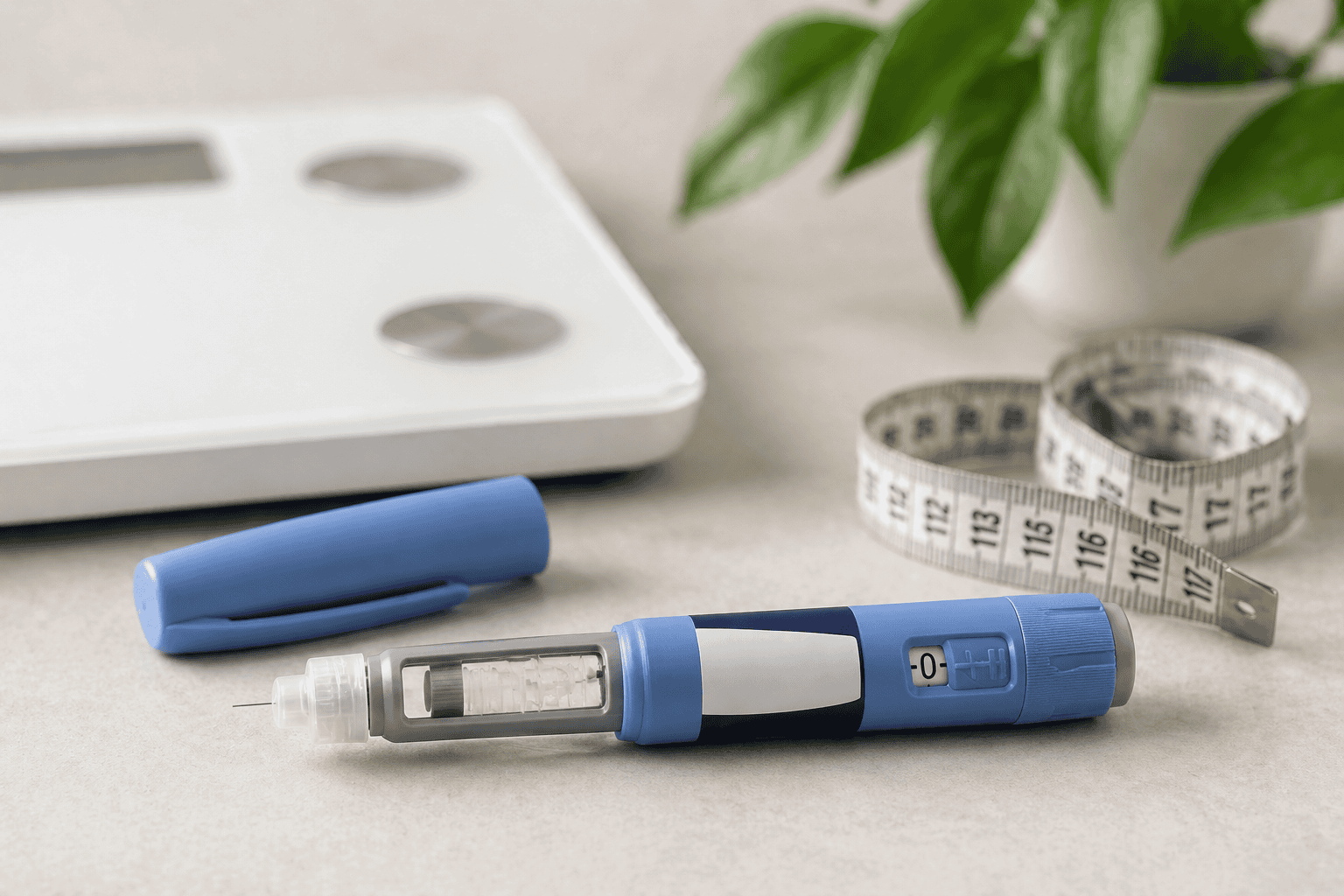

What Saxenda is and why it was a turning point
Saxenda is not a “new” drug, but it is certainly not one that should be ignored. When it was introduced, it fundamentally changed how we approach obesity treatment. For the first time, the focus shifted away from willpower and restrictive diets toward a therapy that directly targets the biological mechanisms of hunger.
Its active substance, liraglutide, is an analog of the GLP-1 hormone. This hormone plays a key role in regulating appetite, satiety, and blood glucose. In practice, Saxenda does not force patients to eat less—it makes the body naturally feel that it does not need as much food.
For many patients, this is the moment when their relationship with food begins to change in a real, sustainable way.
How it works in the body
The mechanism of action is complex, but it can be understood by looking at three main levels: the brain, the stomach, and metabolism.
At the brain level, liraglutide acts on appetite centers in the hypothalamus, reducing the drive to eat. Hunger does not disappear completely, but its intensity decreases. This is often the difference between “I can’t stop eating” and “I stop naturally.”
At the gastric level, it slows gastric emptying. Food stays in the stomach longer, prolonging the feeling of fullness after meals. Patients no longer feel the need to eat again shortly after finishing a meal.
At the metabolic level, it improves glycemic control, which is particularly important in patients with Type 2 diabetes or prediabetes.
In short, Saxenda does not only reduce food intake—it reshapes eating behavior.
Foreigner In Romania and in need of a prescription for your chronic treatment?
Contact Dr. Petrache’s Virtual Clinic for any medical issue you encounter while in Romania. Send an email to: clinica@diabet-si-nutritie.ro
How effective is it in real life?
In clinical practice, Saxenda typically leads to a weight loss of about 5–10% of total body weight. For someone weighing 100 kg, this translates into 5–10 kg. While this may seem modest compared to the expectations created by social media, medically it is a meaningful reduction.
This level of weight loss can lead to:
- improved blood glucose control
- lower blood pressure
- reduced cardiovascular risk
- better insulin sensitivity
It is important to remember that medicine does not aim only for “visible” results, but for long-term health improvements.
Why it is no longer the first choice
With the emergence of newer therapies such as Wegovy and Mounjaro, expectations have changed.
These newer treatments offer:
- greater weight loss (15–20% or more)
- weekly administration, which is much more convenient
- stronger metabolic effects
Compared to them, Saxenda appears less effective and more demanding due to daily injections. In a world where adherence is critical, the difference between a daily and a weekly injection matters a lot.
Why it still has a place
Even though it is no longer the first-line option, Saxenda still plays a meaningful role in clinical practice.
There are patients who do not tolerate the newer therapies well, especially due to gastrointestinal side effects. In such cases, Saxenda may be easier to adapt to.
There are also situations where access to newer treatments is limited, either because of cost or availability. In these cases, Saxenda remains a valid alternative when used within a structured treatment plan.
Finally, not every patient needs dramatic weight loss. For someone aiming to lose 5–8 kg and stabilize eating behavior, Saxenda may be more than enough.
Clinical experience – an underrated advantage
One aspect that is often overlooked is the amount of clinical experience with this medication.
Saxenda:
- has been studied for many years
- has a well-known safety profile
- delivers predictable results
In an era of rapid innovation, this level of familiarity can be a real advantage for both physicians and patients.
Tourist in Romania and in need of a prescription for your chronic treatment?
Contact Dr. Petrache’s Virtual Clinic for any medical issue you encounter while in Romania. Send an email to: clinica@diabet-si-nutritie.ro
Side effects and adaptation
Like other GLP-1–based therapies, Saxenda is associated mainly with gastrointestinal side effects.
The most common include:
- nausea
- feeling of fullness
- bloating
- changes in bowel habits
These symptoms are usually more pronounced at the beginning and are closely related to the drug’s mechanism of action. This is why gradual dose escalation is essential.
In most cases, symptoms improve within a few weeks if the treatment is managed correctly.
The real issue: expectations
One of the biggest challenges is not the drug itself, but how it is perceived.
In a world driven by dramatic “before and after” transformations, Saxenda can seem underwhelming. However, this comparison is often unfair.
Saxenda does not promise extreme, rapid changes. It is designed for gradual, sustainable weight loss.
When expectations are realistic, results can be very good. When it is constantly compared to newer therapies, disappointment is almost inevitable.
Where it stands in 2026
Today, Saxenda is no longer the first choice for most patients with obesity.
But it is far from obsolete.
It is:
- an alternative
- an option for selected cases
- sometimes a starting point before more aggressive therapies
Its role has evolved, but it has not disappeared.
Passing through Romania and need a prescription for your chronic treatment?
Contact Dr. Petrache’s Virtual Clinic for any medical issue you encounter while in Romania. Send an email to: clinica@diabet-si-nutritie.ro
Conclusion
Saxenda is no longer the “star” of weight-loss treatment, but it remains a useful tool in the right context.
It has clear limitations:
- lower efficacy compared to newer therapies
- daily injections
- slower results
But it also has strengths:
- extensive clinical experience
- well-established safety profile
- usefulness in carefully selected patients
Ultimately, the right question is not “Is anyone still using Saxenda?”, but: “Is Saxenda the right option for this patient?”
And that answer does not come from trends—it comes from a careful, individualized medical evaluation.
Follow us on:
- FaceBook: Diabetes & Nutrition;
- YouTube: Diabetes Facts.