The Most Harmful Foods Are…

the Ones We Eat So Often We Stop Noticing Them
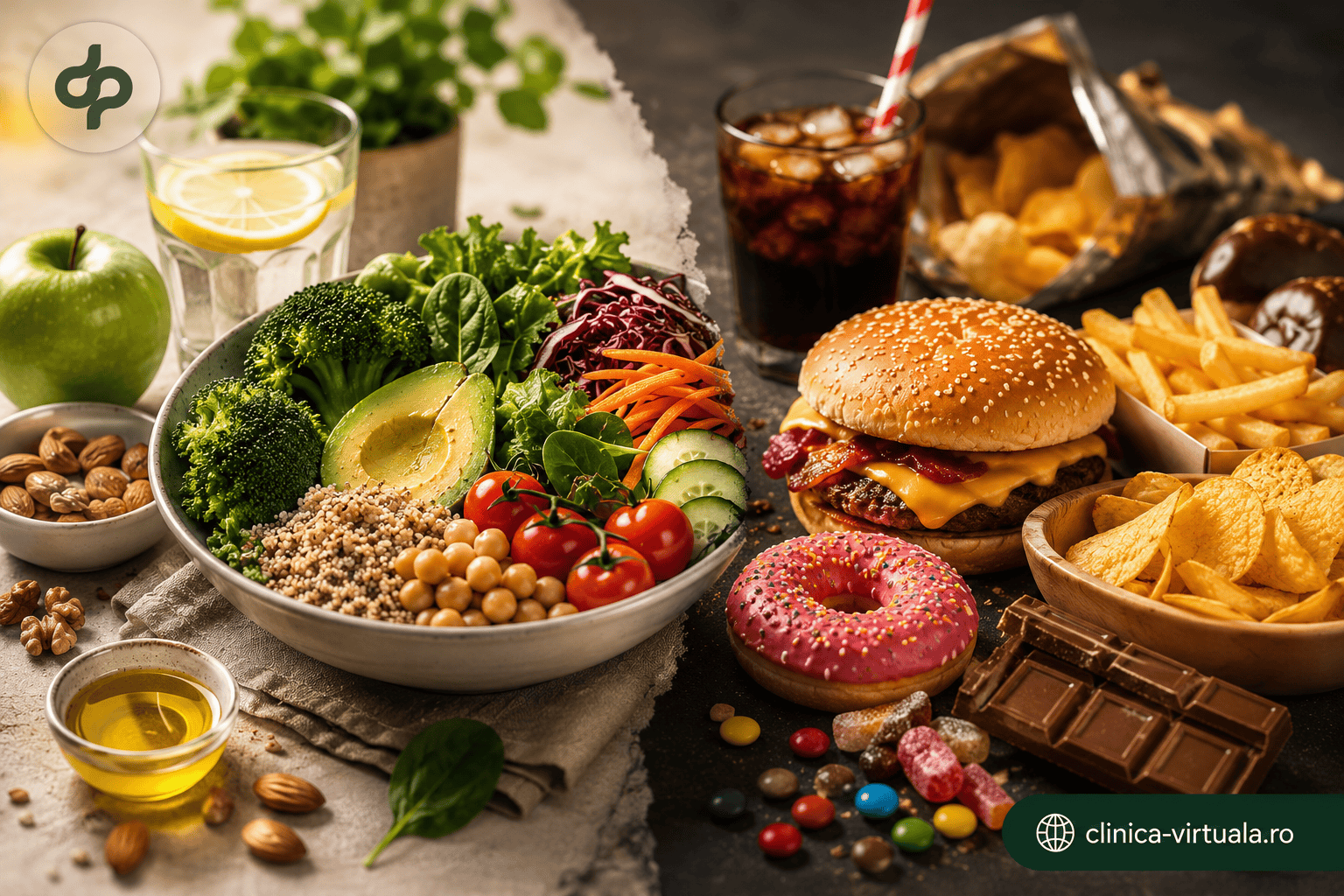
When people ask which foods are the most harmful, many immediately think about sugar, fast food, or sweets. In reality, things are much more complex. The human body can tolerate almost any food occasionally. The real problem appears when certain products become a constant part of daily life.
The most harmful foods are not necessarily the ones eaten once at a celebration or during a vacation. Very often, the real issue comes from everyday products that are accessible everywhere, heavily marketed, and consumed almost automatically.
Many of them have several things in common:
- they are ultra-processed;
- they are extremely calorie-dense;
- they provide little satiety;
- they combine sugar, salt, and fat;
- they are designed to be difficult to stop eating.
Tourist in Romania and in need of a prescription for your chronic treatment?
Contact Dr. Petrache’s Virtual Clinic for any medical issue you encounter while in Romania. Send an email to: clinica@diabet-si-nutritie.ro
Sugary Drinks – Among the Most Aggressive Modern Products
Perhaps one of the most problematic aspects of modern nutrition is the frequent consumption of sweetened beverages.
This category includes:
- soft drinks;
- energy drinks;
- sweetened teas;
- commercial coffee drinks;
- milkshakes;
- seemingly “natural” juices.
The issue is that liquids provide very little satiety compared to the number of calories they contain.
As a result, a person may consume large amounts of sugar very quickly without feeling like they have actually eaten.
In addition, sugary beverages may contribute to:
- weight gain;
- insulin resistance;
- blood sugar fluctuations;
- increased cravings;
- excess calorie intake.
Many people consume liquid calories every day without perceiving them as “food.”
Ultra-Processed Foods
In recent years, the term “ultra-processed” has become increasingly discussed.
These products are often industrially designed for:
- intense flavor;
- pleasant texture;
- long shelf life;
- repetitive consumption.
This category may include:
- chips;
- packaged snacks;
- many pastries;
- packaged sweets;
- highly processed breakfast cereals;
- fast food;
- processed meats;
- ready-to-eat frozen meals.
The problem is not only the calorie content. Many of these foods can also interfere with the body’s natural hunger and satiety signals.
Sometimes people continue eating even after exceeding their energy needs.
Foreigner In Romania and in need of a prescription for your chronic treatment?
Contact Dr. Petrache’s Virtual Clinic for any medical issue you encounter while in Romania. Send an email to: clinica@diabet-si-nutritie.ro
Frequent Fast Food Consumption
Occasional fast food is not the end of the world. However, frequent consumption can become problematic.
Many fast-food meals combine:
- very high calories;
- unhealthy fats;
- excess salt;
- refined carbohydrates;
- concentrated sauces;
- sugary drinks.
In addition, modern portions have become much larger than they used to be.
Another important aspect is the extremely high calorie density. Sometimes fast-food meals contain enormous amounts of calories in a relatively small volume.
Processed Meats and Deli Products
Processed meat is heavily debated in nutrition science.
This category may include:
- hot dogs;
- salami;
- certain sausages;
- industrial bacon;
- processed deli meats with many additives.
The issue is not only the meat itself, but also the industrial processing:
- large amounts of salt;
- preservatives;
- nitrites;
- high calorie density;
- association with other ultra-processed foods.
The overall dietary context matters enormously.
Concentrated Sweets and Desserts
Cakes, candies, pastries, and processed desserts often combine:
- sugar;
- fats;
- refined flour;
- very high calories;
- low satiety.
Sometimes the issue is not an occasional dessert, but the fact that many people consume sweet products multiple times every single day.
In addition, many modern snacks are specifically engineered to encourage repeated consumption.
Breakfast Cereals That Only Look Healthy
Many products marketed as healthy for children or adults are actually extremely processed.
Some breakfast cereals contain:
- large amounts of sugar;
- very little real fiber;
- artificial flavors;
- food colorings;
- concentrated calories.
Many people believe they are eating a healthy breakfast when the product is actually closer to a dessert.
Foreigner In Romania and in need of a prescription for your chronic treatment?
Contact Dr. Petrache’s Virtual Clinic for any medical issue you encounter while in Romania. Send an email to: clinica@diabet-si-nutritie.ro
Pastries and Bakery Products
Industrial croissants, puff pastries, oversized pretzels, and similar products are extremely popular because they are:
- cheap;
- accessible;
- convenient;
- tasty.
The problem is that many of them provide:
- very little protein;
- very little fiber;
- large amounts of calories;
- rapid return of hunger.
As a result, people may feel hungry again shortly afterward.
French Fries and Crunchy Snacks
The combination of:
- salt;
- fat;
- crunchy texture;
is extremely stimulating for the brain.
This is why chips and crunchy snacks can be very difficult to control in terms of quantity.
In addition, many people consume these foods without real hunger, simply out of habit or emotional eating.
Excessive Alcohol Consumption
Many people do not perceive alcohol as an important source of calories.
However, alcohol may influence:
- the liver;
- sleep quality;
- appetite;
- blood sugar;
- body weight;
- inflammation.
In addition, alcohol often lowers food control and may encourage overeating.
Passing through Romania and need a prescription for your chronic treatment?
Contact Dr. Petrache’s Virtual Clinic for any medical issue you encounter while in Romania. Send an email to: clinica@diabet-si-nutritie.ro
Sauces and “Light” Products
Sometimes the most misleading products are those promoted as:
- diet;
- fitness;
- sugar-free;
- healthy.
Some of them actually contain:
- large amounts of sweeteners;
- starches;
- hidden fats;
- excessive salt;
- many calories.
Modern food marketing can create the false impression that a product is automatically healthy.
The Real Problem Is Frequency
An extremely important aspect is that the human body can tolerate many things occasionally.
The problem appears when:
- sugary drinks become daily habits;
- fast food is consumed constantly;
- snacks replace real meals;
- sweets become routine;
- vegetables and fiber almost disappear from the diet.
Very often, metabolic health is influenced more by routine than by exceptions.
Why These Foods Are So Difficult to Control
Many modern products are designed for hyper-palatability.
In other words, they are created to strongly stimulate the brain’s reward system.
The combination of:
- sugar;
- fats;
- salt;
- crunchy textures;
- intense flavors;
can make it difficult to stop eating.
This does not mean a lack of willpower. The modern food environment is very different from what humans evolved with.
Emotional Eating Matters Enormously
Many people do not eat only because of biological hunger.
Eating may also be triggered by:
- stress;
- fatigue;
- anxiety;
- sadness;
- boredom;
- emotional reward.
Ultra-processed foods are often the main players in this type of eating behavior.
Are There Completely Forbidden Foods?
In real life, extremely rigid eating patterns rarely work long-term.
For many people, the idea of “completely forbidden” foods may encourage:
- binge eating episodes;
- guilt;
- a toxic relationship with food.
In general, context and frequency matter more than perfection.
What Deserves to Be Eaten More Often
Instead of obsessing over perfect elimination, it is often more useful to increase protective foods such as:
- vegetables;
- protein sources;
- fiber;
- whole fruits;
- legumes;
- minimally processed foods.
The body often functions better when it consistently receives real nutrients.
What We Frequently Observe in Medical Practice
Many people do not realize how dramatically modern nutrition has changed.
Today we have:
- larger portions;
- constant food availability;
- fast delivery services;
- snacks everywhere;
- aggressive marketing;
- highly calorie-dense products.
In this environment, overeating can happen almost automatically.
There Is No Nutritional Perfection
An important idea is that health does not depend on one single meal.
What truly matters includes:
- overall eating patterns;
- sleep;
- stress;
- physical activity;
- consistency;
- balance.
Sometimes small changes repeated daily have a greater impact than extreme diets.
Passing through Romania and need a prescription for your chronic treatment?
Contact Dr. Petrache’s Virtual Clinic for any medical issue you encounter while in Romania. Send an email to: clinica@diabet-si-nutritie.ro
Conclusion
The most harmful foods are not necessarily the ones eaten occasionally, but rather the ultra-processed products that become part of daily routine and gradually replace simple, balanced foods.
The modern problem is not only sugar or isolated fast-food meals, but an entire eating pattern based on:
- excessive calories;
- too little fiber;
- liquid calories;
- constant snacking;
- ultra-processing.
In many cases, the body does not need extreme diets. It simply needs more balance, consistency, and foods that are closer to their natural form.
Follow us on:
- FaceBook: Diabetes & Nutrition;
- YouTube: Diabetes Facts.