A Historic Change in Type 1 Diabetes

The First Treatment That Can Slow the Disease After Diagnosis
For more than 100 years, the treatment of type 1 diabetes has focused on one essential goal: replacing the insulin that the body can no longer produce.
Insulin has saved millions of lives and remains the cornerstone of therapy. However, it does not address the underlying cause of the disease. The immune system continues to attack and destroy the insulin-producing beta cells in the pancreas, and over time the body’s ability to make insulin steadily declines.
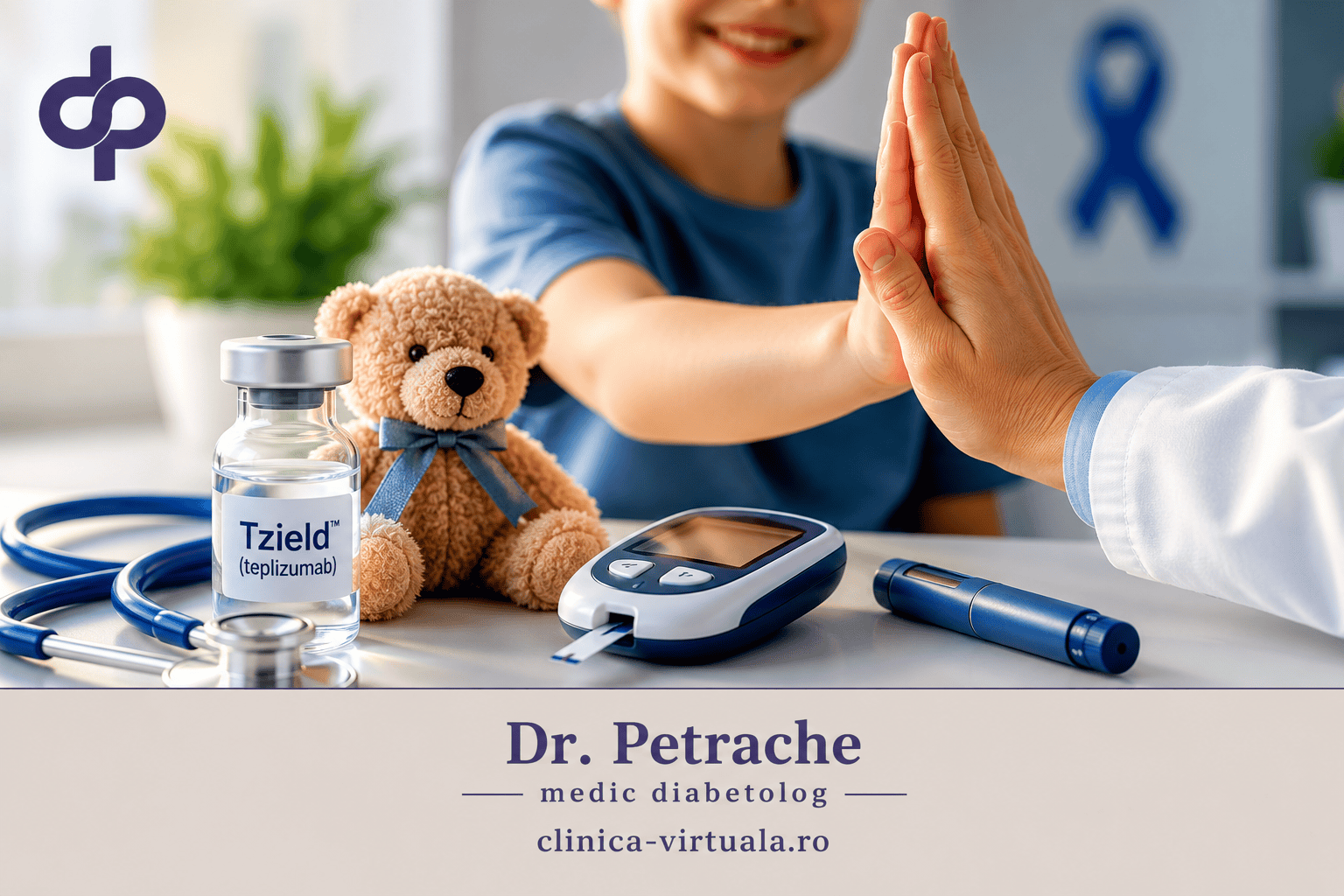
In 2026, the U.S. Food and Drug Administration (FDA) expanded the approval of Tzield (teplizumab), an immune-modifying therapy that can help preserve the body’s own insulin production in children and adolescents who have recently been diagnosed with type 1 diabetes. This marks a major milestone in diabetes care because, for the first time, an approved treatment is designed not only to manage blood glucose levels but also to modify the course of the disease itself.
Tourist in Romania and in need of a prescription for your chronic treatment?
Contact Dr. Petrache’s Virtual Clinic for any medical issue you encounter while in Romania. Send an email to: clinica@diabet-si-nutritie.ro
What Is Tzield?
Tzield, also known as teplizumab, is a monoclonal antibody that targets specific T cells involved in the autoimmune attack responsible for type 1 diabetes.
In people with type 1 diabetes, the immune system mistakenly identifies pancreatic beta cells as foreign and gradually destroys them. This autoimmune process often begins years before symptoms appear and continues even after diagnosis.
Tzield does not cure type 1 diabetes, nor does it eliminate the need for insulin therapy. Instead, it reduces the intensity of the immune attack, allowing some beta cells to survive and function longer.
Understanding the Stages of Type 1 Diabetes
Scientists now recognize that type 1 diabetes develops gradually rather than appearing suddenly.
The disease progresses through several stages.
In Stage 1, diabetes-related autoantibodies are present, but blood glucose levels remain normal.
In Stage 2, blood glucose abnormalities begin to appear, although patients usually have no symptoms.
In Stage 3, clinical diabetes develops, leading to symptoms such as excessive thirst, frequent urination, weight loss, and the need for insulin treatment.
Until recently, Tzield was primarily known for its ability to delay the progression from Stage 2 to Stage 3 diabetes.
The newly expanded FDA approval now allows its use in certain children and adolescents who have already been diagnosed with Stage 3 type 1 diabetes.
The Study Behind the Approval
The FDA’s decision was based on the results of the Phase 3 PROTECT trial, an international study involving 328 children and adolescents between the ages of 8 and 17 who had been diagnosed with type 1 diabetes within the previous six weeks.
Participants received two treatment courses, each consisting of 12 consecutive daily infusions.
Researchers monitored beta-cell function using C-peptide levels, an important marker that reflects the body’s natural insulin production.
The results were encouraging.
Patients treated with Tzield experienced a significantly slower decline in C-peptide levels compared with those receiving placebo. In practical terms, this means that the pancreas retained its ability to produce insulin for a longer period of time.
Why Is Preserving Natural Insulin Production So Important?
At first glance, preserving a small amount of insulin production may not seem particularly important. After all, people with type 1 diabetes use insulin regardless.
In reality, it matters tremendously.
Even small amounts of residual insulin production are associated with better glucose control, fewer severe hypoglycemic episodes, reduced glucose variability, and a lower daily management burden.
Patients who maintain some beta-cell function often find it easier to achieve stable blood glucose levels and may experience fewer diabetes-related complications over time.
Foreigner In Romania and in need of a prescription for your chronic treatment?
Contact Dr. Petrache’s Virtual Clinic for any medical issue you encounter while in Romania. Send an email to: clinica@diabet-si-nutritie.ro
Is This a Cure?
No.
This point cannot be emphasized enough.
Tzield does not cure type 1 diabetes.
Patients who receive the treatment still require insulin therapy, glucose monitoring, and ongoing medical care.
What makes Tzield different is that it is the first FDA-approved therapy designed to slow the loss of pancreatic function after diagnosis rather than simply replacing what has already been lost.
Are There Side Effects?
Like all immune-modifying therapies, Tzield carries potential risks and side effects.
The most commonly reported adverse effects include temporary reductions in lymphocyte counts, skin rash, headache, nausea, vomiting, diarrhea, and elevated liver enzymes.
More serious complications, including the reactivation of certain viral infections, have also been reported. For this reason, careful patient selection and medical monitoring are essential.
Why Is This Approval So Important?
For decades, advances in type 1 diabetes have largely focused on insulin formulations, glucose monitoring systems, insulin pumps, and automated insulin delivery technology.
These innovations have dramatically improved quality of life, but they do not alter the underlying autoimmune process.
The expanded approval of Tzield represents a new chapter.
For the first time, regulators have formally recognized that the course of type 1 diabetes can be modified through targeted intervention in the immune system.
This shifts the focus from simply treating the consequences of diabetes to actively slowing the disease itself.
What Could the Future Hold?
Tzield is unlikely to be the final answer, but it may be the beginning of a new era in type 1 diabetes treatment.
Researchers are already investigating combinations of immune therapies, beta-cell protective treatments, and regenerative approaches aimed at restoring insulin production.
Future strategies may not only slow beta-cell destruction but potentially help preserve or even recover pancreatic function.
For now, however, the expanded approval of Tzield stands as one of the most important developments in type 1 diabetes care in recent years.
More than a century after the discovery of insulin, medicine is taking its first meaningful steps toward altering the natural history of type 1 diabetes itself—not merely managing its symptoms.
Passing through Romania and need a prescription for your chronic treatment?
Contact Dr. Petrache’s Virtual Clinic for any medical issue you encounter while in Romania. Send an email to: clinica@diabet-si-nutritie.ro
Conclusion
The FDA’s decision to expand the use of Tzield for newly diagnosed children and adolescents with type 1 diabetes represents a landmark achievement in diabetes research and care.
While it is not a cure, it offers something that has long seemed out of reach: the possibility of slowing the disease process itself.
For families facing a new diagnosis of type 1 diabetes, this approval provides a new source of hope and signals a future in which preserving pancreatic function may become a standard part of treatment rather than an experimental goal.
Follow us on:
- FaceBook: Diabetes & Nutrition;
- YouTube: Diabetes Facts.