One Cheese Pastry a Day… and Then What?
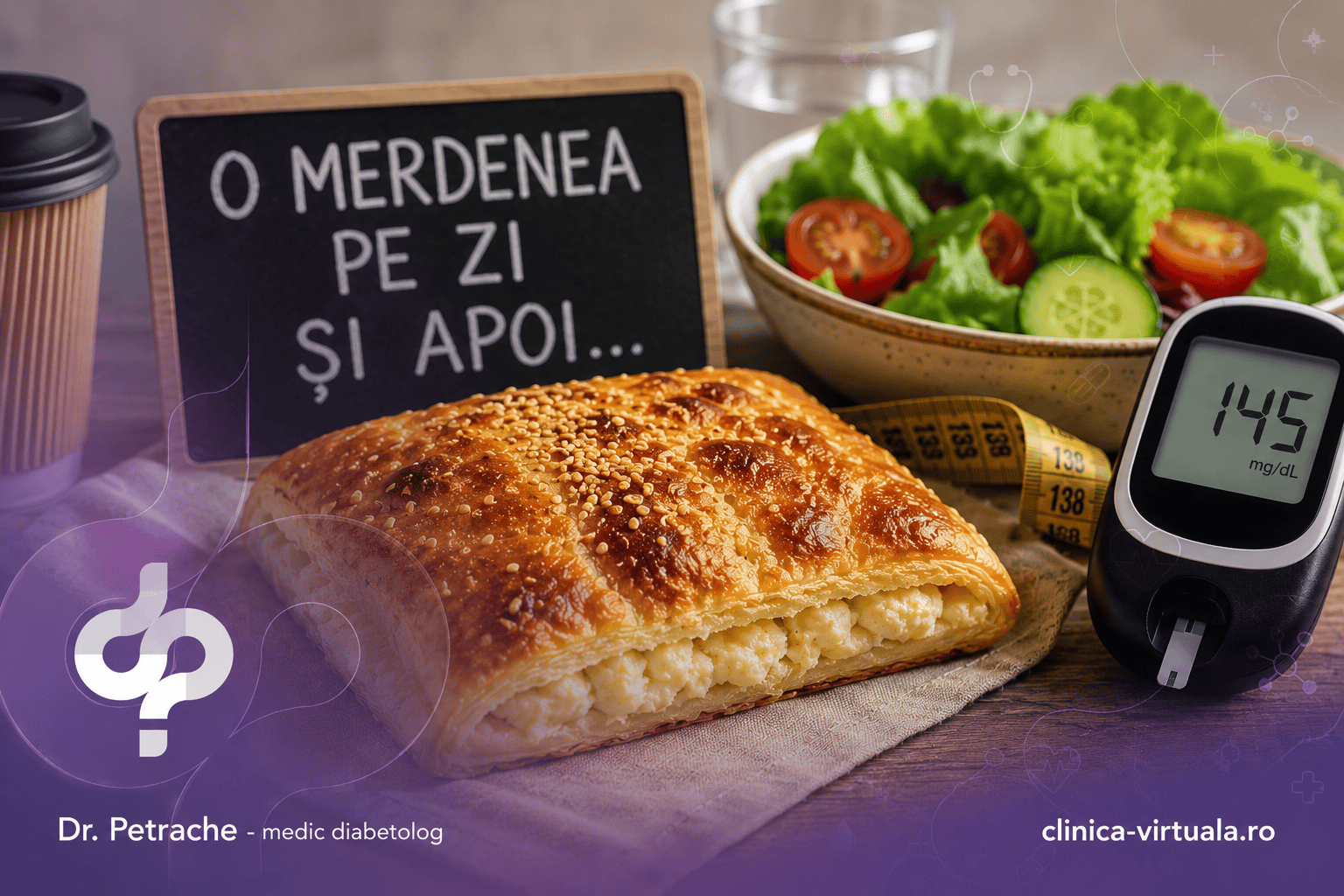
Cheese pastries are one of those foods that bring back memories. For many of us, their taste reminds us of the walk to school, a quick break at work, or the bakery around the corner. Warm, flaky, savory, and aromatic, they seem like a simple and harmless choice. But what would happen if we ate one every day?
Many people think, “It’s just a pastry. How much harm can it do?” The reality is that the effects of nutrition do not appear after a single day but after months and years of repeated habits. One pastry is not a problem. One pastry every day for years, however, can become an important piece of a less favorable metabolic puzzle.

Tourist in Romania and in need of a prescription for your chronic treatment?
Contact Dr. Petrache’s Virtual Clinic for any medical issue you encounter while in Romania. Send an email to: clinica@diabet-si-nutritie.ro
What Does a Cheese Pastry Actually Contain?
Recipes vary from one bakery to another, but most cheese pastries contain:
- White flour
- Fat (butter, margarine, or vegetable fats)
- Cheese
- Salt
- Water
At first glance, this does not sound alarming. However, the combination of refined flour and a significant amount of fat makes the pastry a calorie-dense food.
A single pastry can often provide between 350 and 600 calories, depending on its size and recipe. For some people, this is equivalent to an entire lunch.
Why Is It So Satisfying?
The human brain loves the combination of carbohydrates and fats.
From an evolutionary perspective, energy-dense foods were once rare. Today, they are available on nearly every street corner. When we consume foods such as cheese pastries, puff pastries, croissants, or savory baked goods, the brain’s reward system receives a powerful stimulus.
This is also why very few people say:
“I ate a cheese pastry and didn’t enjoy it.”
Most people find it delicious.
What Happens to Blood Sugar?
A cheese pastry is not a dessert and does not contain large amounts of sugar. However, white flour is rapidly converted into glucose.
After consumption, blood sugar levels may rise significantly, especially in people with:
- Diabetes
- Prediabetes
- Insulin resistance
- Metabolic syndrome
In addition, the fats in the pastry may slow digestion and lead to prolonged blood sugar elevations.
Many patients are surprised to discover that their blood sugar response after a pastry can be similar to what they see after certain desserts.
But What If I Am Thin?
Many slim people assume they are protected from the effects of poor dietary habits.
Body weight is only part of the story.
There are normal-weight individuals who develop:
- Type 2 diabetes
- Fatty liver disease
- High blood pressure
- Dyslipidemia
Blood tests do not care how much you weigh. They reflect what is happening inside your body.
What About Cholesterol?
This depends greatly on the recipe.
Some baked goods contain substantial amounts of saturated fats or lower-quality fats.
Frequent consumption may contribute over time to:
- Higher LDL cholesterol
- Increased apolipoprotein B
- Greater cardiovascular risk
This does not mean that one pastry causes a heart attack.
It means that a repeated habit can contribute to the gradual accumulation of risk factors.
The Hidden Issue: Salt
Few people think about this aspect.
Cheese pastries are usually salty foods.
For individuals with high blood pressure or a predisposition to hypertension, repeated sodium intake can become relevant.
When combined with other processed foods eaten throughout the day, total sodium consumption can easily exceed recommended limits.
Foreigner In Romania and in need of a prescription for your chronic treatment?
Contact Dr. Petrache’s Virtual Clinic for any medical issue you encounter while in Romania. Send an email to: clinica@diabet-si-nutritie.ro
What Happens After One Year?
Let’s assume a pastry contains approximately 450 calories.
Eating one every day would mean:
450 calories × 365 days = 164,250 calories per year.
Of course, the body does not function like a simple calculator, but this figure illustrates how much extra energy a seemingly small habit can add over time.
If these calories are not offset by physical activity or reduced intake elsewhere, gradual weight gain may occur.
And the Liver?
The liver is one of the organs that feels the effects of chronic excess calorie intake.
Alcohol is not the only thing that can affect liver health.
An excess of calories from processed foods, refined flour, and fats can contribute to the development of metabolic fatty liver disease.
Today, fatty liver disease is one of the most common conditions encountered in medical practice.
It Also Matters What You Eat It With
An occasional pastry consumed within an active lifestyle and an otherwise balanced diet is very different from a daily pastry consumed alongside:
- Sugary beverages
- Chips
- Fast food
- Frequent sweets
Risk often develops through the accumulation of several unfavorable habits.
Rarely is a single food entirely responsible.
But What If I Really Like It?
Modern nutrition is not about absolute prohibition.
The problem is not that you enjoy cheese pastries.
The problem arises when a highly caloric, low-fiber food consumed out of habit begins replacing more nutritious options.
If you eat a pastry once every few weeks, there is probably little reason for concern.
If it becomes your daily breakfast for years, it is worth asking whether this habit supports or hinders your health goals.
What Could Be a Better Alternative?
A breakfast that includes:
- Protein
- Fiber
- Vegetables or fruit
- Healthy fats
usually provides better satiety and a more favorable metabolic response.
Eggs, high-protein yogurt, lean cheeses, vegetables, and seeds are simple and accessible examples.
Passing through Romania and need a prescription for your chronic treatment?
Contact Dr. Petrache’s Virtual Clinic for any medical issue you encounter while in Romania. Send an email to: clinica@diabet-si-nutritie.ro
Conclusion
One cheese pastry a day will not make you sick tomorrow.
But health is not the result of a single day—it is the result of thousands of choices repeated throughout life.
An occasional pastry can absolutely be part of a balanced diet. A pastry every day, however, may mean more calories, more sodium, fewer fibers, and a greater metabolic burden over time.
Perhaps the real question is not:
“Can I eat a cheese pastry?”
but rather:
“What happens if I turn this choice into a daily habit for the next 10 years?”
Most of the time, the answer to that question is far more important than the pastry itself.
Follow us on:
- FaceBook: Diabetes & Nutrition;
- YouTube: Diabetes Facts.