An Implant That Lowers Blood Sugar Without Insulin

Could This Swiss Discovery Change Diabetes Treatment?
Diabetes treatment could one day benefit from a technology fundamentally different from the medications currently available. Researchers at ETH Zurich in Switzerland have developed an implantable device capable of lowering blood glucose levels without administering insulin or other glucose-lowering medications.
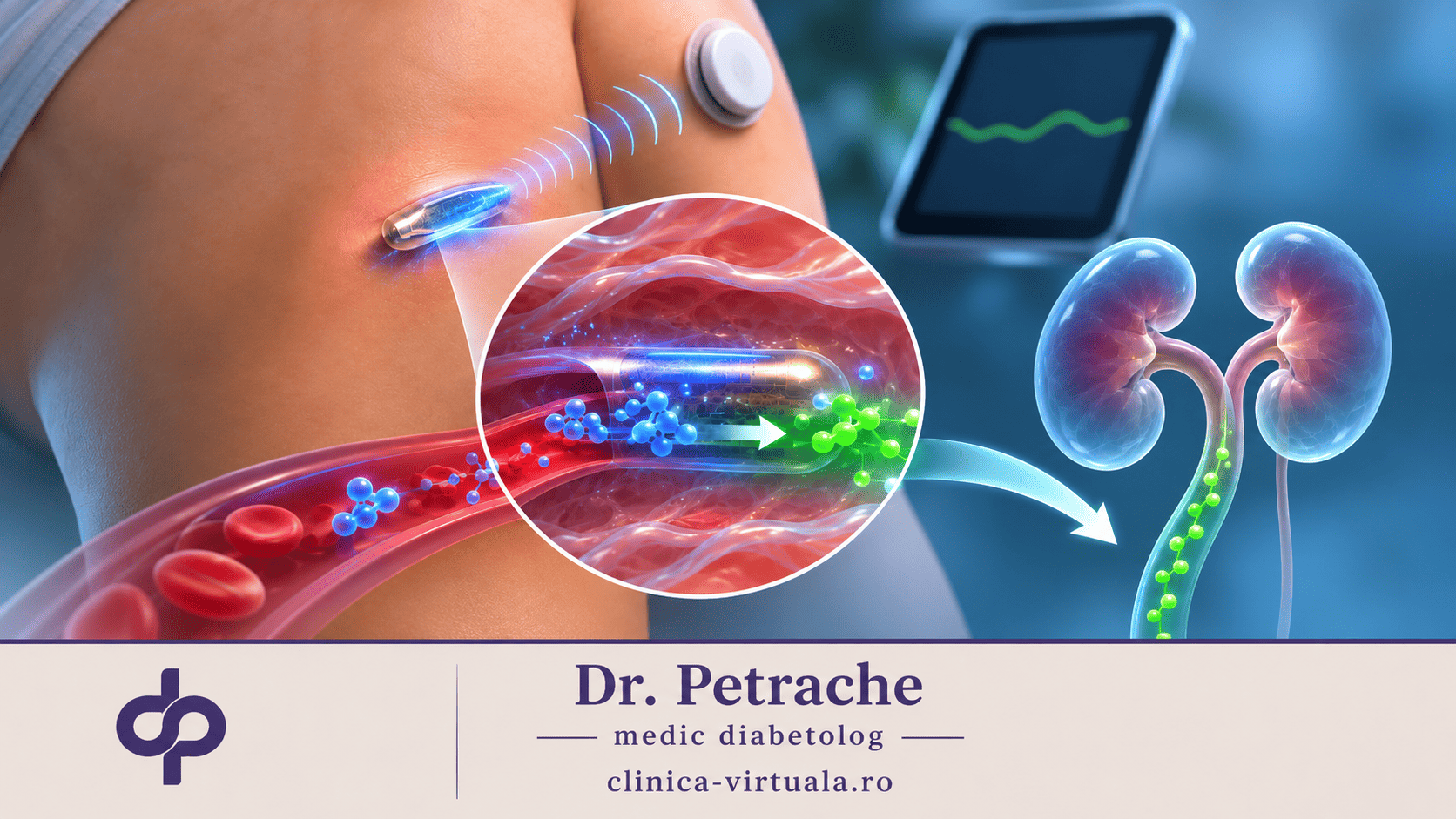
Instead of stimulating insulin secretion or improving the body’s response to insulin, the device converts glucose into another substance that can potentially be eliminated through the kidneys.
The research was published on October 22, 2026, in the prestigious scientific journal Science, under the title „Wireless electrocatalytic closed-loop system for drug-free management of diabesity.”
Although the experimental results are promising, one essential point must be emphasized from the beginning: the device has been tested in mice with type 2 diabetes and obesity, not in humans.
Therefore, it is not currently an available treatment for people living with diabetes.
Why Is This Discovery Different From Existing Diabetes Treatments?
To understand the importance of this research, we first need to consider how glucose is normally regulated in the body.
After consuming foods containing carbohydrates, some of these carbohydrates are broken down into glucose, which enters the bloodstream. Insulin helps regulate glucose uptake, utilization, and storage, contributing to normal blood glucose levels.
In type 2 diabetes, the body frequently develops insulin resistance, while the pancreas may gradually lose its ability to produce sufficient insulin.
Current diabetes medications work through different mechanisms:
- Metformin primarily reduces glucose production by the liver.
- GLP-1 receptor agonists, such as semaglutide, improve glucose regulation through glucose-dependent mechanisms and may reduce appetite and body weight.
- SGLT2 inhibitors, such as dapagliflozin and empagliflozin, increase glucose excretion through urine.
- Insulin regulates blood glucose and is essential when the body cannot produce enough insulin.
The new technology introduces a completely different approach: the direct chemical conversion of glucose through an electrically controlled reaction.
Instead of modifying how the body produces, uses, or eliminates glucose, the device chemically transforms some of the available glucose into another compound.
How Does the Swiss Implant Work?
The device is called ECHO, which stands for Electrocatalytic Closed-loop Health Optimization.
It is a miniature implant, approximately 3 centimeters long, containing a catalyst made from graphite, gold nanoparticles, and platinum particles.
These materials enable an electrochemical reaction in which glucose is oxidized and converted into gluconate.
The resulting gluconate may then be eliminated through the kidneys, reducing the amount of glucose available for normal metabolic processes.
Importantly, the implant does not need to be inserted directly into a blood vessel.
Instead, it is placed beneath the skin, where it interacts with glucose present in the interstitial fluid, which continuously exchanges glucose with the bloodstream.
The Mechanism Explained Simply
- Blood glucose rises. A continuous glucose monitoring (CGM) sensor detects the increase.
- The implant is activated. The system wirelessly delivers electrical energy to the implant.
- Glucose is converted into gluconate. An electrochemical reaction takes place without administering insulin.
- Gluconate is eliminated through the kidneys. The amount of glucose available for metabolism decreases.
This process allows glucose levels to be regulated through a mechanism that does not directly depend on insulin administration.
What Role Does Continuous Glucose Monitoring Play?
One of the most innovative aspects of the technology is its integration with a continuous glucose monitoring system, commonly known as CGM.
A CGM sensor measures glucose concentrations in the interstitial fluid and transmits this information to an electronic device, such as a smartphone.
When glucose levels exceed a predetermined threshold, the system activates the implant.
Once glucose levels return to the target range, the implant is automatically deactivated.
This mechanism is known as a closed-loop system.
The concept resembles automated insulin delivery systems, but there is a fundamental difference.
While automated insulin delivery systems regulate blood glucose by adjusting insulin administration, ECHO controls an electrochemical reaction that directly transforms glucose.
In animal experiments, the system demonstrated the ability to regulate blood glucose without detected episodes of hypoglycemia.
However, this finding does not establish that the device would be free from hypoglycemia risk in humans.
What Results Did the Researchers Obtain?
The study, conducted by researchers including Debasis Maity and Martin Fussenegger, involved laboratory experiments and evaluations in mouse models of type 2 diabetes and obesity.
Several important findings were reported.
1. Blood Glucose Normalization
In experimental mice, elevated blood glucose levels returned to normal within approximately 60–90 minutes following activation of the device.
This demonstrated that the electrochemical mechanism could influence glucose concentrations in a living organism.
2. Weight Reduction
Animals receiving repeated treatment experienced body weight reductions of up to approximately 10% over six weeks.
Importantly, this occurred without a significant reduction in food intake.
3. Changes in Lipid Metabolism
Researchers also observed reductions in triglyceride concentrations, together with increases in circulating free fatty acids and ketone bodies.
These findings suggest a metabolic shift toward greater utilization of fats as an energy source.
4. Short-Term Safety
During the experimental observation period, researchers did not identify significant physiological, inflammatory, or behavioral adverse effects using the methods employed in the study.
However, a six-week observation period is insufficient to establish the long-term safety of a device intended for potentially prolonged implantation.
These results are preclinical and should not be interpreted as evidence of equivalent effectiveness or safety in humans.
Why Did the Treated Animals Lose Weight?
This is one of the most interesting observations in the study.
Under normal conditions, glucose is an important energy source for the body.
When some glucose is converted into gluconate and removed from the usual metabolic pathways, less glucose remains available for energy production.
The body may compensate by increasing its reliance on stored fat.
In the experimental study, treated animals experienced weight loss of up to approximately 10%, without a significant change in food intake.
However, it would be premature to conclude that the same degree of weight loss would occur in humans.
Furthermore, increased fat utilization does not automatically indicate a beneficial metabolic effect in every clinical situation.
The hormonal environment, insulin availability, and ketone production are particularly important when evaluating the metabolic consequences of this approach.
Could This Implant Replace Insulin in Type 1 Diabetes?
The answer, based on current evidence, is no.
This distinction is extremely important because headlines claiming that a device can lower blood glucose without insulin may create unrealistic expectations among people living with diabetes.
In type 1 diabetes, the fundamental problem is not simply elevated blood glucose.
It is the absolute or near-absolute deficiency of insulin.
Insulin performs several essential metabolic functions beyond regulating blood glucose.
It inhibits excessive lipolysis, suppresses uncontrolled hepatic ketone production, and contributes to normal protein and energy metabolism.
A device that removes glucose from the body cannot automatically replace these functions.
Consequently, even if blood glucose levels returned to normal, a severe insulin deficiency could still persist.
The Risk of Diabetic Ketoacidosis With Normal Blood Glucose
This is one of the most important theoretical concerns associated with technologies that lower glucose independently of insulin.
Diabetic ketoacidosis develops when insulin deficiency, together with increased counterregulatory hormone activity, promotes excessive ketone production and metabolic acidosis.
In some circumstances, diabetic ketoacidosis can occur even when blood glucose levels are not markedly elevated.
This condition is known as euglycemic diabetic ketoacidosis.
The phenomenon is already recognized in clinical practice, including in association with SGLT2 inhibitor therapy.
In the ECHO study, researchers observed increased ketone body concentrations in treated animals.
This finding may reflect a metabolic adaptation toward greater fat utilization and does not necessarily indicate ketoacidosis.
Nevertheless, in individuals with significant insulin deficiency, such metabolic changes would require particularly careful investigation.
Normal blood glucose does not necessarily mean normal metabolism.
For this reason, findings from mouse models of type 2 diabetes cannot be directly extrapolated to people with type 1 diabetes or insulin-deficient latent autoimmune diabetes in adults (LADA).
Is This Technology Similar to SGLT2 Inhibitors?
There is a conceptual similarity, but the mechanisms are different.
SGLT2 inhibitors reduce glucose reabsorption in the kidneys, allowing more glucose to be excreted through urine.
The ECHO implant chemically converts glucose into gluconate before its potential renal elimination.
| Characteristic | SGLT2 Inhibitors | ECHO Implant |
|---|---|---|
| Main mechanism | Reduced renal glucose reabsorption | Electrochemical glucose oxidation |
| Substance eliminated | Glucose | Gluconate |
| Direct glucose-lowering action requires insulin | No | No |
| Human clinical trials | Yes | No |
| Long-term safety | Clinically evaluated | Unknown |
| Clinical availability | Approved medications | Experimental technology |
It is important not to confuse an insulin-independent glucose-lowering mechanism with the body’s ability to function without insulin.
These are two entirely different concepts.
What Challenges Must Be Overcome Before Human Use?
Although the experimental results are encouraging, several important questions remain unanswered.
1. Can the Device Remove Enough Glucose?
An adult may consume hundreds of grams of carbohydrates daily, while the body also produces glucose through endogenous metabolic pathways.
The researchers demonstrated the device’s ability to convert glucose in a controlled laboratory solution containing five liters of fluid.
However, such experiments cannot reproduce the full complexity of human glucose metabolism.
Further studies must determine whether a sufficiently small implant could process clinically meaningful quantities of glucose under real physiological conditions.
2. What Happens to the Gluconate?
Gluconate may be eliminated through the kidneys, but the efficiency and safety of eliminating substantial amounts in humans remain uncertain.
Researchers will need to determine whether repeated gluconate production could lead to accumulation or unexpected metabolic consequences.
3. Could Electrolyte Imbalances Develop?
The renal elimination of significant quantities of substances may influence fluid and electrolyte balance.
Potential changes in sodium, potassium, and acid-base balance require investigation.
These are theoretical safety concerns requiring further research, not adverse effects already demonstrated by the study.
4. Is the Implant Safe Over the Long Term?
Researchers will need to evaluate several aspects of long-term safety, including:
- Biocompatibility of the implanted materials.
- Stability and durability of the catalyst.
- Possible local inflammatory reactions.
- Long-term performance of the electronic components.
- Potential need for replacement or removal of the implant.
5. What Happens if the System Malfunctions?
Any automated glucose-regulating technology must be designed to manage technical failures safely.
Potential problems include inaccurate CGM readings, interrupted wireless communication, insufficient electrical power, or inappropriate activation of the implant.
These concerns are especially important for technologies that directly influence glucose concentrations.
Independent experts have also emphasized the need to investigate renal gluconate elimination, acid-base balance, and whether the technology can be scaled for human use.
When Could This Implant Become Available to Patients?
At present, there is no confirmed timeline.
The researchers intend to continue evaluating the technology in larger animals, including pigs and sheep, before considering human clinical trials.
If these studies are successful, clinical investigations will still be required to assess safety, effectiveness, the appropriate level of electrochemical activity, and long-term metabolic outcomes.
The device would also need to meet the relevant regulatory requirements for medical devices.
Therefore, it would be scientifically inappropriate to claim that the implant will become available within two, five, or ten years.
It is also possible that technical or safety limitations could prevent its eventual clinical application.
What Could This Discovery Mean for the Future of Diabetes Care?
The study introduces an intriguing possibility: regulating blood glucose through physical and chemical processes rather than through medication administration.
If the technology eventually proves safe and effective in humans, it could potentially become an additional treatment option for selected individuals with type 2 diabetes and obesity.
It may also contribute to the development of future medical devices capable of automatically modifying metabolic parameters using real-time sensor data.
However, type 2 diabetes is a complex metabolic disease involving insulin resistance, pancreatic beta-cell dysfunction, and multiple hormonal and metabolic abnormalities.
Lowering blood glucose through an electrochemical reaction does not necessarily correct all these underlying mechanisms.
Furthermore, it remains unknown whether this approach could reduce cardiovascular, kidney, or neurological complications.
Such benefits have already been demonstrated for certain established diabetes medications, but they cannot be assumed for a new technology simply because it lowers blood glucose.
Clinical outcomes, rather than glucose measurements alone, will ultimately determine its medical value.
Conclusion
The ECHO implant developed by researchers at ETH Zurich represents an important experimental discovery and an innovative approach to diabetes research.
Its ability to convert glucose into gluconate through an automatically controlled electrochemical reaction demonstrates that glucose regulation may be achievable through mechanisms beyond conventional pharmacological treatments.
The results observed in mice, including normalization of blood glucose, body weight reduction, and changes in lipid metabolism, justify further investigation.
However, the technology has not been tested in humans, and its clinical effectiveness and long-term safety remain unknown.
For people with type 1 diabetes, it is essential to understand that lowering blood glucose without administering insulin does not mean that insulin can safely be replaced or discontinued.
Until robust clinical evidence becomes available, scientifically validated treatments, glucose monitoring, and individualized medical care remain the foundation of effective diabetes management.
Scientific References
- Maity D, Guha Ray P, Buchmann P, Charpin-El-Hamri G, Fussenegger M. Wireless electrocatalytic closed-loop system for drug-free management of diabesity. Science. 2026;394(6822). Published October 22, 2026. https://doi.org/10.1126/science.ady8560
- ETH Zurich. Tackling diabetes with an electronic implant: how a tiny catalyst lowers blood sugar. October 22, 2026. https://ethz.ch/en/news-and-events/eth-news/news/2026/10/tackling-diabetes-with-an-electronic-implant.html
- Science News. A drug-free diabetes treatment? An implant lowers blood sugar in mice. November 3, 2026. https://www.sciencenews.org/article/diabetes-device-experiment-blood-sugar
- Physics World. Electronic implant shows promise for drug-free diabetes control. November 4, 2026. https://physicsworld.com/a/electronic-implant-shows-promise-for-drug-free-diabetes-control/
Medical information provided by Dr. Daniela Petrache, Specialist in Diabetes, Nutrition and Metabolic Diseases.
This article is intended for educational purposes and does not replace individualized medical advice. The technology discussed is experimental and is not approved for clinical use in humans.
Visiting Romania and need a prescription?
- Forgot your regular medication at home?
- Running out of your chronic treatment?
- Need a prescription for a medication while travelling in Romania?
Dr. Petrache’s Virtual Clinic offers an online prescription service for foreign visitors in Romania.
Simply send us an email with your prescription request and the relevant medical information. If the medication can legally and safely be prescribed, you will receive payment instructions and your prescription will be sent to you electronically.
No clinic visit required.
📧 clinica@diabet-si-nutritie.ro
🌐 Dr. Petrache’s Virtual Clinic – Services for Foreigners
Prescriptions are issued at the physician’s discretion and in accordance with Romanian legislation. Certain medications cannot be prescribed through this service.
Follow us on:
- FaceBook: Diabetes & Nutrition;
- YouTube: Diabetes Facts.