CBD Creams for Diabetic Neuropathy
Diabetic neuropathy is one of the most insidious and debilitating complications of diabetes, affecting millions of people worldwide. Characterized by nerve damage, it can cause a wide range of symptoms, from numbness and tingling to severe and agonizing burning pain, which dramatically reduces quality of life. Despite conventional therapies, many patients continue to struggle with persistent pain, seeking new solutions that can provide relief.
In this context, cannabidiol (CBD), a non-psychoactive compound of the hemp plant, has emerged as a major subject of interest. Although it is most often associated with oral oils and supplements, its topical application, in the form of creams and ointments, has rapidly gained popularity as a targeted method for managing localized pain.

What Is Diabetic Neuropathy and How Does It Affect Us?
Diabetic neuropathy is a form of nerve damage caused by long-term high blood sugar levels. It mainly affects peripheral nerves, especially those in the feet and hands, but can also affect other parts of the body. Symptoms can range from:
- Numbness and tingling: A „pins and needles” sensation or a loss of tactile sense, often in the feet.
- Pain: Sharp, stabbing, or burning pains, which can be constant or intermittent.
- Muscle weakness: Loss of muscle strength, which can lead to difficulty walking.
- Increased sensitivity: An exaggerated sensitivity to touch, where even the slightest touch is perceived as painful.
Nerve damage can lead to serious complications, including foot ulcers, infections, and, in extreme cases, amputations. Conventional treatment focuses on managing blood sugar and relieving painful symptoms with medications such as tricyclic antidepressants or anticonvulsants, which can, however, have unwanted side effects. This has paved the way for exploring alternatives such as CBD creams.
Foreigner In Romania and in need of a prescription for your chronic treatment?
Contact the Dr. Petrache’s Virtual Clinic for any medical issue you encounter while in Romania. Send an email to: [email protected]
Cannabidiol (CBD): A Natural Anti-inflammatory and Analgesic Agent?
Cannabidiol, or CBD, is one of more than 100 cannabinoids identified in the hemp plant. Unlike its more famous relative, tetrahydrocannabinol (THC), CBD does not have psychoactive effects. This means it does not produce the „high” associated with marijuana.
Its therapeutic effects are mediated by its interaction with the endocannabinoid system (ECS), a complex network of receptors (CB1 and CB2) and molecules produced by our body, which plays a crucial role in regulating essential functions, including:
- Pain perception
- Inflammatory response
- Sleep
- Mood and appetite
In the case of neuropathic pain, inflammation plays a central role. CBD acts by modulating the activity of these receptors and by interacting with other signaling systems, with the potential to reduce inflammation and directly influence pain signals.
The Mechanism of Action of CBD Creams in Diabetic Neuropathy
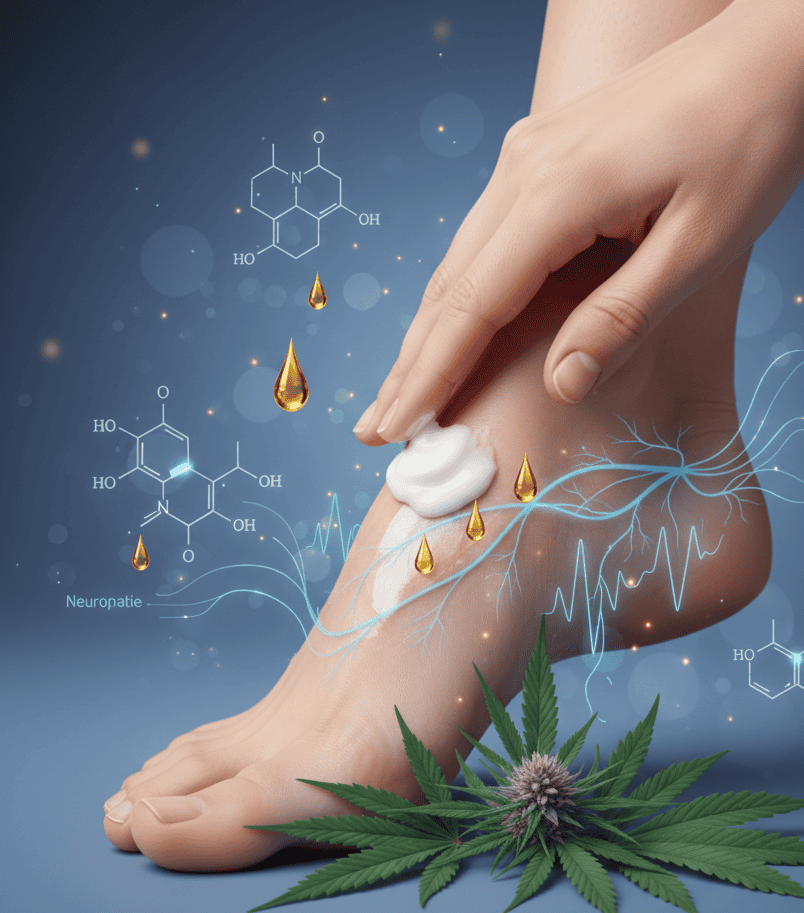
CBD creams work differently than orally administered oils or capsules. When applied directly to the skin, cannabidiol does not enter the bloodstream. Instead, it interacts with ECS receptors in the skin, muscles, and nerve tissues beneath the surface of the epidermis.
This topical mechanism of action has several distinct advantages in the treatment of diabetic neuropathy:
- Targeted action: CBD is delivered directly to the affected area, allowing for a higher concentration of the compound where it is most needed. This is ideal for localized neuropathic pain, such as that in the feet.
- Avoidance of liver metabolism: Through topical application, CBD bypasses the metabolic process in the liver, which can reduce the bioavailability of the compound.
- Minimal risk of systemic side effects: Because CBD does not enter the blood in significant amounts, the risk of systemic side effects, such as drowsiness or changes in appetite, is minimized.
Thus, CBD creams offer a non-invasive and potentially effective way to address the symptoms of neuropathy directly at their source.
What the Scientific Studies Say: Benefits and Evidence
Research into the effectiveness of CBD creams for diabetic neuropathy is still in its early stages, but the preliminary results are encouraging. Here are a few key findings from recent studies:
- The 2020 Study: A placebo-controlled study, published in 2020, investigated the effects of topical application of CBD oil in people with peripheral neuropathy of the feet. Participants who used CBD reported a significant reduction in intense pain, itchy sensations, and discomfort, compared to the placebo group. The study concluded that the topical application of CBD can provide an improvement in symptoms, without notable adverse effects.
- Preclinical Research (2024-2025): Studies on animal models, published recently, suggest that CBD may not only relieve pain but also have a neuroprotective effect. A study published in 2024 showed that a combination of CBD and another compound prevented thermal and mechanical hypersensitivity in rats with nerve damage, and also improved motor function. These findings suggest that CBD could help protect nerves from further damage, not just manage symptoms.
- Synergy with other cannabinoids: A 2024 case report explored the treatment of neuropathic pain with a mixture of CBD and THC. The results showed that this combination, in relatively low doses, had a significant analgesic effect, with reduced side effects. This reinforces the „entourage effect” theory, according to which cannabinoids and terpenes work together to amplify their benefits.
Despite these promising results, it is crucial to conduct more extensive and long-term clinical studies to fully confirm the effectiveness and safety of CBD creams in the management of diabetic neuropathy.
Passing through Romania and need a prescription for your chronic treatment?
Contact the Dr. Petrache’s Virtual Clinic for any medical issue you encounter while in Romania. Send an email to: [email protected]
How to Choose a Quality CBD Cream in 2025: Essential Tips
The market for CBD creams is vast, and the quality of products can vary considerably. To ensure you choose a safe and effective product, consider the following criteria, which are crucial in 2025 to avoid low-quality products:
- Type of CBD:
- CBD Isolate: Contains only pure CBD, without other cannabinoids, terpenes, or flavonoids. Ideal for people who must completely avoid THC.
- Broad-Spectrum CBD: Contains CBD and other hemp components, with the exception of THC. This type offers an „entourage effect,” but without the risk of THC being present.
- Full-Spectrum CBD: Contains all cannabinoids, including a minimal amount of THC (under 0.3% in accordance with European legislation). This type is considered the most effective due to the synergy effect.
- Certificate of Analysis (CoA): Any reliable manufacturer will provide a Certificate of Analysis from a third-party laboratory. This document confirms the CBD concentration, as well as the absence of dangerous contaminants (pesticides, heavy metals, solvents). Make sure you carefully check these certificates.
- Concentration (Potency): CBD creams come in various concentrations, from 250 mg to 1000 mg or even more per container. For diabetic neuropathy, which involves moderate to severe pain, a cream with a higher concentration (over 500 mg) might be more effective.
- Additional ingredients: Many creams contain additional ingredients that can amplify the pain-relieving effect, such as:
- Menthol or Camphor: Provides a cooling sensation, which can soothe pain.
- Arnica: A plant known for its anti-inflammatory properties.
- Essential oils: Lavender, eucalyptus, or chamomile can contribute to muscle relaxation and a sense of well-being.
Usage and Dosage Guide
Using a CBD cream is relatively simple, but following some essential steps can maximize the benefits:
- Clean the area: Make sure the skin is clean and dry before applying.
- The right amount: Start with a small amount of cream (the size of a pea) and massage the affected area well. Increase the amount gradually until you find a dose that provides relief.
- Frequency: Apply the cream 2-3 times a day, or as often as needed, depending on the intensity of the pain.
Remember that the effect of a CBD cream sets in more slowly than that of an oral analgesic but can last longer. Each person reacts differently, so it is important to be patient and adjust the dosage until you get the desired results.
Legal Aspects in Romania and the European Union in 2025
From a legal point of view, CBD creams are considered safe and legal in Romania, as long as the THC content does not exceed 0.3%, according to EU legislation. These products are often classified as cosmetic products or food supplements, and their sale is regulated.
In 2025, the European legislative context continues to be clarified. What is important is that the products are legally marketed in a member state and comply with the THC limits. Choosing a trusted retailer, with tested and certified products, is the best way to ensure you are in compliance with the current regulations.
Tourist in Romania and in need of a prescription for your chronic treatment?
Contact the Dr. Petrache’s Virtual Clinic for any medical issue you encounter while in Romania. Send an email to: [email protected]
conclusion and Essential Recommendations
Diabetic neuropathy can be a challenging chronic condition, but new approaches, such as CBD creams, offer a ray of hope for those seeking effective pain relief. Based on a targeted mechanism of action and supported by promising preliminary studies, these products represent a viable option for managing localized symptoms.
However, it is vital to approach this option with caution and responsibility. Do not rely exclusively on information from the internet. Always consult a medical specialist before starting a new treatment. Discuss openly with them about CBD, its potential interactions with other medications (especially for diabetes), and what type of product suits you best. Medical expertise, combined with an informed product choice, is the key to maximizing benefits and minimizing risks.
Follow us on:
- FaceBook: Diabetes & Nutrition;
- YouTube: Diabetes Facts.